10 simple ways to increase your newsletter open rate

Does this sound familiar? You put a great deal of time and care into your newsletter, but the open rate leaves much to be desired, and you do not know why. It can be disheartening when you work hard on your email marketing and only a fraction of your contacts open your newsletters. The good news is that you do not simply have to accept a low newsletter open rate. We have a range of tips and strategies to help you increase it in no time.
🥜 In a nutshell: the key facts about newsletter open rates
The newsletter open rate is one of the most important metrics in email marketing: it describes how many subscribers opened your newsletter after it was successfully delivered.
Our top 10 tips for a good newsletter open rate:
- 🙋🏻 Use a familiar sender name
- ✨ Use creative, personal subject lines that convey value
- 📚 Offer relevant, varied content that inspires readers
- 🎯 Address your target groups directly
- 🧹 Maintain your recipient lists so that you reach genuinely interested contacts
- 🕒 Find the ideal send time for your campaigns
- 📱 Make sure your newsletter displays responsively on different devices
- 📤 Optimize your newsletter deliverability
- 📬 Send follow-up emails
- 🗣️ Ask your subscribers for feedback regularly
rapidmail lets you keep an eye on your open rate at all times, thanks to clear newsletter reports containing all the key metrics.
1. Definition: what is the newsletter open rate?
The newsletter open rate can be defined as follows: the open rate describes how many contacts opened your newsletter after it was successfully delivered. In other words, it shows the ratio between the number of recipients who opened it and the number of emails delivered. The newsletter subject line is an especially important factor in determining whether your contacts open the newsletter. A good newsletter open rate therefore tells you how interesting your subscribers find the subject line and, by extension, the topic of your newsletter.
📐 rapid cheat sheet: how to calculate your newsletter open rate
Open rate = (newsletter opens/number of recipients) * 100
Example: suppose your campaign was sent to 20,000 newsletter contacts and achieved 6,000 opens. The open rate is therefore 30%:
Open rate = (6,000/20,000) * 100 = 30
HOWEVER: Always treat the calculated newsletter open rate with caution, because your email marketing tool cannot always calculate email opens reliably. There can be several reasons for this, including an Apple privacy feature that makes it difficult to measure the precise number of newsletter opens.
👀 Did you know?

Recent privacy updates, such as Apple’s, make the newsletter open rate less relevant in reports. When the privacy option is enabled for a user, the sending server can no longer track the open rate. In practical terms, this reduces the metric’s reliability. Other metrics, such as the newsletter click rate, become more important instead.
Another factor that can affect your open-rate figure is your email marketing tool. The displayed open rate is calculated differently depending on the tool you use to send your newsletter. The stated figure may refer either to the total number of opens or to the number of contacts who opened the newsletter at least once, with repeat opens excluded. For this reason, average newsletter open rates quoted online can vary considerably.
2. The average open rates achieved by newsletters
It is difficult to give a universally applicable answer to the question of what constitutes a good newsletter open rate. It depends on many different factors, including the industry, subject line, newsletter topic and target audience. Based on our experience, however, a very rough average newsletter open rate is around 20-25%.
What we can say is that, proportionally, campaigns to small recipient groups achieve higher open rates than those sent to very large numbers of contacts. This makes sense: with small email distribution lists, the newsletter is more likely to match subscribers’ interests, whereas mass emails tend to send the same campaign to contacts with very different interests.
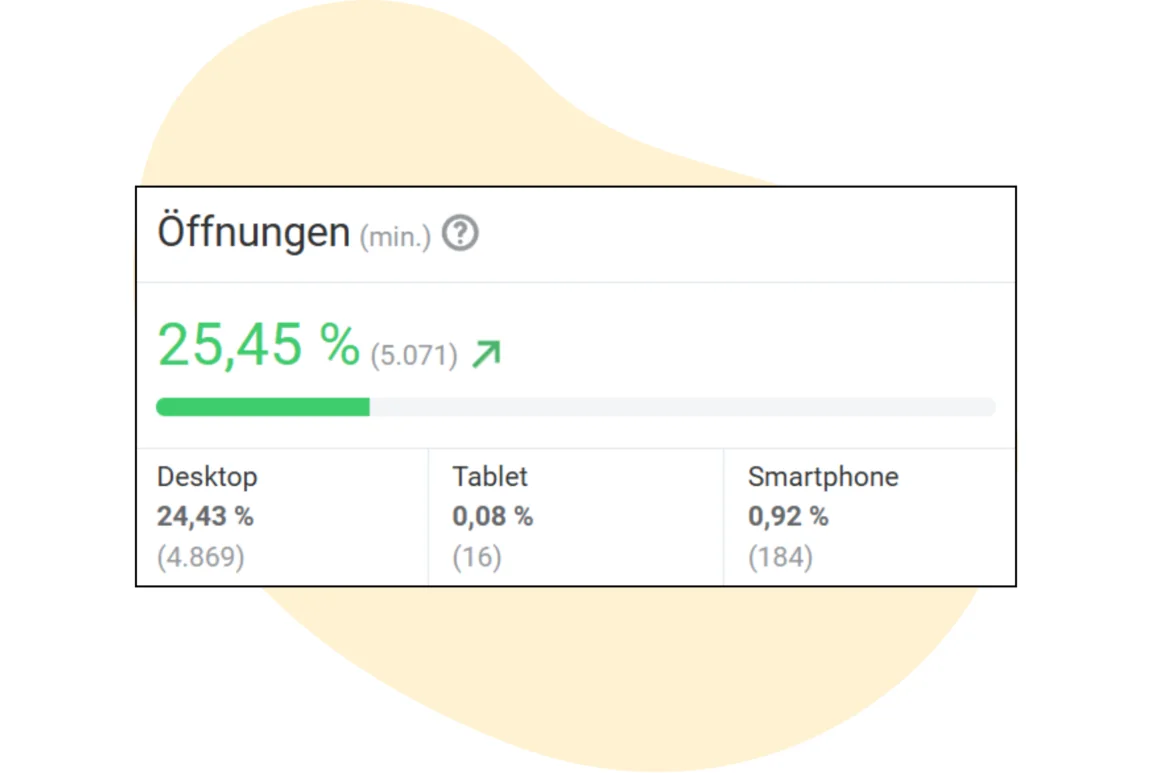
But be careful: a high open rate does not automatically mean your newsletter contacts read the campaign. Sometimes subscribers open a newsletter and immediately close it again after a few seconds because the first impression did not convince them. In this case, the click rate is more informative, because it shows how many contacts actually clicked something, demonstrating interest and interacting with your campaign.
3. How to achieve good newsletter open rates
Now that you understand what the newsletter open rate means, let us look at it in practice. How can you achieve a good open rate for your newsletters? Few things are more frustrating than sending regular newsletters that only a fraction of your contacts read, without knowing why. If you send newsletters through a newsletter tool such as rapidmail, you can explore the reports and metrics after sending to identify areas with room for improvement. The newsletter open rate is one of the key metrics you should always monitor.
Not satisfied with your results? There are several steps to consider when creating and sending newsletters if you want to increase their open rate. We will show you 10 simple ways to increase your newsletter open rate. Let’s get started! 🚀
Tip no. 1: achieve more newsletter opens with a familiar sender name
The sender name is one of the first pieces of information your contacts notice when they see your newsletter in their inbox. The same rule applies to email as elsewhere: first impressions count.
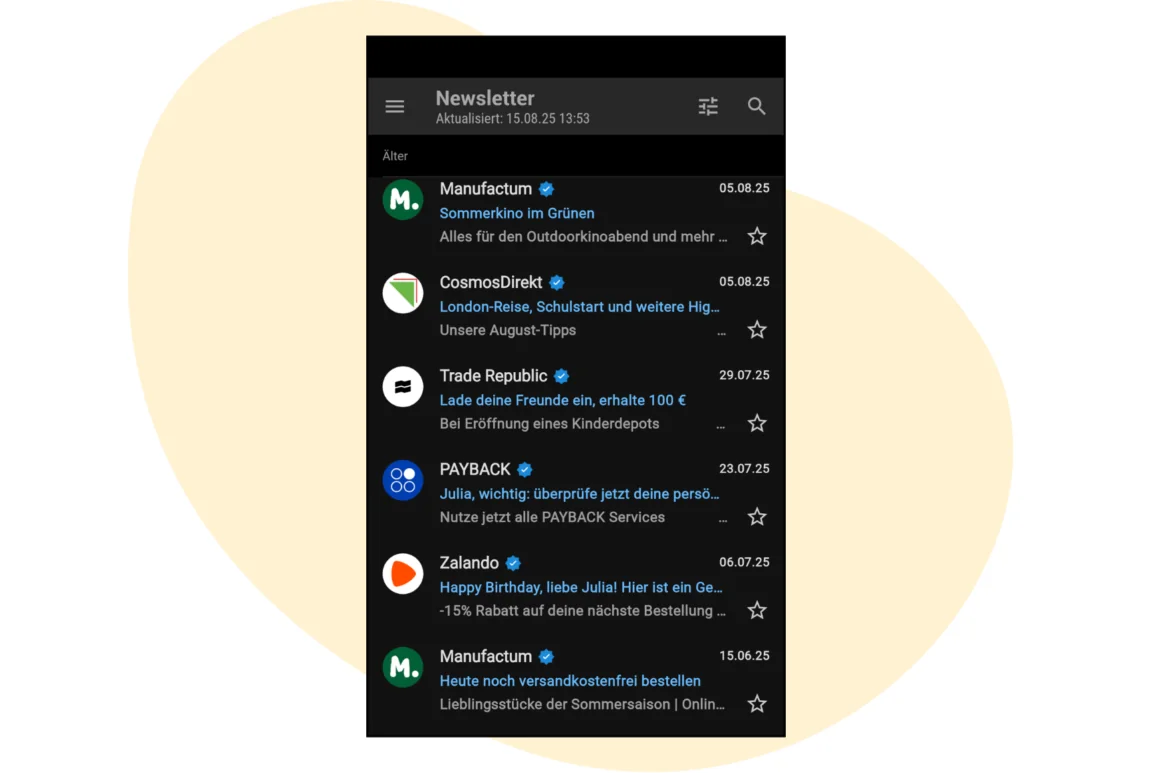
Your chosen email sender should not only build trust, but also let your contacts recognize immediately who the newsletter is from. The company name should therefore be part of the sender name, for example Manu from EisManuFaktur. This lets your contacts see at once that the campaign comes from your company and therefore from a familiar, trustworthy sender.
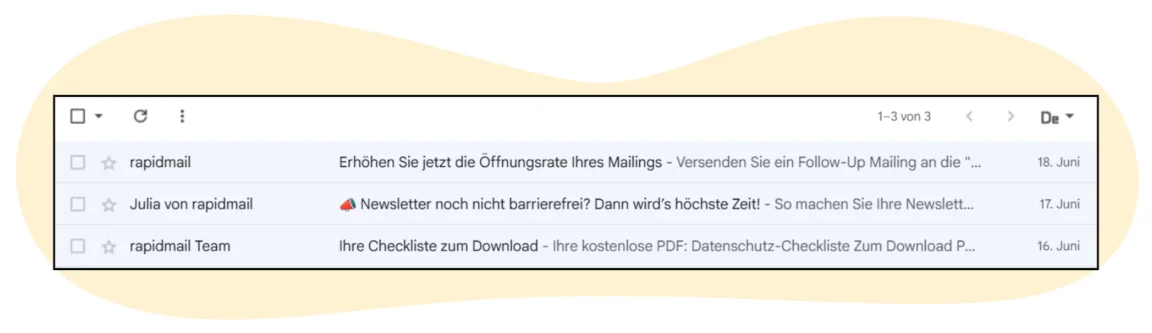
It is also helpful to begin building a personal connection with subscribers through the sender name. If you subscribe to the rapidmail newsletter, for example, you may have noticed that it is sent by “Julia from rapidmail”. When contacts can associate your newsletter with a name and therefore a person, this creates closeness and strengthens customer loyalty. Of course, this strategy is not always the best one. The most suitable sender name also depends on your industry and target audience. For very well-known companies in particular, it may make sense to use only the brand name as the sender.
The rapidmail newsletter
Tips, ideas and news about email marketing, straight to your inbox.
Your newsletter contacts are often regular visitors to your website too. They have probably already come across the sender’s name or face there, for example on the “About us” page or beneath published blog posts. When they then receive an email and can connect the sender name with a face, they are more likely to perceive your sender and campaigns as familiar. This, in turn, makes them more likely to open your newsletters, improving your open rate.
💡 rapidtip
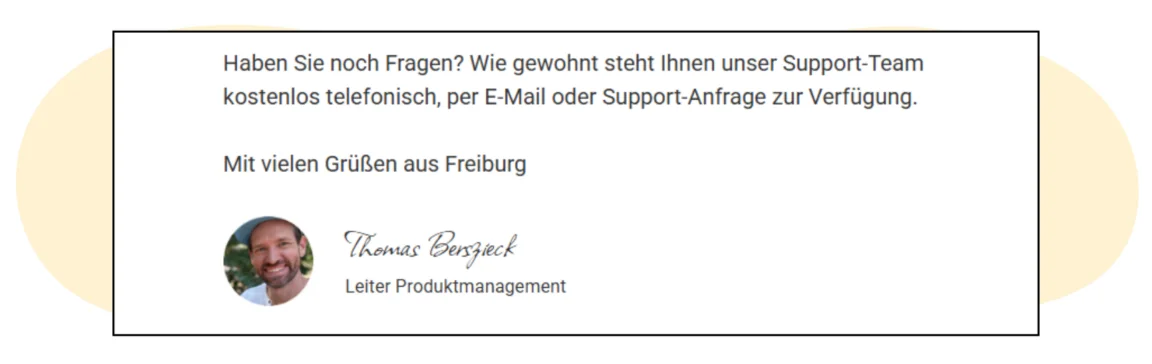
The sender name in the inbox does not have to be the end of it. You can also include a photo of the newsletter sender in the email signature in your newsletter to reinforce sender recognition and create a more personal effect for your subscribers, like this:
If you are just getting started with email marketing, you can use an A/B test to try different sender profiles. This helps you identify which sender name works best with your subscribers. To get the most from your open rate in the long term, it is also important to choose a sender name and keep using it. This increases your chances of building a strong connection with readers while making it easier for them to associate the newsletter with your company immediately.
💡 rapidtip

If you do decide to change your newsletter sender profile, we recommend informing your recipients in advance. This prevents readers from mistaking your newsletter for spam and deleting it unread the first time it arrives under the new name.
The sender name is not the only factor that determines whether your email inspires trust and recognition in your contacts’ inboxes. Your company logo in the sender profile can also increase newsletter open rates, and a few workarounds allow you to display it directly beside the subject line or sender name.
The key term here is “Brand Indicators for Message Identification” (BIMI). It may sound complicated, but it is easy to implement: BIMI lets you configure your brand logo so that it is displayed automatically in supported email clients such as Gmail, Yahoo or Apple Mail. This not only makes you stand out visually in the inbox, but also creates a professional impression at first glance. Sound interesting? This Inbox Collective article explains everything you need to know to make your brand logo appear in your newsletter contacts’ inboxes.
Tip no. 2: use creative, personal subject lines that convey value
Remember that your contacts decide primarily from the subject line whether to open your email. A successful newsletter subject line should therefore not be too long and should make subscribers curious about the email’s content. To help you create the perfect subject line, we have collected the following tips, which are sure to spark your contacts’ interest and persuade them to open your newsletter:
Subject line tips for an optimized email open rate:
- 👀 What is the newsletter about? Your contacts should be able to recognize from the subject line what value your newsletter offers them.
- ⏰ Keep it short: we recommend no more than 10 words or 50-70 characters. This helps ensure that the full subject line is displayed on different devices.
- 🎨 Be creative: varied wording captures readers’ attention. Use wordplay or other original phrases to stand out from other emails in the inbox.
- 🙋🏻 Get personal: personalized subject lines help contacts feel directly addressed. Depending on the information available, you can use it to your advantage. Alongside subscribers’ first and last names, their location can be useful in industries such as events.
- 😄 Use emojis: colorful and eye-catching, emojis in newsletter subject lines are ideal for standing out in your contacts’ inboxes. The visual appeal generally leads to higher open rates.
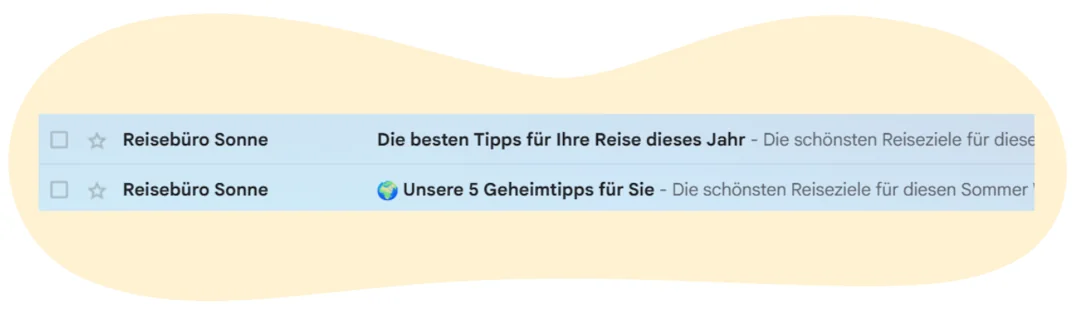
To find out which type of subject line works best with your contacts, you can try different versions with an A/B test. For example, you can test whether your subscribers prefer a formal or informal form of address, whether they favor serious or humorous subject lines, how they respond to emojis, and so on.
The results help you learn more about your target audience and identify the type of newsletter subject line that receives the best response. In turn, this helps you increase your newsletter open rate over the long term.
👀 Did you know? How to write compelling newsletter subject lines with AI and rapidmail
rapidmail also lets you use AI in email marketing to your advantage, generating individual subject lines tailored perfectly to your brand in moments. Simply enter your company website URL in the email editor. Once you add a keyword, it suggests subject lines suited to your company, products or services.
The URL allows the AI to learn about your company and provide relevant, individual subject-line suggestions. These AI suggestions are tailored to your company and writing style.
Tip no. 3: gain more newsletter opens with relevant content
The most important factor in maintaining a consistently high open rate is and remains relevant newsletter content. From the very first newsletter, your new subscribers should see that you are not only trying to sell them products or a service, but are also providing useful, informative material or offering value in another way. This creates the ideal conditions for your contacts to want to open and read future newsletters too.
Only varied and useful newsletter content can help you build lasting customer relationships with contacts over the long term.
Interesting content for ideal newsletter open rates includes:
- 📢 Presentations of new products, collections, features and similar news
- 📆 Invitations to exciting events
- 💡 Tips and help on using products, instructions and links to video tutorials
- ❗ Important internal news
- 🎁 Attractive offers, discounts, loyalty gifts and free delivery
- 👀 Insights into everyday life at the company
- 🎤 Employee interviews
- 🆕 News from the industry
Newsletters in the form of open loops can also be exciting. Content or a topic begins in one newsletter but is only completed in a later one. This type of newsletter sequence sparks your contacts’ curiosity, making them want to learn more about the topic in the next newsletter.
For open loops, choose a topic you know will interest many of your readers. This increases the likelihood of achieving a high newsletter open rate across all the loops from the outset. Add wording such as “Part 1”, “Part 2” and so on to the subject line so contacts recognize immediately that the new newsletter in their inbox is part of the open loop. Our practical email marketing course, made up of several email lessons, is a good example.
💡rapidtip
To help readers follow the thread, we recommend developing a newsletter strategy in advance. Retain some central elements in the structure and design of your campaigns rather than making every newsletter completely different.
Example: as a food manufacturer, you could send one product newsletter a month featuring current offers and new products. To add variety, you could also send one inspiration newsletter a month, sharing seasonally appropriate recipe ideas or tips on sustainable cooking, festive menus and similar topics. This keeps your content interesting, your readers engaged and your newsletter open rate consistently high.
To give your creativity a little boost, we have 55 inspiring ideas to breathe new life into your newsletters. Best of all, you can download the ebook for free!
Our collection of ideas includes:
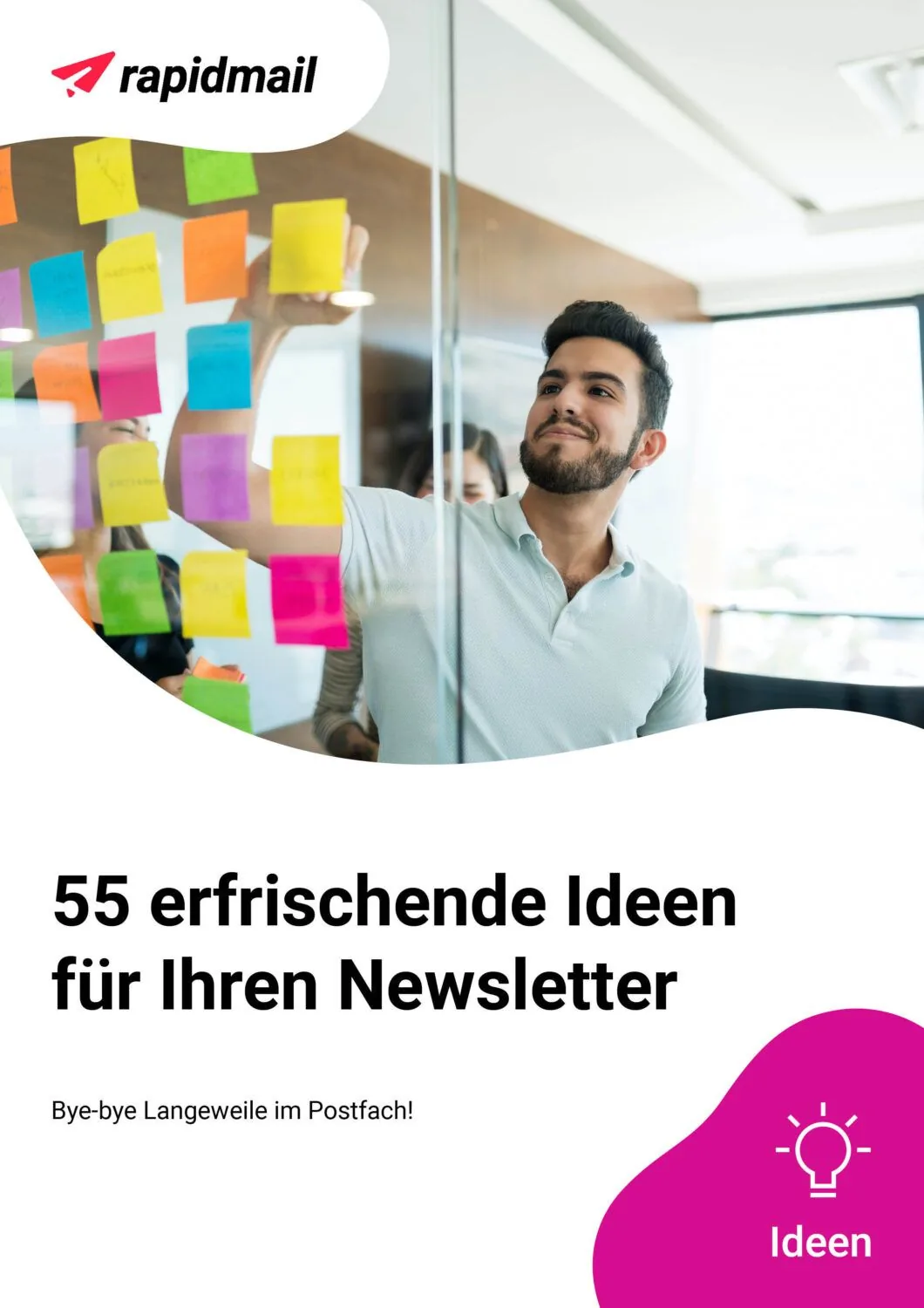
- 🎨 Creative tips for strengthening your relationship with newsletter subscribers
- 💡 Essential expertise on consistently providing good newsletter content
- 👀 Useful best-practice examples to guide you as you optimize your email marketing further
Download the collection of ideas for free now (PDF in German)
Tip no. 4: target recipient groups and increase your open rate
Newsletters are often sent to the complete contact list containing the email addresses of every existing subscriber. Depending on the list’s size, however, it can be difficult to find a newsletter topic that appeals equally to all potential readers. Unfortunately, this often has a negative effect on your newsletters and their average open rate. Many contacts may look at the subject line but not open the email because the topic does not interest them.
We therefore recommend dividing your subscribers into different groups in your newsletter tool and adapting the newsletter for each group. With rapidmail, for example, you can use the segmentation feature to divide subscribers by gender, age or ZIP code. If you also want to assign different areas of interest or buyer groups to contacts, you can give them as many tags as you like.
rapidmail lets you segment recipients by categories such as age, gender or location.
In both cases, you can then include or exclude the desired recipient groups when sending the newsletter. This makes it easy to send targeted newsletters to the cinema fans, new customers, bookworms, people in northern Germany or organic shoppers among your contacts, while increasing your open rate with perfectly matched content.
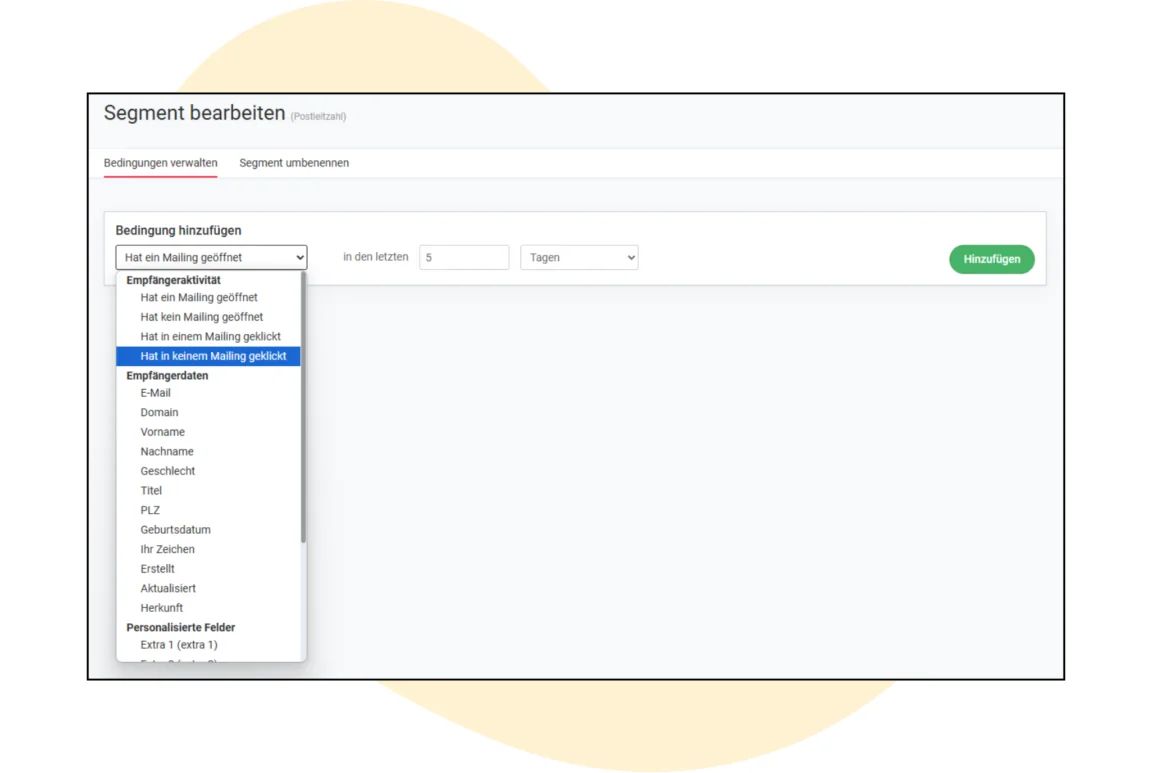
To increase the average newsletter open rate through recipient segmentation, you must first find out what different readers expect from your newsletter. A detailed analysis of your sent campaigns plays an important role, helping you learn a great deal about readers. Once you know which topics hit the mark with different recipient groups, you can create and send newsletters accordingly.
💡 rapidtip
Segmented recipient lists? Yes, please! Segmented sending and targeted contact messaging not only save unnecessary costs by ensuring that the right content reaches genuinely interested contacts. They also increase reader satisfaction while achieving the highest possible newsletter open rates. It is a win-win-win situation!
Tip no. 5: keep contact lists “clean”
Another step toward a higher newsletter open rate is the continuous maintenance of your newsletter contact lists. By regularly removing inactive recipients from your distribution list after they fail to respond to your reactivation emails, you benefit in several ways:
- 💸 You avoid unnecessary sending costs
- 🤝 You preserve your good reputation as a reputable newsletter sender
- 📬 You increase your newsletter open rate, because you send only to contacts who are genuinely interested in your newsletter
Tempting as it may sound, buying email addresses is definitely not the right way to increase newsletter open rates. The people who own these email addresses are not interested in your content and have never officially consented to receive your campaigns. This means they are highly unlikely to open your newsletters and may even move them to the spam folder, which is exactly what you want to avoid.
👀 Did you know?
Although buying email addresses is not expressly unlawful in Germany, the ways in which you can use purchased email addresses are very limited, and sending newsletters is not one of them. Be sure to follow the applicable data protection requirements for email marketing so that you do not face fines or other penalties.
Tip no. 6: increase your newsletter open rate with the right send time
For a good newsletter open rate, it is also important to consider before sending when readers are most likely to be available. Sending the newsletter immediately after you finish it is often not the best option.
Your contacts are most likely to open and read the newsletter when it arrives in their inbox at the right moment. But when exactly is that?
Here is how to choose the right send time based on your target audience:
- 🙋🏻 B2C (business to consumer): if your target audience consists of private individuals, they are likely to be easiest to reach outside working hours, typically during their lunch break, in the evening or on the weekend. While your contacts are working, they are unlikely to have time to browse their private email inboxes.
- 🏢 B2B (business to business): if you send your newsletter primarily to B2B contacts, early morning is a suitable send time, allowing people to read it with their first coffee as the working day begins. Alternatively, late afternoon works well because subscribers can look at your newsletter shortly before finishing work without being pulled away from important projects. Sending on the weekend naturally makes little sense for a B2B audience.
If your contacts cannot open your newsletter immediately, it will not disappear from their inbox straight away. Nevertheless, it will inevitably move further down the list of incoming messages, reducing the likelihood that it will be opened and read later. After all, dozens more emails arrive in readers’ inboxes during the day, catching their eye instead of your newsletter.
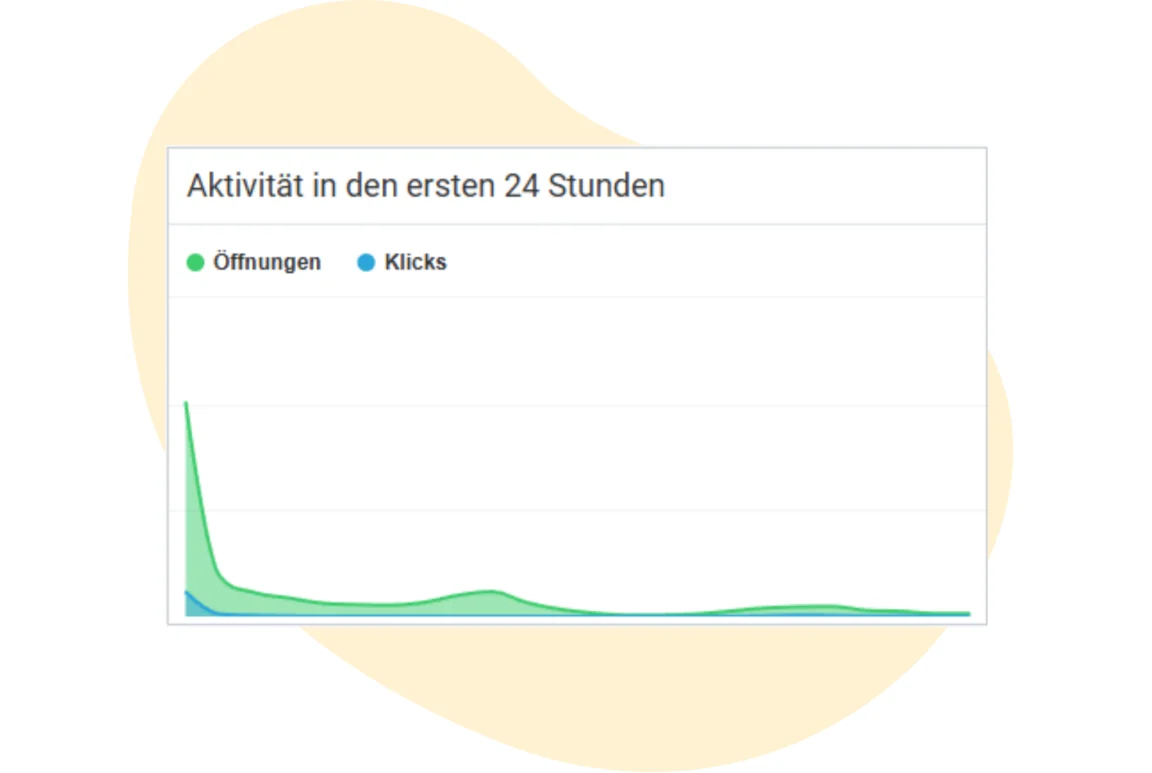
Before sending, consider when your contacts genuinely have time to read your newsletter at leisure. Particularly at first, it is worth testing different send times and comparing open rates to determine the ideal newsletter send time for future campaigns. This will help you achieve an ideal open rate and reach your email marketing goals in no time!
👀 Did you know?
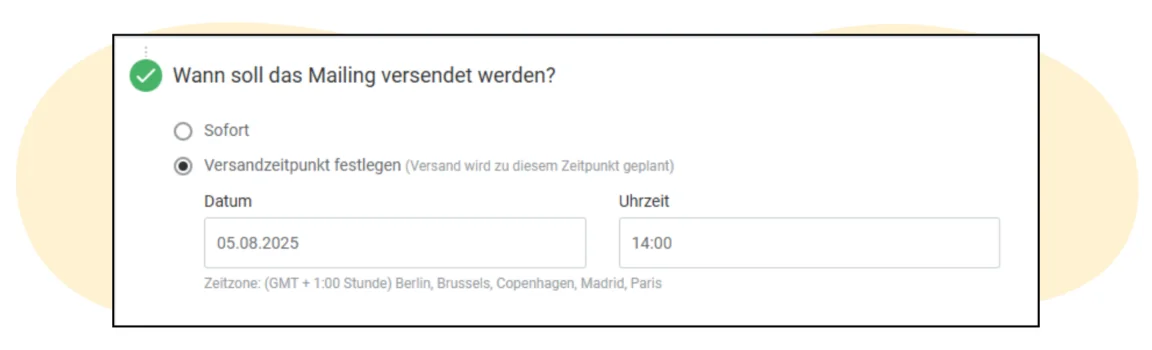
If you want to send your newsletter on the weekend, that does not mean you have to sit down at your desk on the weekend too. Quite the opposite! Most newsletter tools, including rapidmail, offer a scheduling feature: you can finish the newsletter during the week before it is sent and specify the day and time for automatic delivery.
Tip no. 7: ensure correct display on mobile devices
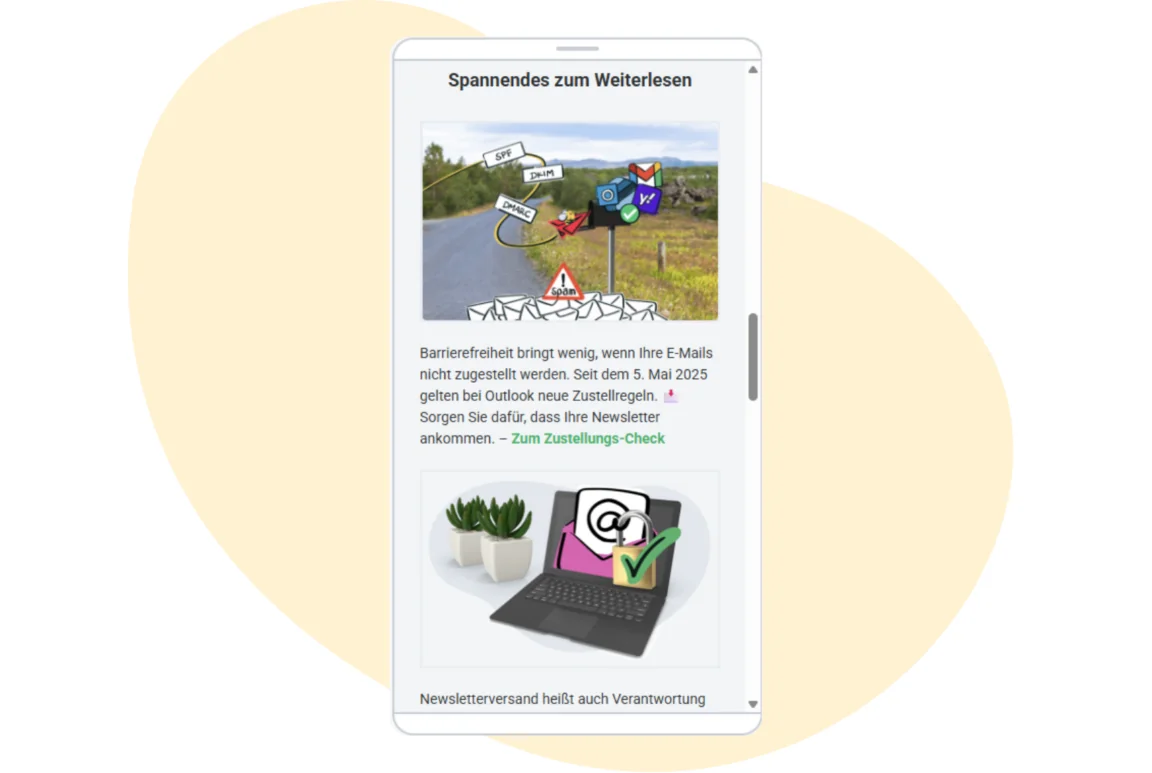
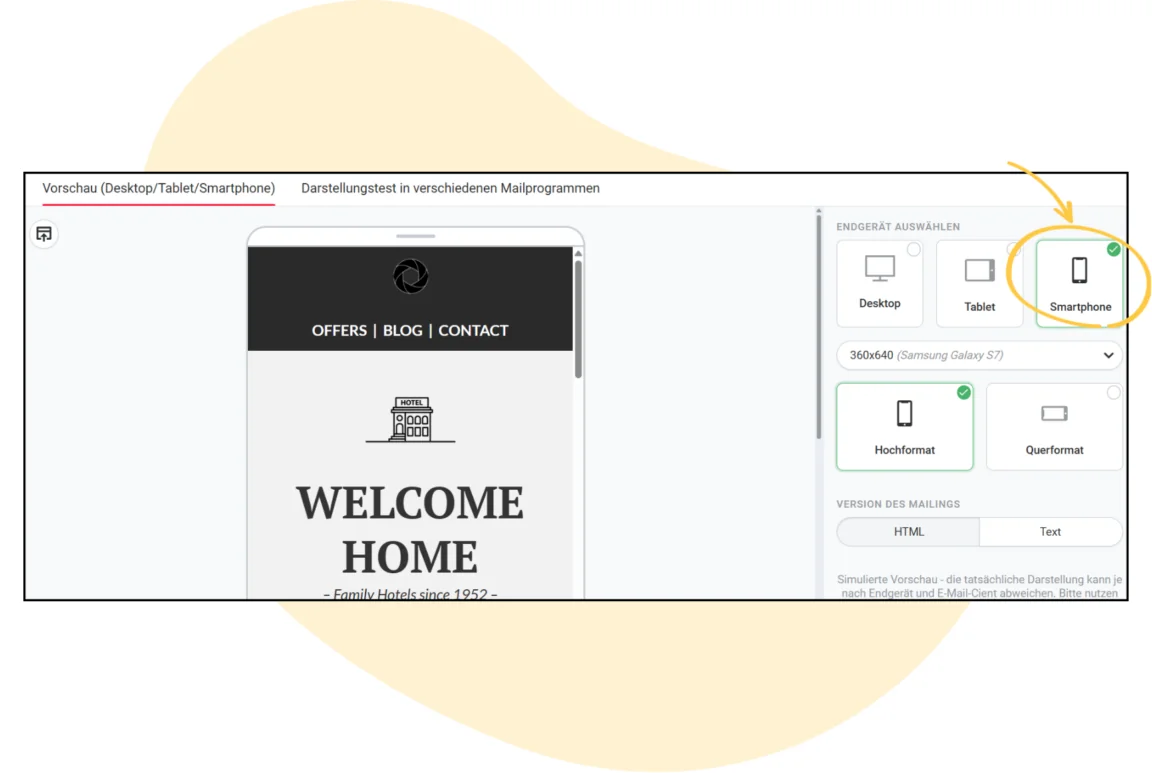
Newsletters are often displayed differently on different devices. As many people now check email on their smartphones, you should make sure your newsletter is displayed correctly on mobile devices and that all links work properly.
If the important elements of your newsletter are scattered haphazardly across the screen on a smartphone, with links too close together to tap separately, your contacts will quickly lose patience with your campaigns. They are then unlikely to make the effort to open your email next time.
Do your best to give contacts a positive reading experience on mobile devices too. With just a little extra effort, you can encourage them to stay engaged and continue looking at your emails in the future. This will naturally be reflected in your open rate!
💡 rapidtip
Every newsletter you send with the rapidmail newsletter tool is automatically responsive, meaning the display adjusts automatically to the subscriber’s device, such as a smartphone. Try it for yourself!
Tip no. 8: increase your newsletter open rate through optimized deliverability
A basic requirement for achieving a good newsletter open rate is, of course, that the emails reach your contacts’ inboxes in the first place. Logically, only delivered emails can be opened.
Alongside regularly cleaning up your contact lists, there are other factors to consider if you want to maximize the likelihood of newsletter delivery:
- ✂️ Minimize email size: your newsletter should not exceed the recommended size of 300 kB if it is to reach readers’ inboxes reliably.
- 🚫 Avoid words associated with spam: avoid using lots of exclamation marks (!!!!!), only capital letters (PLEASE DON’T), or certain trigger words such as “free” and “prize”, particularly in your subject line. Otherwise, spam filters can quickly intervene and stop your email arriving.
- 🔍 Check your spelling: error-free spelling does more than optimize newsletter deliverability. It also strengthens contacts’ trust when no careless mistakes creep into your campaign.
- 🛡️ Implement important authentication methods: these include the DKIM and SPF security standards, which protect newsletter contacts from forged senders while safeguarding your good reputation as a sender. This strengthens your sender reputation and improves delivery rates.
The simplest way to maximize deliverability is to send through a professional email marketing tool. rapidmail, for example, is included in the Certified Senders Alliance (CSA) whitelist. Because rapidmail is listed there, newsletters sent through our servers are delivered more reliably by recipients’ email programs. As a newsletter sender, this minimizes the risk of campaigns ending up in the spam folder. One less worry, and ideal newsletter open rates for you!
💡 rapidtip

Psst… our comprehensive guide contains plenty of useful tips on how to optimize newsletter deliverability easily, helping your emails avoid spam and shine with high open rates instead!
Tip no. 9: send follow-up emails to non-openers
Children who do not want to go to bed, too many emails arriving in the inbox at once, no push notification on a smartphone… there are countless possible reasons why your newsletter was not read and your open rate was not as high as you hoped.
But that is no reason to give up. Simply make a second attempt instead! A follow-up email lets you send the newsletter a second time to every subscriber who did not open it the first time. It is best to send the second campaign at a different time and on a different day of the week from the first. This helps prevent the follow-up from going unopened again because of an unsuitable send time.
👀 Did you know?
rapidmail lets you send follow-up emails in just a few clicks. You can choose between four different recipient groups for your follow-up email.
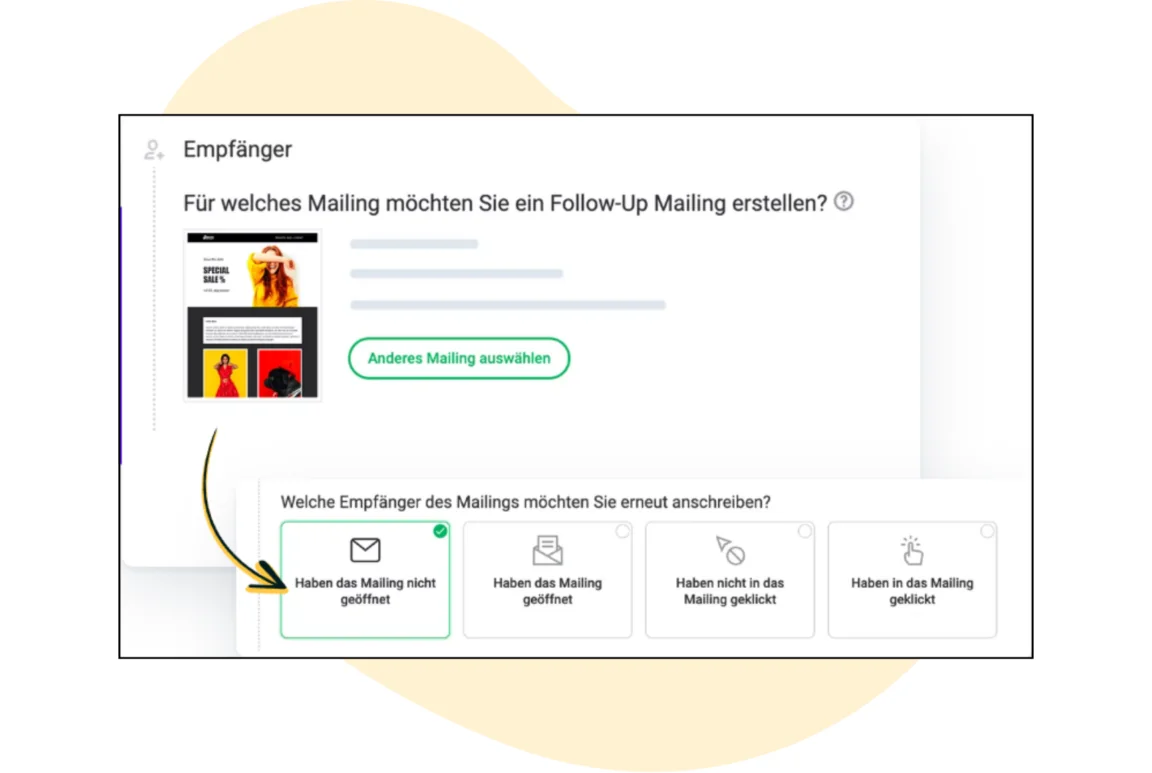
To focus your follow-up on improving the newsletter open rate, we recommend selecting the option “Contacts did not open the campaign”. Contacts who did not open your newsletter the first time will then receive the email again. According to our internal analyses, sending a newsletter again as a follow-up increases the open rate by an average of around 8%. It is certainly worth a try!
But be careful: use follow-ups with caution
Although the newsletter follow-up feature is very useful for achieving additional opens later, do not overdo it by sending countless follow-ups for a single newsletter. Some contacts may find this intrusive and eventually mark your emails as spam, which would harm your sender reputation and, naturally, your newsletter open rates.
Tip no. 10: ask your newsletter contacts for feedback
Have you optimized every possible aspect of your newsletters but still not achieved the email open rate you want? Simply ask your readers directly! Send a separate newsletter to all non-openers with a subject line such as “What can we do better?” to make clear that your contacts’ opinions and satisfaction matter to you.
Constructive feedback helps you get to know subscribers better and align newsletters more closely with their expectations. A survey tool lets you include a survey in the email and ask contacts questions such as:
- 📚 Which subjects interest you?
- 💭 What content did you hope for when signing up for our newsletter?
- 📆 How often would you like to receive our newsletter?
- 💡 What is the most useful content you have received from us so far?
- 🚫 Are there any subjects that do not interest you at all?
- 👀 Is our newsletter easy for you to read in terms of design, structure and length?
- 👍 Would you recommend our newsletter? Why or why not?
If only out of curiosity to see whether you follow through and improve the newsletter in line with their wishes, your contacts are sure to open the next one! Surprise readers with optimized newsletter content. This shows them that customer satisfaction genuinely matters to you and keeps them interested in reading your emails.
4. Conclusion: how to optimize your newsletter open rate
You have made it: you now know our top 10 tips for increasing your newsletter open rate. If this has whetted your appetite and you want to learn even more about improving newsletter opens, we have just what you need:
👀 Have you seen this? How to increase your newsletter open rate
Is there still room to improve your newsletter opens? In this video, our content manager Wiebke explains the possible reasons and how to increase your open rate in no time. Roll the film! 🎬
Open video transcript
Chapter 1: Introduction
Do you send newsletters regularly and put a lot of effort into them, only to find that the open rate leaves much to be desired? Then you have come to the right place!
In this video, you will learn what a good open rate is, how to measure it and, above all, how to improve it immediately with eight practical tips. Let’s get started!
Chapter 2: What is a good open rate?
The open rate shows how many recipients actually opened your newsletter. It is measured as a percentage and displayed automatically in your newsletter tool.
A good open rate is generally between 20% and 30%. However, it can vary considerably by industry. I therefore recommend that you do not compare yourself with others. Look at your own open rate, observe how it develops across different campaigns and try to improve your newsletter open rate step by step.
Chapter 3: Reasons for a low open rate
There can be many reasons why your open rate is still rather low. You might be using an odd or untrustworthy sender address, such as a no-reply address. Your subject line might be a little dull or fail to spark interest, or you may have chosen the wrong send time, such as late in the evening or at a busy time in the inbox. Even the best newsletter is no use if nobody is looking at their inbox. You may also have too many inactive contacts who have not opened your emails for a long time and are dragging down your rate. Or perhaps your newsletter has not provided any value in the past, so people are no longer interested.
By the way: Privacy features used by email providers mean that not every open can be counted reliably these days. You should therefore treat the open rate only as a guide and not take it too seriously. Make sure you also consider other metrics, especially the newsletter click rate.
Those may be the reasons why your newsletter open rate is not yet as high as you would like. Let us move straight on to the tips that can noticeably improve it.
Chapter 4: Quick tips for a higher open rate
First tip: choose a trustworthy sender name.
The sender name is one of the first details recipients see. A personal sender such as “Julia from rapidmail” builds trust and increases the open rate.
Second tip: optimize your subject line.
The subject line determines whether your email is opened. Keep it short, at 50-70 characters, spark curiosity and use emojis to attract attention.
Fortunately, this is really easy with rapidmail because our AI generates individual subject-line suggestions for you. You only need to provide your URL so that the AI can learn about your brand. Directly below, our subject-line check shows how good your existing subject line is and what you could improve.
If you are not yet sure which wording works best with your contacts, an A/B test makes it easy to find out. You can send two versions to a small portion of your contacts and observe which subject line produces more opens. The winning version is then sent to the remaining contacts!
Third tip: use the preheader.
This is the short preview text beside the subject line. Many people forget it, but it is a useful place to add valuable information and spark curiosity about the newsletter’s content.
Fourth tip: choose a good send time.
When it comes to send times, experimenting is the best way to learn. If you feel that few contacts open your emails immediately, try a different time of day. In B2B, it is generally best to send newsletters during working hours, such as first thing in the morning or just after the lunch break. In B2C, early morning or after work may be better. As always, however, these are only guidelines. You must identify the best time for you and your industry.
You can also schedule your newsletter in advance with rapidmail. Simply design the newsletter, choose all your settings and select the desired send time, then there is nothing more for you to do.
Fifth tip: try personalization.
There is another useful way to improve your subject line. Personalization fields let you address recipients directly. A contact’s own name in the subject line can work wonders because it makes them feel personally addressed!
For this to work, ask for contacts’ names in the sign-up form.
Sixth tip: segment your recipient list.
Newsletters are often sent to the entire contact list. Particularly with large lists containing many contacts, it is very unlikely that everyone will be interested in the same topic.
I therefore recommend dividing contacts into different subgroups. With rapidmail, you can use the segmentation feature to separate contacts by gender, age or ZIP code, for example. Tags also let you assign different interests to them.
When sending, you can select the segments and tags for which the current campaign may be relevant, increasing both the share of interested contacts and the open rate!
Seventh tip: win people over in the long term with good content.
More generally, make sure your newsletter provides value. If you launch one discount campaign after another and only ever try to sell, your contacts will feel as if they are watching a constant stream of adverts and will probably stop opening your campaigns eventually. You can find ideas for varied newsletter content in this video too!
Eighth tip: say goodbye to inactive contacts.
Time to say goodbye! Even though saying farewell can be difficult, remember that inactive contacts do not benefit you. On the contrary, they cost you money unnecessarily because your newsletter tool charges you for contacts who have not opened your emails for a long time.
My tip is therefore to send automated reactivation emails to rekindle inactive contacts’ curiosity. In rapidmail, you can use a practical template to create an automated workflow and, for example, automatically send a reactivation email with a special discount after three months of inactivity. If even that produces no result, it is time to remove the contact from your list.
Your recipient list will be smaller, but your open rate will immediately be higher.
Chapter 5: Conclusion
The key lesson from this video is that the newsletter open rate is a good indicator of your target audience’s interest in your emails, but it is not the only measure that matters, as the click rate is much more informative, for example.
If you send your newsletter at the right time with an interesting subject line and preheader, personalization and a trustworthy sender profile, include compelling content and regularly remove inactive contacts, nothing stands in the way of high open rates!
So test plenty of ideas, keep going and be patient. As always, the goal is not to be perfect, but to improve.
Let me know in the comments which tip helped your newsletter open rate most, or what interesting observations you have made yourself.
I would be delighted if you gave the video a thumbs up and subscribed to our channel so that you do not miss any more tips on successful email marketing!
Thank you for watching, and see you next time!
As you can see, there are countless ways to improve your newsletter open rate. Approach the subject step by step and work out which tips you already follow and which are easy for you to implement. You will see: it is worth it!
Creating your campaigns is sure to become even more enjoyable when the metrics in your newsletter reporting show your open rate rising steadily and your email marketing really taking off! 🚀