What is mass advertising, and does it still work today?


Newsletters are now among the most popular communication and advertising tools. It is hardly surprising: advertising content can be sent quickly and cost-effectively by email, reaching recipients almost anywhere thanks to modern smartphones. You might therefore assume that the more recipients a campaign reaches, the better it is. Well, yes and no. We understand that you want to make as many people as possible aware of your company, products, services and offers. In this article, we explain why we advise against bulk emails, the disadvantages of mass advertising and the better alternative for your email marketing.
1. What exactly is mass advertising?
Most people have a rough idea of what advertising is. That is hardly surprising, as we encounter it every day, whether at the bus stop, on the car radio, through the letterbox or on a smartphone. You can probably even think of a few familiar slogans straight away when you consider advertising…
Even so, a short definition is a useful place to start: advertising is the distribution of information to the general public, specific target audiences or individuals through various communication media, with the aim of influencing opinions. When advertising messages are sent to the general public, meaning the largest possible target audience, this is known as mass advertising.
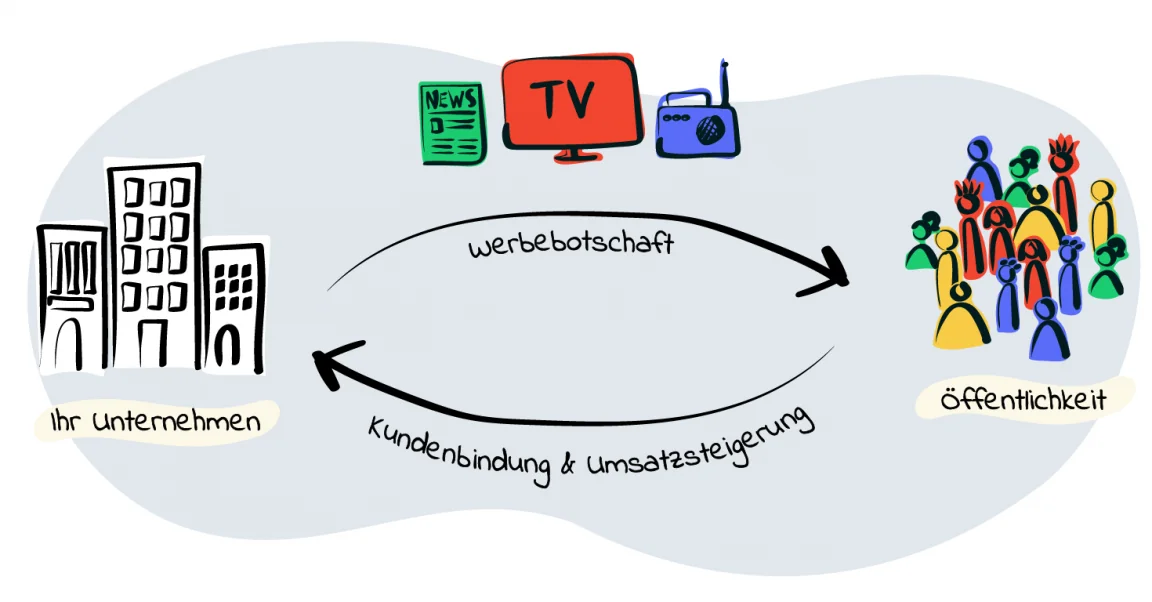
Advertisers pursue various objectives, but above all they want to inspire and convince the recipients of an advertising campaign and encourage them to take the desired action. Other important objectives of mass advertising include:
- Selling products or services to increase revenue
- Winning new customers
- Retaining existing customers
- Reactivating former customers
- Increasing the company’s profile and expert status
- Creating a positive brand image
2. What forms of mass advertising are there?
Traditional mass advertising channels include:
- Outdoor advertising, such as billboards
- Print media, such as newspapers, magazines, brochures and flyers
- Radio, television, cinema and the internet
These vast communication channels certainly offer a number of benefits. However, they cannot compete with the compelling arguments for email marketing: newsletters are cost-effective and highly efficient. Because you always need your recipients’ email addresses and cannot simply address the general public, newsletters are not actually a form of mass advertising. Nevertheless, the term bulk email is used when emails are sent to thousands of recipients without addressing them personally with individual advertising content or tailoring that content to their interests.
👀 Important: sending newsletters to purchased email addresses is illegal.
There are many reasons not to buy email addresses, even if it may seem tempting at first to expand your recipient list with thousands of purchased addresses and send advertising messages as bulk emails to a huge audience. In practice, however, this is not possible because you may not send advertising emails without recipients’ express consent. Furthermore, the people behind purchased addresses are by no means necessarily prospective customers.
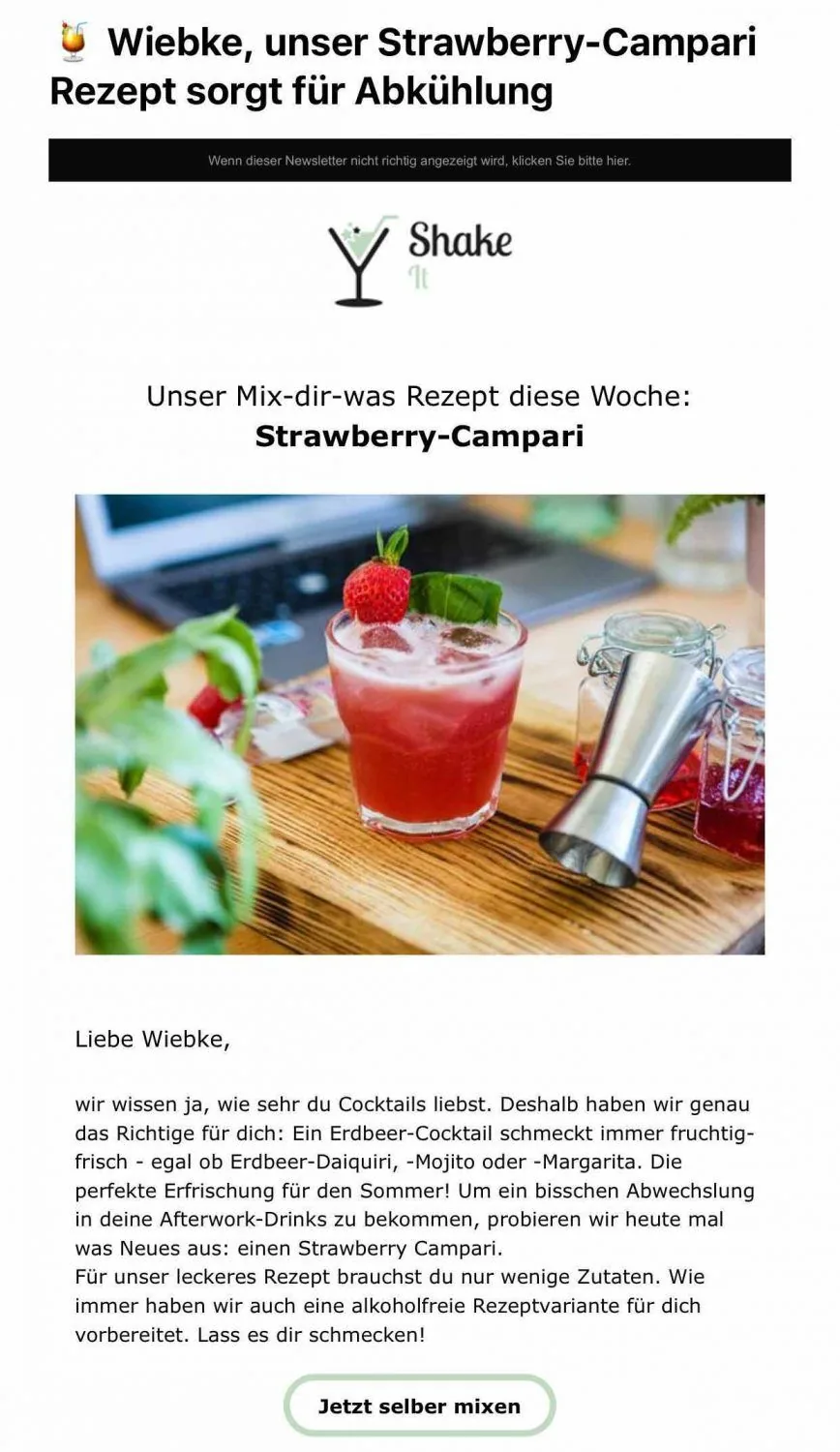
As you can see, email marketing is not mass advertising. At the same time, you should not send large volumes of unpersonalized emails to as many recipients as possible. If you want your campaign not only to land in many subscribers’ inboxes but also to be opened and read with enthusiasm, you need to consider other aspects too. Prioritize a good sender name, an appealing subject line and relevant, original content that leaves readers wanting more. An imaginative name for your newsletter is another excellent way to get lots of recipients excited about your campaigns.
💡 rapidtip
You do not need to be a design or technology expert to create an appealing, successful newsletter. With rapidmail’s email marketing tool, you can intuitively create your first campaign in just a few minutes. Numerous segmentation options, including location, interests and purchasing behavior, allow you to send targeted newsletters. This helps you achieve your marketing goals faster, without any mass advertising.
3. What are the disadvantages of sending bulk emails?
If you have already gained a large number of newsletter subscribers, without buying them, of course, sending bulk emails requires relatively little work compared with other advertising strategies. However, bulk email also carries several risks that overshadow this apparent increase in efficiency. If you are still considering sending bulk emails, you should be aware of the following disadvantages:
- Poorer deliverability: If your recipient list is very long, you risk sending emails to inactive addresses, which in turn leads to many bounces. The risk of email providers classifying you as a spam sender increases. There is also a strong chance that some recipients will find the impersonal content of your campaign less interesting and therefore mark the email as spam.
- Lower open rate: Impersonal bulk emails are unlikely to build trust or establish an individual relationship with readers. This increases the risk of the newsletter being sent unopened to the trash.
- Lack of personalization: Without addressing prospective customers directly, your campaign may feel impersonal. If the content is also dull and constantly repeated, this could result in more newsletter unsubscribes.
- Little potential for improvement: Bulk sending can also be of little value to you as a newsletter sender. You will gain hardly any new information about the individual interests of your target audience that could be used for further product development.
- Information overload for recipients: Bear in mind that a huge number of emails compete for your subscribers’ attention in their inboxes every day. If they are not interested in your campaign, they will not make the effort to read it. That is why it is important for recipients to have a fundamental interest in the content of your email and for you to present it attractively with the ideal image-to-text ratio.
- Higher costs: When you contact as many people as possible instead of a clearly defined target audience, newsletter sending costs rise considerably. By selecting clearly defined customer segments, however, you can significantly reduce your email marketing costs.
Conclusion: bulk emails have a significantly lower success rate than individual direct mailings tailored to customers’ interests. Sending mass advertising by email will not bring you any closer to your email marketing goals. The sayings “the more, the better” and “there is strength in numbers” do not necessarily apply to newsletter sending.
The rapidmail newsletter
Tips, ideas and news about email marketing, straight to your inbox.
4. Are there better alternatives to mass advertising?
Good news: yes, there are. When advertising messages are not directed at the general public but individually tailored to prospective customers, we call it direct marketing. Newsletters, advertising letters and telephone marketing all fall into this category. Unlike mass advertising, targeted direct advertising offers the crucial advantage of being more personal and therefore adaptable to the specific interests of your target audiences. This makes direct marketing through newsletters one of the most efficient marketing channels and a far better alternative to bulk emails.
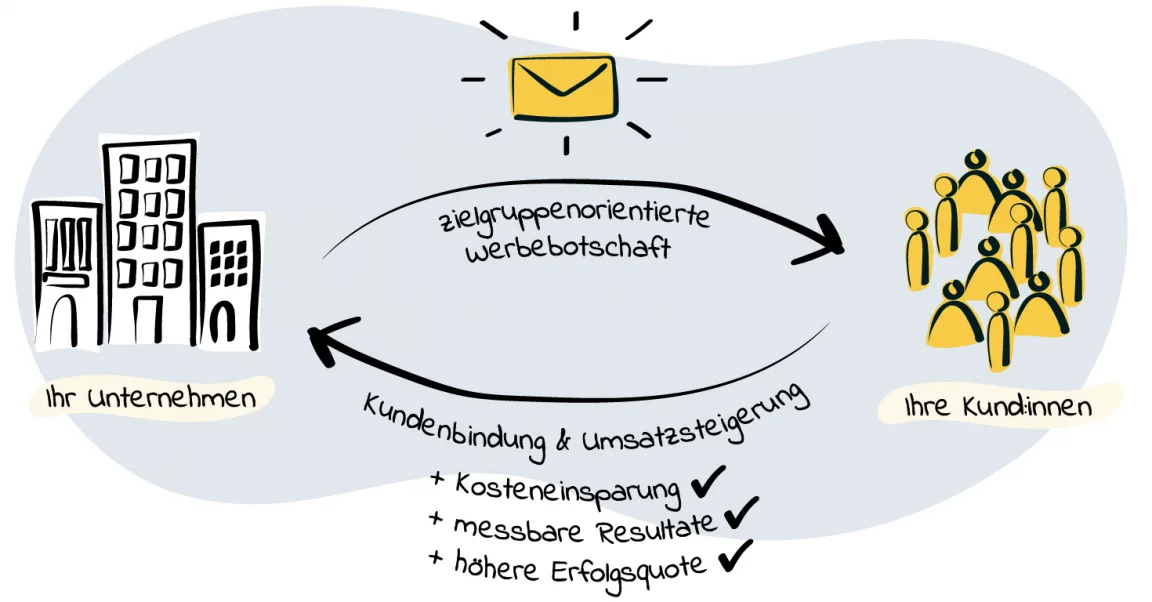
Think about your own email inbox. Perhaps you are interested in books, wine and exciting travel offers. How would you react to a newsletter about fishing equipment or children’s toys? You probably would not read the newsletter or even open it. You might unsubscribe or, at worst, move it to your spam folder. Whatever happens, bulk emails do not reflect well on their senders, which is why we strongly recommend targeted direct marketing.
For you as a newsletter sender, this means:
- Tailor your email content to your readers’ interests and address them personally. For example, you can use our various personalization features to address prospective customers easily by their first and last names, motivate them to buy with personal coupon codes or surprise them with birthday emails.
- It is also important to clean up recipient lists regularly and contact only people who are genuinely still interested in your newsletters. This is the only way to ensure that your advertising messages actually reach potential customers.
- Segment your recipients so that your newsletter addresses its target audience individually.
- Last but not least, assign tags to your newsletter subscribers. rapidmail’s tag management allows you to categorize recipients by factors such as purchasing behavior or particular areas of interest, enabling you to send newsletters that are even more closely tailored to them.
💡 rapidtip: win new subscribers with original sign-up options.
If your recipient list is not yet endless, you can gradually expand it with little effort. The first step toward making website visitors interested in your newsletter is to use inviting newsletter sign-up forms, which you can add to your website as a pop-up, for example. You can design these directly in your rapidmail account with just a few clicks. Already have a modern sign-up form? Get inspired by our other original ideas for winning new newsletter subscribers.
Learn all about the alternatives: free email marketing ebook for beginners
So, email marketing is a better alternative to sending bulk emails. But what exactly is email marketing, what benefits does it offer different types of business and how do you get started? You will find all the answers and other important email marketing basics in our free ebook for beginners. 💡
No time to read everything right away? No problem. Simply download the ebook and “open” it again whenever you want to look something up.
Download the free email marketing ebook for beginners (PDF in German)
5. Conclusion: quality over quantity
So, does quality beat quantity when sending newsletters? Absolutely! A newsletter does not automatically become more successful simply because it has a particularly large number of recipients and is sent as a bulk email.
It is time to create and send targeted newsletters for your direct marketing campaign. With rapidmail as an intuitive, 100% GDPR-compliant email marketing tool, you can design appealing campaigns in just a few clicks and send them to prospective customers.