Personalization as a success factor in email marketing
 Lea·
Whether at the weekly market, your favorite pizzeria or the café around the corner, it feels good to be recognized and greeted personally. Personalized messages make us feel good not only in everyday life, but also in the digital world. So why does personalization play such a major role in email marketing?
Table of contents
1. Personalization in email marketing: what does it mean?
As digitalization advances, processes and workflows are becoming increasingly automated. Databases are generated without manual effort, emails and newsletters can be sent automatically to large recipient lists, and support on websites is often provided through chatbots. Personal relationships with customers are frequently lost in the process.
Yet this personal connection is essential to many customers. According to one study, 72% of consumers say that personalized messages are a basic requirement for them to consider interacting with a company (source: SmarterHQ).
Email marketing opens many doors here without requiring a great deal of effort. Newsletter senders can use data that subscribers have already provided, for example when signing up for the newsletter. Personalized emails can quickly prevent individual readers from being lost in the crowd. Instead, they feel valued, customer loyalty is strengthened and a relationship of trust develops between customers and the company.
We therefore recommend: use the data available to you. First and last names are the most obvious option, but you can also analyze and use a customer’s place of residence, abandoned baskets, purchases and click behavior for personalization. This is guaranteed to improve the customer experience!
One important legal requirement for personalization is that you must be permitted to use your contacts’ data. In other words, you need your contacts’ consent to process their data. Your terms and conditions should describe exactly which data you collect and for which purposes. Subscribers then give their consent by accepting your terms and conditions in the newsletter sign-up form.
💡 Our tip:
Newsletters let you reach many people simultaneously with little effort and at low cost. However, recipients can easily tell whether a message is tailored to them or whether they have received an impersonal mass email, so always opt for personalized newsletters.
2. The advantages of personalized newsletters at a glance
How do personalized emails affect the customer experience? A direct comparison quickly shows that personalized newsletters excel in many areas and delight customers.
| Personalized emails | Emails without personalization | |
|---|---|---|
| Customer relationship | Personal level: building trust and customer loyalty | Impersonal form of communication |
| Content design | Adapted content: content can be tailored to customers | Content is not personalized and has no individual impact |
| Customer response | More positive customer response: customers feel personally addressed | Customers may become indifferent because campaigns are automated |
| External perception | Company seems more approachable and human: customers feel they are treated as people | Company seems faceless: customers feel less valued |
| Relevance | More relevant in the inbox: a personalized campaign catches the eye immediately | More easily overlooked in the inbox: looks like mass advertising |
| Open rate | Higher open rates: customers are more likely to read a campaign when their name appears in the subject line | Lower open rates: more often deleted unread |
| Sales rate | Higher transaction rates: customers who feel personally addressed are more likely to buy something | Lower transaction rates: non-personalized offers provide less motivation to buy |
3. What to bear in mind for successful personalization
It all sounds very promising, but there are several aspects you should bear in mind.
Naturally, customer data must be correct or the personalization will fail completely. Data quality is therefore extremely important, as a misspelt name or incorrect form of address looks unprofessional. If you are unsure about your customer data, it is better to omit personalization when in doubt.
👀 Did you know?
Your newsletter sign-up form may only make the email address compulsory, as required by law. Other fields, such as customers’ first and last names, must be optional.
Your newsletter content must also remain equally compelling. Send relevant content and strike the right balance between sending newsletters too rarely and too often. After all, recipients should neither forget you nor become annoyed by a huge flood of emails. Addressing customers personally is an important step, but it is not the complete package for a perfect newsletter.
Finally, you should check the personalization setup in your newsletter with a test email before the actual send.
👀 How do I obtain customer data?
To learn more about your customers, you could include a short questionnaire for recipients to complete in the sign-up form. For example, they can select which topics they want to hear about by newsletter or provide their date of birth to receive a small surprise in a birthday email.
4. Ways to personalize newsletters
So what options let you tailor newsletters to subscribers without creating problems with time or organization? We have taken a closer look at newsletter structure to find out which newsletter elements are suitable for personalization.
👀 Did you know?
You can also give your newsletter its own name. A creative newsletter title such as “Friends of Trends” gives it distinctive branding. The name can reflect your campaigns’ main theme and should be repeated regularly so readers remember it. Higher open rates and stronger customer loyalty will follow.
“Obvious” personalized features:
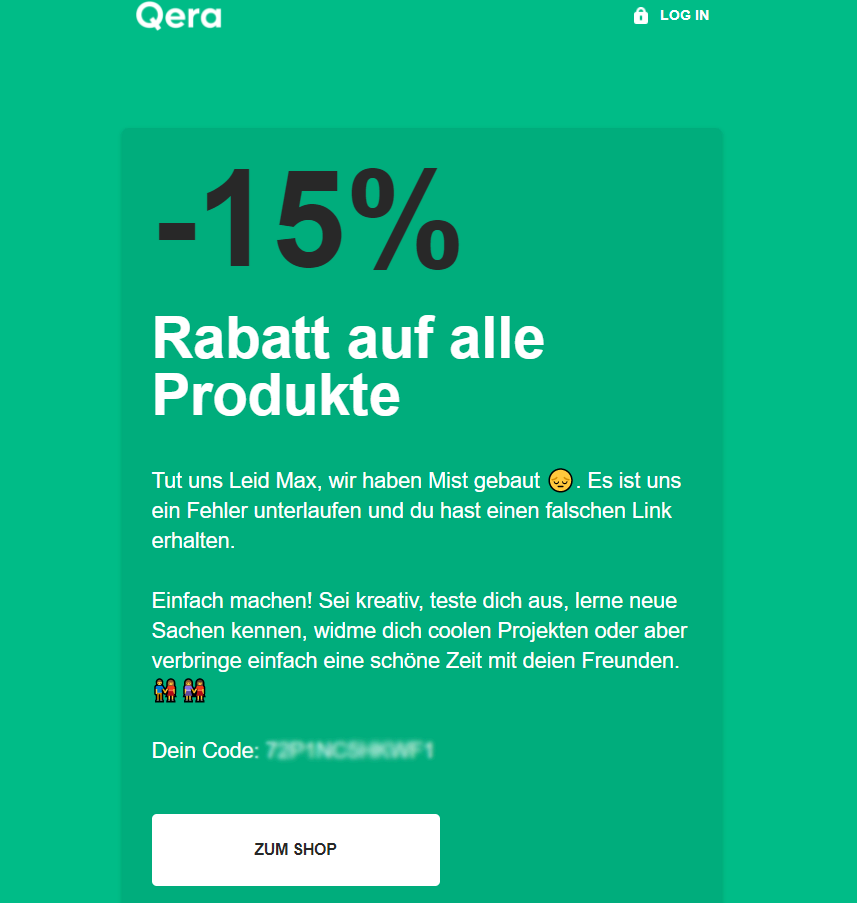
- A personalized subject line: the subject line is one of the first things a newsletter recipient notices. It is therefore especially important for it to be memorable and feel personal. Using variables applied to your recipient lists, you can address recipients by name in the subject line.
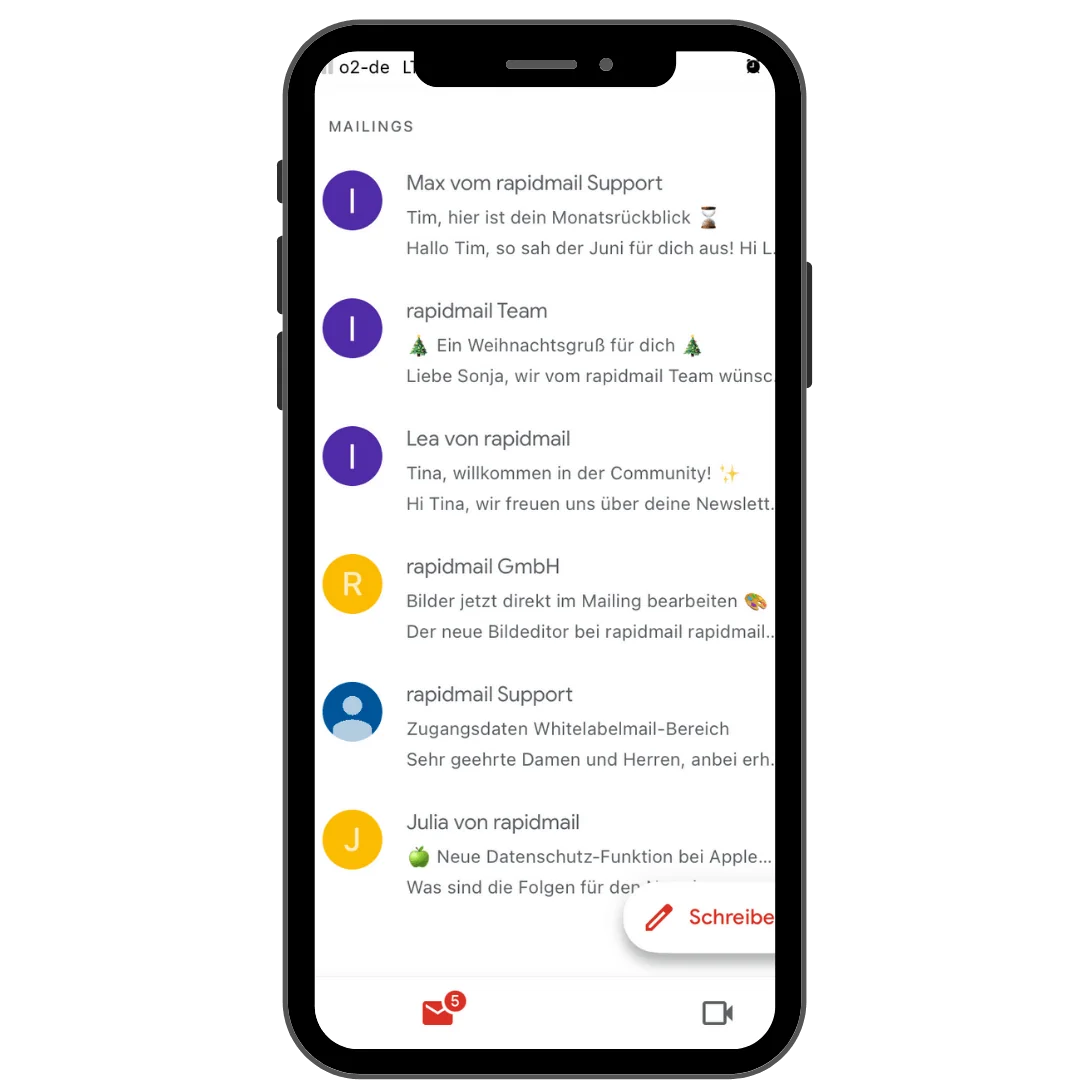
- A personalized sender: personalizing the sender makes customers feel that they are interacting with another person. Combining a name with the company name (Max from rapidmail) or a specific department (Max from rapidmail Support) helps readers understand where your newsletter comes from and who they are dealing with.
- A personal signature: this ties in with a personal signature at the end of the newsletter, which gives your newsletter an authentic touch. Sign the newsletter with the name of the person who wrote the email. To go one step further, you could even add a suitable photo. This gives readers an idea of who they are dealing with.
- A personal salutation: you can, of course, use a personal salutation in the email itself. Whether you choose formal language (“Dear Ms Smith”) or a relaxed approach (“Hi Anna”), recipients will appreciate not simply being greeted with an impersonal “Hello customer” or “Dear Sir or Madam”.
“Hidden” personalized features:
- Option to reply: do not send newsletters from a noreply address. Instead, give subscribers the opportunity to send questions, feedback or similar responses. This gives subscribers a degree of involvement and the sense that they can contact you at any time.
- Creating closeness through language: your wording can also help you build a more personal relationship with customers. Use a friendly, open style in your newsletter that reflects your company’s personality or values.
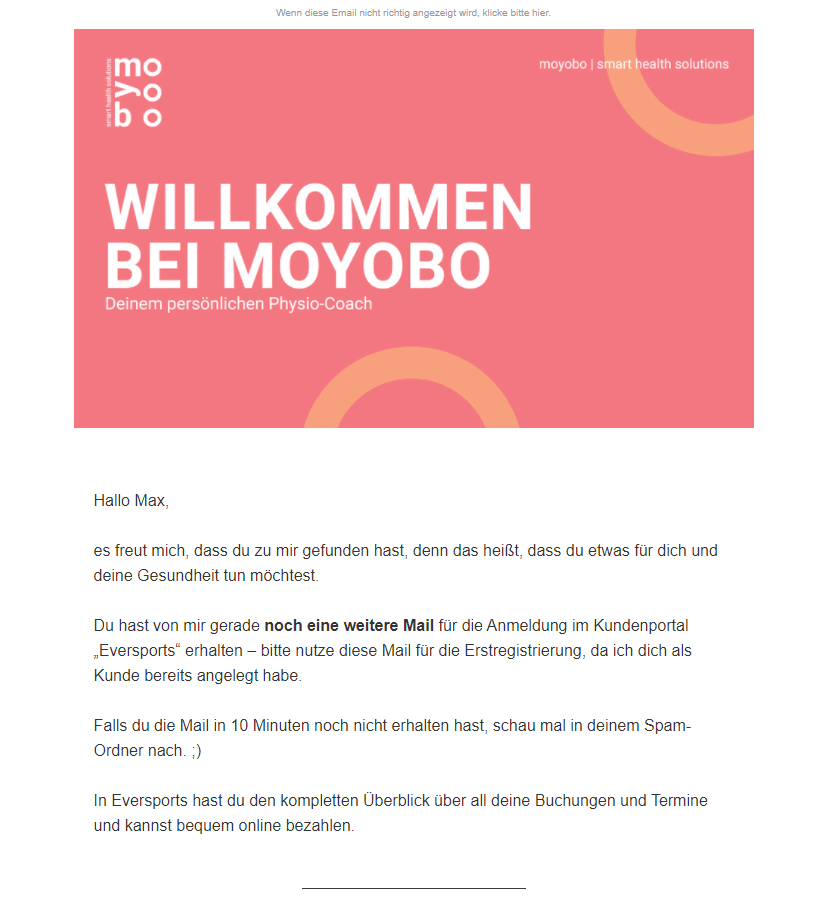
- Original content: your newsletter content does not always have to be purely professional. Shine with varied content and occasionally surprise readers with creative and entertaining email content. This keeps subscribers engaged and helps you build a personal connection with them.
- Recipient segmentation: once you have identified recipients’ interests, for example from their click behavior, their own details or their purchasing behavior, you can segment them to tailor content for different recipient groups. More segmentation can quickly lead to more revenue, while customers are happier because they receive newsletters that are better suited to them.
There are no particular occasions on which personalized newsletters must be used. Events such as customers’ birthdays are, of course, especially suitable for sending a personalized campaign, but the general rule is that well-executed personalization is an absolute success factor in email marketing.
At the end of the day, your subscribers are people just like you and us! Use various newsletter personalization strategies to show readers that their satisfaction matters to you and that you value them. The possibility of higher open and conversion rates is, of course, a particularly welcome bonus!
The rapidmail newsletter
Tips, ideas and news about email marketing, straight to your inbox.
5. Sending personalized emails: how it works with rapidmail
Below, we show you in several steps how to personalize your campaigns easily and efficiently with rapidmail.
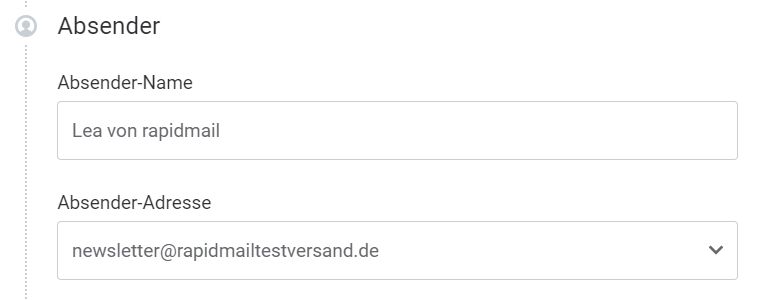
Let us start with the sender address and sender name. No matter which email address you use to send your newsletter, you can always customize the sender name. This lets you give your campaign a personal touch from the very first steps. Good options include a company name combined with the sender’s name, the company department or something similar.
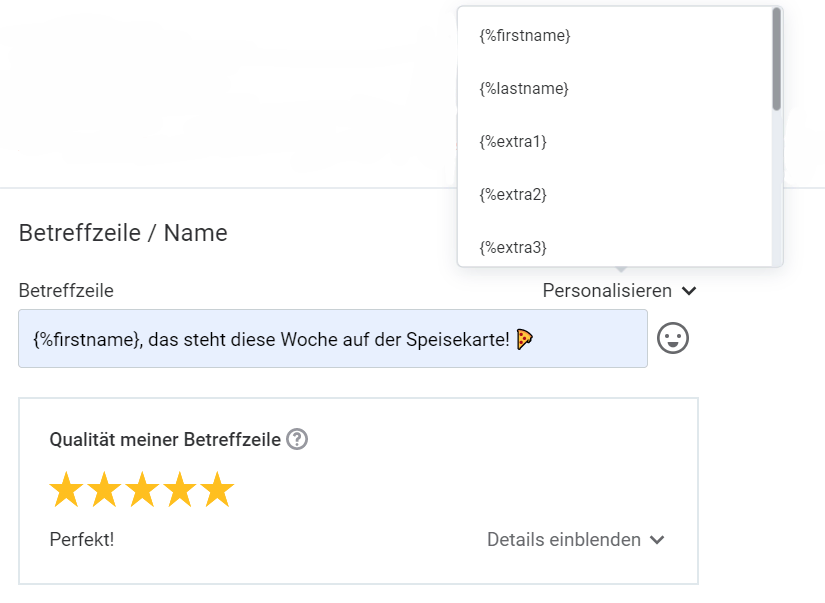
Next comes the subject line. As mentioned earlier, this is one of the first things recipients notice. Various variables let you select recipients’ first and/or last names, for example, so they are automatically taken from your recipient list. You will then receive brief feedback on the quality of your subject line.
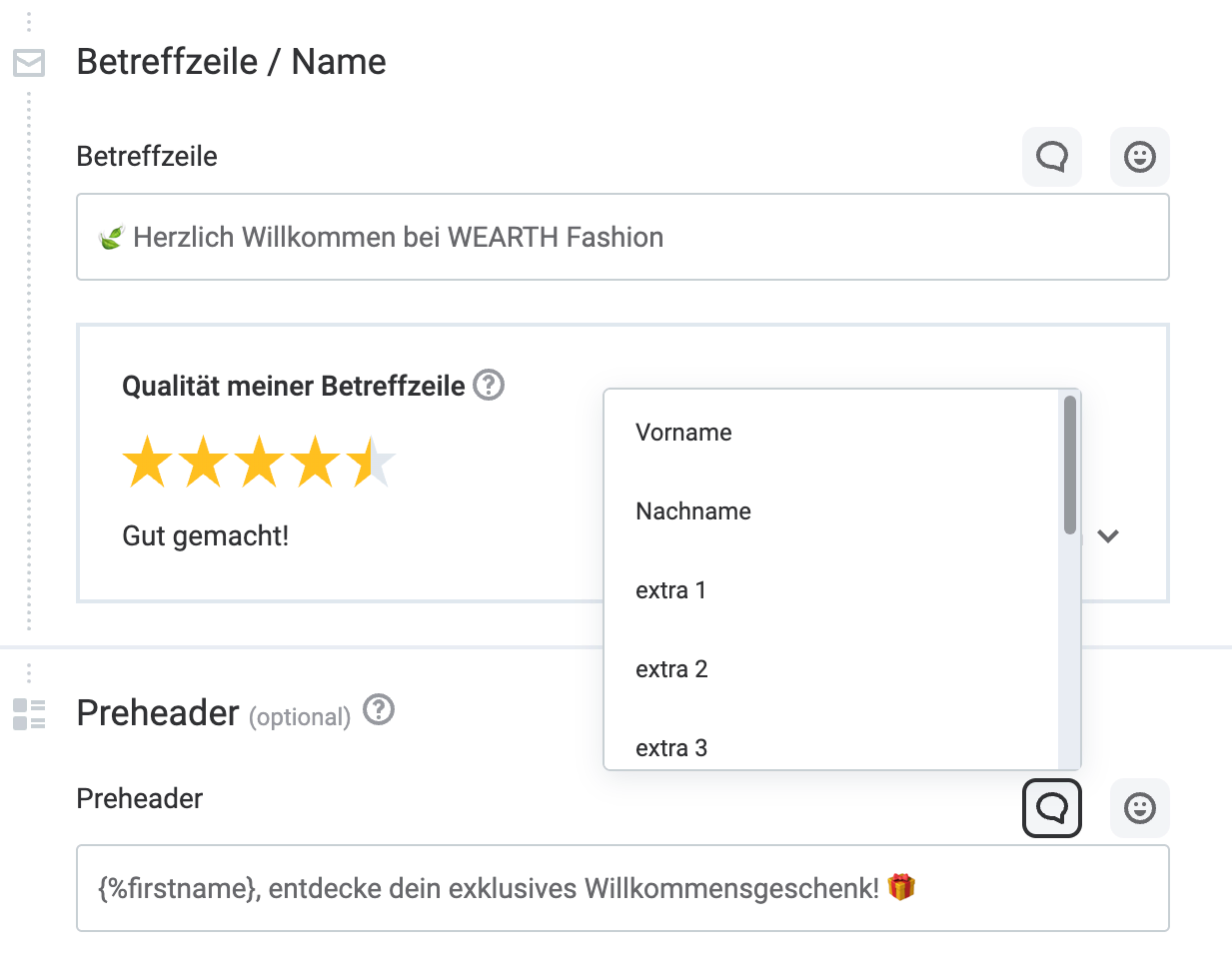
The preheader is also easy to personalize with rapidmail. As with the subject line, you can choose the most suitable option from a list, and it will then automatically pull the data from your recipient list.
The next step is creating the email content. This also offers plenty of scope for personalized content and presentation. Let your creativity run free and use personal customer salutations, relaxed language and inspiring content.
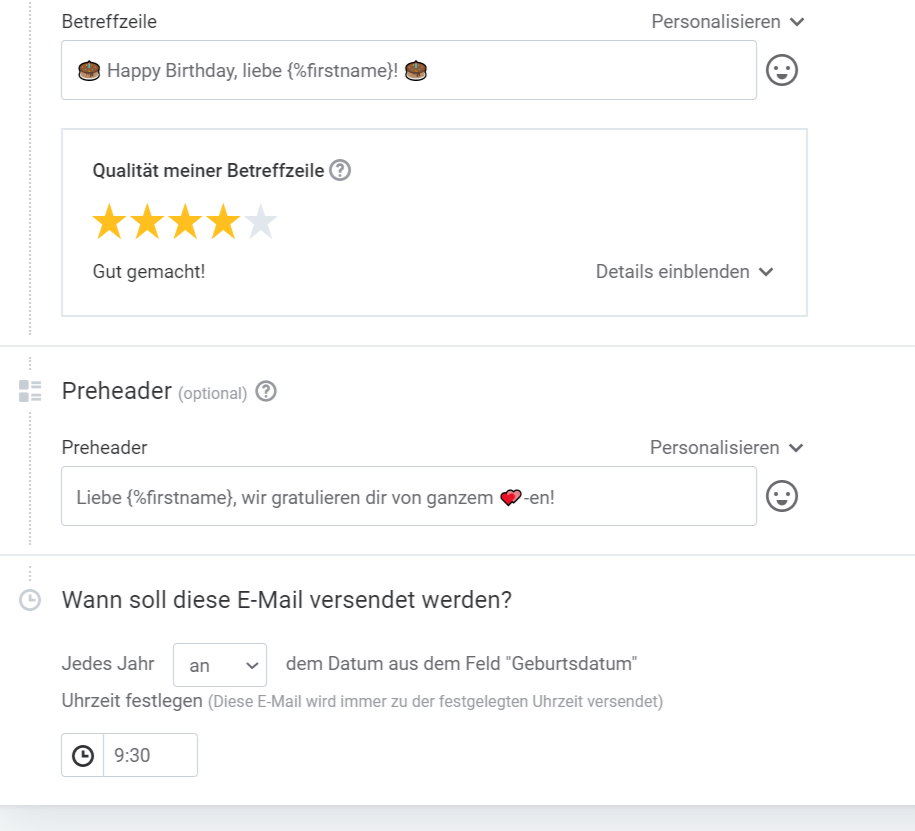
You can also use rapidmail as an email automation tool. It is particularly suitable for individual automated emails marking special, recurring occasions such as customers’ birthdays.
Finally, you can use our A/B tests to check the success of your personalized campaigns. Test whether campaigns with a personalized subject line or direct contacts in the email sender field are more effective than newsletters without a personal approach.
To do this, create a new campaign as usual and, in the first step, select the “A/B test” checkbox under Options on the right. You can now use the “Add” button to test a different sender name and two different subject lines.
Do you have questions about newsletter personalization? Do not hesitate to contact our support team.
Or simply give it a try!