The email marketing trends for 2026 you definitely shouldn’t miss

The latest email marketing trends for 2026 make one thing clear: newsletters remain one of the most important marketing channels. While social media reach fluctuates and advertising costs rise, email marketing gives you full control over your communications, directly in your customers’ inboxes. This year also brings further challenges and opportunities: smart inboxes, AI and subscribers’ rising expectations require a rethink. We show you the most important email marketing trends for 2026 that you should know to achieve your goals this year.
🥜 In a nutshell: the most important email marketing trends for 2026
The latest email marketing trends for 2026 show that smart inboxes, changing KPIs and new technological opportunities such as AI require a rethink, while opening up major opportunities for businesses that develop their newsletter strategy this year.
Newsletter trends at a glance:
- 1️⃣ Smart inboxes: Email providers increasingly decide what gets seen. Relevant, well-segmented content reaches the top of the inbox.
- 2️⃣ Bye-bye, open rate: Opens are becoming less meaningful. Clicks, conversions and long-term engagement are taking center stage.
- 3️⃣ Regular touchpoints: Consistent newsletter communication beats isolated peak campaigns and builds lasting trust.
- 4️⃣ AI as a creative sparring partner: Artificial intelligence helps with ideas, structure and efficiency, while the personal connection with customers comes from you.
- 5️⃣ Accessibility becomes standard: Readable, accessible newsletters improve usability, engagement and inbox placement.
- 6️⃣ Minimalist designs: Clear structures, plenty of white space and pared-back designs improve readability and strengthen CTAs.
rapidmail makes it easy to put these trends into practice, from segmentation and automation to meaningful analysis and modern, accessible newsletter designs.
1. Email marketing trend: smart inboxes
One of the biggest changes in email marketing in 2026 is happening where every newsletter arrives: the inbox. Inboxes from providers such as Apple Mail, Gmail and Outlook are becoming increasingly intelligent. The aim is clear: users should receive even better, more reliable protection from irrelevant, interchangeable and, above all, disreputable spam emails.
For you and your business, this means it is no longer enough to “simply” send a newsletter. Whether your email is visible to your contacts and where it appears in their inbox is increasingly decided by the email provider itself.
What are smart inboxes?
Smart inboxes analyze user behavior and make automatic decisions based on this data. For example, they assess:
- 👀 How often someone opens your emails
- 👆🏻 Whether they click on content
- 📩 Whether emails are read, answered or deleted
- 📁 Whether your newsletters are moved to other folders
Based on these signals, email providers assess and prioritize incoming messages. Relevant content with high interaction rates is more likely to reach the main inbox, while less relevant emails disappear into promotions tabs, collection folders or, in the worst case, straight into spam. Purely promotional newsletters with no real added value therefore find it increasingly difficult to reach recipients directly.
👀 Did you know?
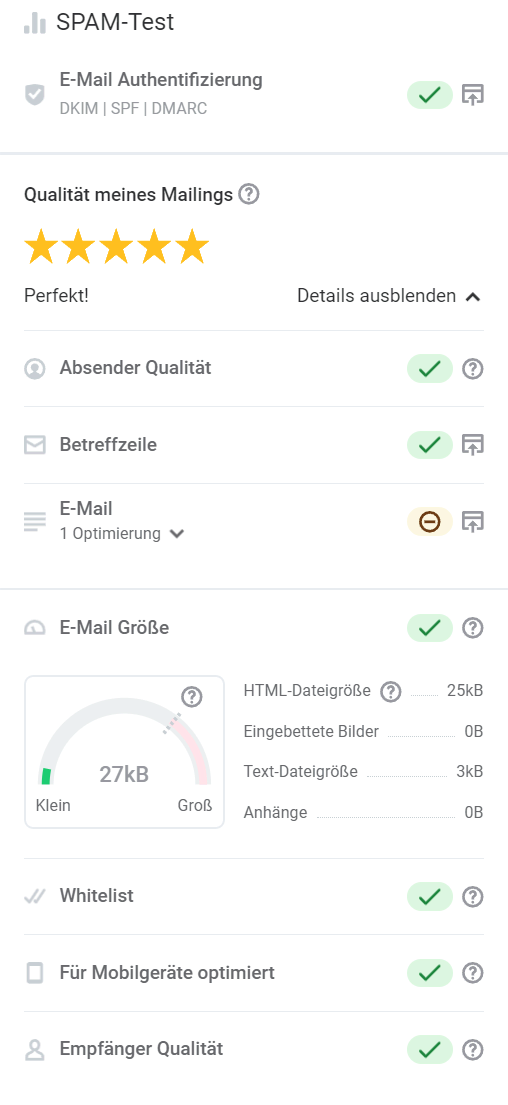
The rapidmail spam test lets you put your newsletter’s deliverability thoroughly through its paces before sending. The spam check reviews all the key criteria that spam filters generally consider when assessing email quality and, where appropriate, gives you tips on how to optimize deliverability even further. It helps prevent your newsletters from ending up in your contacts’ spam folders, or from not being delivered at all.
Why smart inboxes matter so much
Email providers increasingly face the same challenge as your newsletter contacts: too many messages, too little time. Users want tidy inboxes, relevant content and as few distractions as possible. This is precisely why providers such as Gmail and Apple Mail increasingly use intelligent algorithms that filter, sort and prioritize in advance, making life a little easier for recipients.
For your email marketing, this means a clear change in perspective: reach is no longer determined by the sender, but by the value of your content. Anyone who continues to rely on interchangeable mass emails will gradually lose visibility. If, on the other hand, you provide relevant, well-timed content, you can actively secure your place in the inbox and even strengthen it over the long term.
How to secure your place in the inbox in 2026
The good news is that smart inboxes are not an obstacle, but an opportunity. They do not penalize newsletters as such; they reward good, clean, user-centered email marketing. If you pay attention to a few fundamentals, you need not worry about the visibility of your newsletters in your contacts’ inboxes in 2026:
1. Authenticate your sender domain
One of the most important requirements for good inbox placement is sender authentication. This involves adding specific security records that tell your contacts’ email providers: this sender is trustworthy and legitimate.
Authenticated domains signal that you have no fraudulent intent, follow the email providers’ current delivery guidelines and handle your email sending responsibly. This not only increases the delivery rate, but also the likelihood that your newsletters will be categorized correctly instead of disappearing into spam or promotions folders.
2. Create genuine relevance
Perhaps the most important point to remember for your email marketing this year is: one email for everyone no longer works.
The more intelligent inboxes become, the more rigorously they filter. Generic mass emails cannot possibly be relevant to all your contacts at once, so they will slowly but surely lose visibility among your entire target audience.
Instead, you need to reach the right contact with the right content at the right time. Segmentation and automation are the main ways to achieve this:
- 🗃️ Segmentation: Divide your contact list into meaningful groups, for example by interests, location, purchasing behavior or previous interactions with your campaigns. This ensures that the content is genuinely suitable and does not miss the mark.
👀 Have you seen this?
Would you like to learn more about how segmentation in email marketing can boost your open and click rates? Simply watch this video from our Content Manager Wiebke. It covers everything you need to know about the topic. Roll the film! 🎬
Open video transcript
Chapter 1: Intro
Do you know one of the biggest email marketing mistakes, one that costs you real money every time? Failing to segment your email list and sending every contact exactly the same newsletter. Yet it is perfectly logical: not every contact is interested in the same topics and offers. If they repeatedly receive emails that do not interest them, they will not open or read them, or worse still, they will unsubscribe.
To stop that happening in the future and keep your contacts engaged over the long term with different newsletters and topics, today we will look at how to segment your email list.
Incidentally, this is already the fourth episode of my newsletter course, which turns even beginners into genuine experts. Feel free to watch the other lessons too if you want to learn just how easy good email marketing can be.
Chapter 2: 1. What is segmentation in email marketing?
Segmentation means dividing your contact lists into different subgroups. When you send a campaign, you can then select the segments for which it is relevant. This means you do not have to try to cram all your different recipients into the same newsletter, but can create different, precisely tailored content with genuine added value.
In B2C, for example, you could segment your contacts by age, gender or place of residence. If you run a travel agency, it would make sense to send families with children different offers from young couples or single travelers. Location also matters: contacts in Hamburg may be more interested in a concert in their city than an event in Munich.
An online fashion shop could divide its list by gender or clothing style, perhaps sending separate campaigns for women’s, men’s or outdoor clothing.
It works in much the same way in B2B: you can segment contacts by sector, company size or role. Managing directors might receive invitations to strategy webinars, for example, while marketing employees receive tips and ebooks on campaign optimization.
Segmentation by purchasing behavior or customer status is also useful in both B2B and B2C. Regular customers can receive exclusive discounts or loyalty offers. New customers, meanwhile, are more likely to appreciate beginner’s guides, product introductions or welcome discounts. This allows you to address every group directly with content relevant to them.
Chapter 3: 2. How do I find out what interests my contacts?
You may now be wondering how to find out all this information about your recipients. There are several ways to do so:
First, you can ask new contacts about their interests directly in the sign-up form. These interests are added to the contact in your list as tags. I already showed you how easy it is to create your sign-up form in lesson 2 of “Learn email marketing”, so feel free to watch that video again if you would like a refresher. You can also ask for your contacts’ age, gender and location in the form, or import the data directly from your customer database. If you have an online shop, you can also analyze purchasing behavior: if someone frequently buys running shoes and sportswear, you can send them suitable training content or offers from the “Outdoor” category. A customer who regularly buys evening wear, by contrast, fits better in the “Special occasions” segment. A survey can also help you find out what truly interests your readers.
Chapter 4: 3. Conclusion: more opens and clicks through segmentation
As you can see, there are many different ways to divide your contact list into useful subgroups and send them relevant content that is guaranteed to lift your open and click rates.
In the next episode of “Learn email marketing”, we look at the content you can cover in your newsletter and how to plan your sending cleverly in advance. Feel free to watch the lesson straight away if you want to supply your newly created segments with suitable reading material.
Thank you so much for watching, and see you next time!
- 📩 Email automation: Automated emails are not sent indiscriminately to everyone, but triggered in a targeted way. Triggers might include clicking a specific link, a newsletter contact being inactive for more than three months, or the recipient’s birthday.
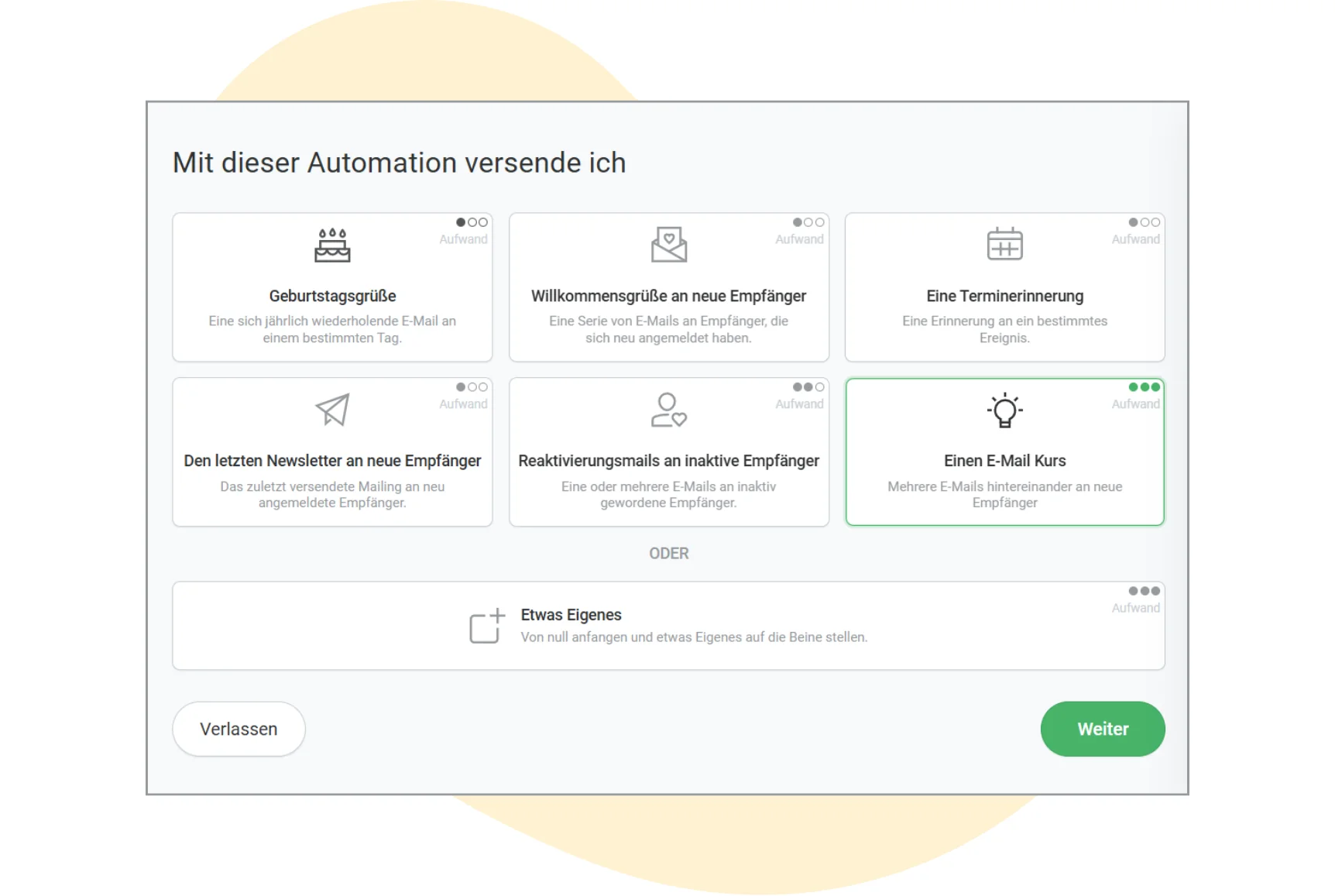
By segmenting your contact list sensibly while sending targeted automated emails, you create precisely tailored newsletter content for your contacts. In the long term, this not only improves your open rates and click rates, but also has a positive effect on the inbox placement of your emails.
👀 Have you seen this? The benefits of email automation
Our Social Media Manager Wiebke uses practical examples to explain why email automation is worthwhile for every business. Roll the film! 🎬
Open video transcript
Chapter 1: Intro
Did you know that email automation is a genuine secret weapon in marketing? Automated emails such as annual birthday greetings, appointment reminders or multi-part email sequences mean you can always give every contact exactly the content relevant to them, at a time tailored to them.
Hi, I’m Wiebke, and in this video I will show you exactly what email automation is and how automated emails can take your marketing strategy to the next level. To help you get started right away, we will go through the three most popular email automations together.
Chapter 2: What exactly is email automation?
Email automation is the automated sending of marketing emails using a specialist tool. The emails are created once and then sent automatically to defined target groups as soon as certain conditions are met. They can be initiated by a trigger, meaning a specific action taken by a contact, such as signing up through a form or clicking a link in a newsletter. A particular behavior over a defined period can also be a trigger, for example if a contact has not opened any of your emails in the last three months. Alternatively, an email can be sent at a set time regardless of contacts’ behavior, for example when new course lessons are released every two weeks or appointment reminders are sent.
If you owned a florist, for example, you could set up a reminder for the beginning of February to remind contacts that Valentine’s Day is approaching. Add attractive photos of your bouquets and an offer of free delivery, and your pre-orders are almost guaranteed.
Within an email automation, you can create an entire workflow of individual automated messages sent in a defined sequence.
Chapter 3: How is it different from regular newsletter sending?
Newsletters are recurring emails sent simultaneously to a list of contacts and usually contain more general information such as news, discounts or product introductions. Email automation is quite different. A newsletter must be created afresh each time and its delivery triggered or scheduled manually, whereas automated emails are sent to the right target group automatically. The two forms of email marketing complement each other well, however. Newsletters keep readers up to date and strengthen customer loyalty, while automated emails are tailored to each contact’s individual situation and accompany them through the customer lifecycle.
Chapter 4: Benefits of email automation
If you have already looked into email marketing, you will know the usual benefits: cost efficiency compared with other marketing methods, direct communication with the target audience without dependence on algorithms or platforms, and highly measurable results. Email automation offers many additional benefits too.
Automated emails let you send targeted offers perfectly matched to your target groups’ interests and purchasing behavior. This increases sales opportunities and revenue. At the same time, regular, personalized emails strengthen trust in your business and encourage customer loyalty.
Returning to the florist example, you could reward customers’ loyalty by sending a small surprise to their inbox one year after their first purchase. You can also acquire new customers by winning over leads with relevant content and offers.
Another advantage is cost savings. If-then branches in your workflows and precisely defined sending triggers ensure that automated emails reach only the contacts for whom the message is currently relevant. This saves you from sending to huge recipient lists full of contacts who are not currently interested in your offer.
Automating recurring tasks such as welcome messages, appointment reminders or course lessons also saves valuable time and increases your efficiency.
You need not worry that too many automated emails will annoy your contacts. If you carefully build and personalize your automations, recipients will notice no difference from a manually created email. Instead, they receive precisely the content most relevant to them.
With a high-quality email marketing tool such as rapidmail, you can also use various control features, including previews and free test sends of every automated email in the workflow. Naturally, you can deactivate or reactivate your automations at any time.
Chapter 5: Requirements for email automation
For email automation to work successfully, you need a powerful email marketing tool with automation features, such as rapidmail. A well-structured, carefully maintained contact list is also essential. You must comply with data protection rules: automated emails may be sent only to people who have expressly consented to receive them.
Chapter 6: Three email automations for every business
Different automations may make sense depending on your company, sector and target group. These three email automations are always worthwhile:
Welcome greetings for new contacts matter because first impressions count. Give new newsletter subscribers a warm welcome with a single email or a complete email series. Use the opportunity to introduce yourself, preview future content and thank them for signing up with a small discount.
Birthday greetings are another excellent way to strengthen customer loyalty. Warm wishes and a small gift are guaranteed to delight your contacts. If you run a florist, for example, you could surprise the birthday person with a free bouquet.
Reactivation emails to inactive recipients help you reconnect with customers who have drifted away from your brand over time. A targeted reactivation email can remind them about you, encourage another purchase or request feedback.
Chapter 7: Conclusion: get started easily with email automation
As you can see, email automation makes it simple to address contacts in a targeted, individual way. You can accompany customers throughout their lifecycle and foster long-term loyalty.
With rapidmail as your email automation software, you can choose from different pricing packages to find the one that best meets your needs. The Starter package lets you create an automation sequence from just €15.00 per month. Full details of each package and its features are available on our pricing page.
Do you have any questions or comments? I look forward to answering them in the comments. I wish you every success and lots of fun with your first email automation. Thank you for watching, and see you soon.
2. Email marketing trend: bye-bye, open rate!
The open rate was long considered the ultimate email marketing metric. At first glance, that makes sense: anyone investing time, creativity and budget in a newsletter naturally wants to know whether it is being read at all.
But things are different in 2026: the open rate alone tells you very little. This is not because the metric is fundamentally unimportant, but because it is becoming increasingly unreliable and often gives a misleading picture of a campaign’s actual success.
Why the open rate is becoming less meaningful
For several years now, data protection and privacy updates from major email providers such as Apple Mail have made opens impossible to measure clearly. Images are loaded automatically, tracking is blocked, or email providers’ spam filters register opens without any genuine user interaction.
As smart inboxes become more widespread, this effect will only grow. A measured open in your newsletter statistics no longer automatically means your contacts paid attention, while an unmeasured open does not necessarily mean your email was ignored.
In short: the open rate no longer reliably shows what your contacts really do with a newsletter and should therefore be used only as a rough guide when comparing campaigns.
What matters in email marketing now
If we are honest, email marketing is rarely only about having an email opened. A much more important question is: what do your contacts do with the information, and what happens next?
For example, your newsletter’s objective might be for contacts to:
- 📅 Register for an event
- 🛒 Buy a product
- 🤔 Test a new feature
- 💡 Learn more about a topic
The open rate alone cannot assess any of these goals. It says nothing about whether your content is persuasive or relevant, or whether it leads to action. Primarily, it shows only how effective your subject line is.
💡 Rapidtip
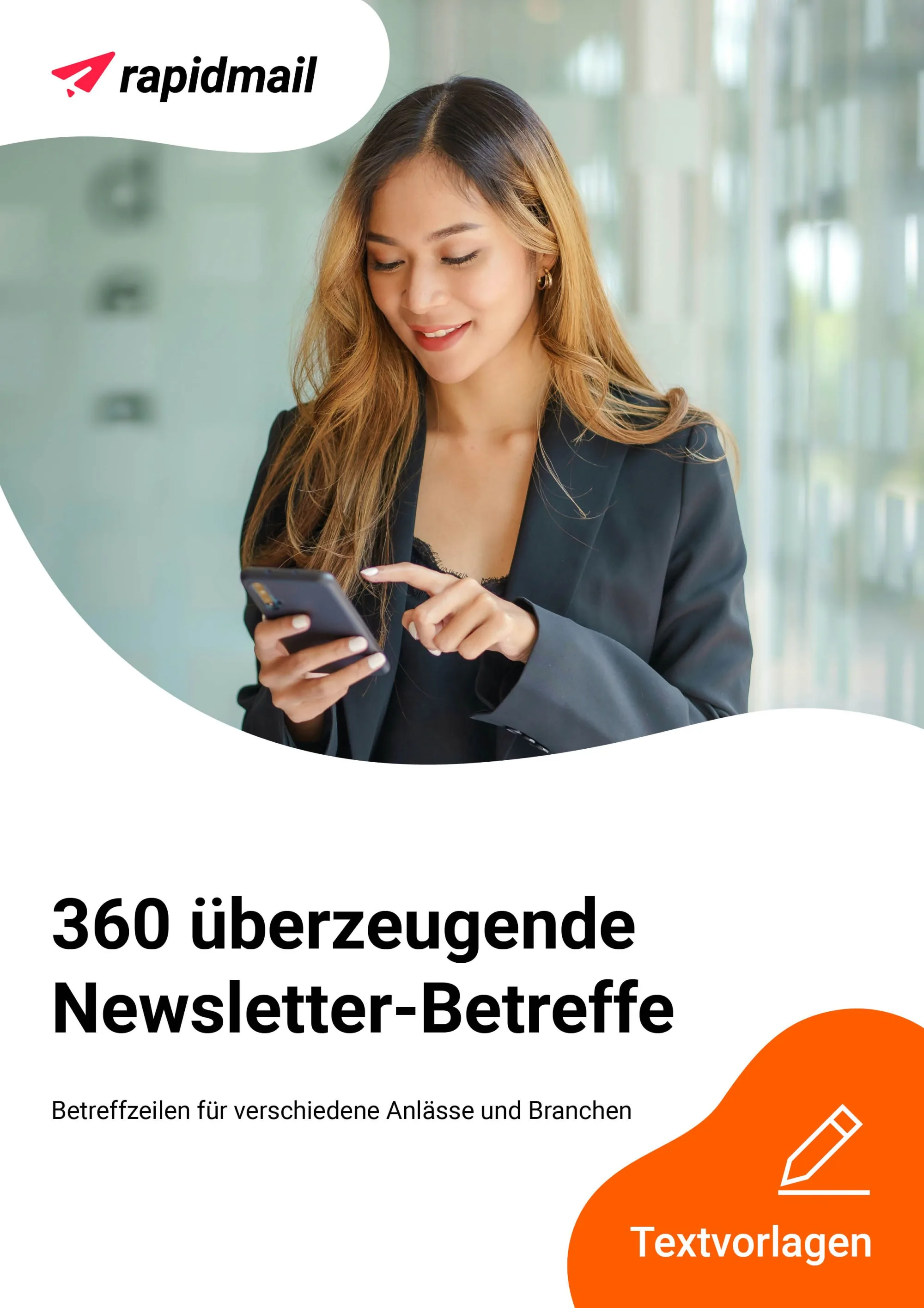
Need some inspiration for compelling newsletter subject lines? We have come up with 360 creative subject lines for different occasions and sectors.
You can download the subject line collection free of charge and open it whenever you need a new idea for your next campaign’s subject line.
The more important metrics for your email marketing in 2026
Instead of concentrating heavily on opens, in 2026 you should focus on metrics that reflect genuine interest and engagement.
These primarily include:
- 🖱️ The click rate: It shows whether your content sparks curiosity and encourages people to read on or take action.
- 🎯 The conversion rate: It shows whether your newsletter achieves its real objective, such as registration for an event or purchase of an advertised product.
- 🫱🏻🫲🏼 Interactions across several campaigns: Use newsletter tracking to monitor whether your contacts interact with your emails regularly or only sporadically. Special features for tracking the activity of individual contacts can help too.
These metrics give you a far more realistic picture of how successful your email marketing strategy really is.
👀 Did you know?
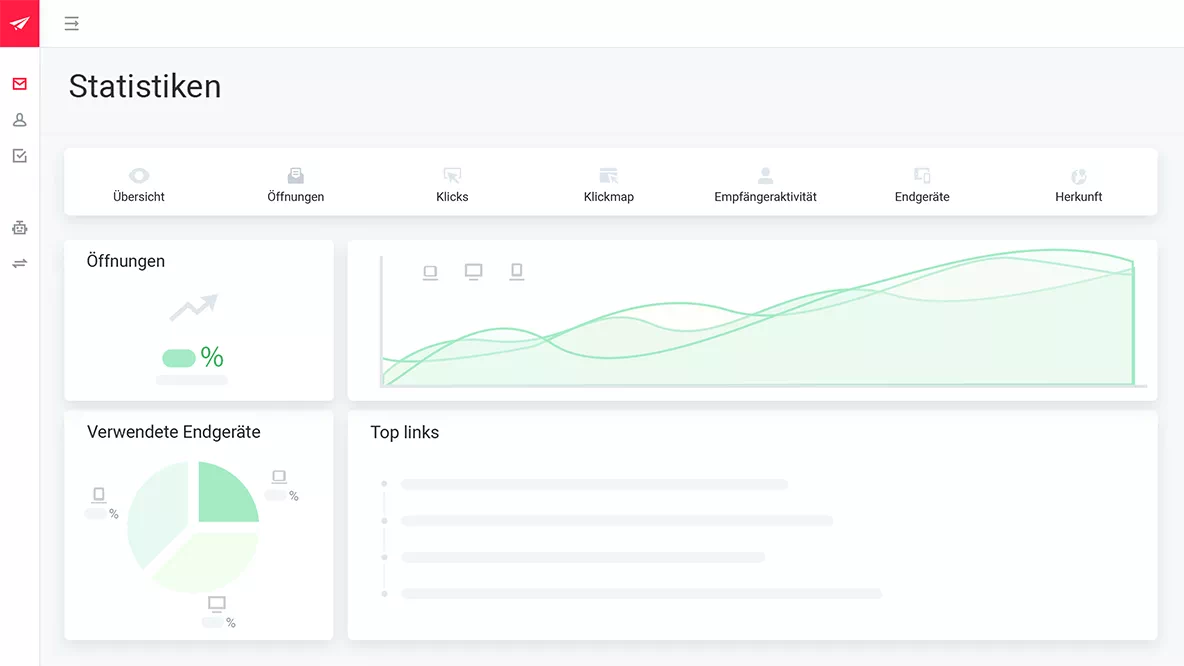
rapidmail lets you monitor your newsletter performance at any time. Clear reports on opens, clicks, unsubscribes and deliverability immediately show which content is well received and where there is still room for optimization. Why not try it for yourself?
Why this change in perspective matters
Do not mourn the move away from the open rate as the main email marketing KPI. See it as an opportunity. It encourages you as a sender to look at email marketing from a different and, above all, more holistic perspective.
Instead of getting annoyed by fluctuating open rates, you will focus on questions such as:
- ✨ Does my newsletter provide genuine value?
- 📢 Is my call to action clear and meaningful?
- 🙋🏻 Do I tailor content and offers to my target groups?
These factors determine long-term success or failure, not one isolated metric.
💡 Rapidtip

Do not use your newsletter analysis to assess individual campaigns, but to identify patterns: which content works particularly well across several campaigns, and which does not? This lets you optimize your newsletter campaigns step by step.
3. Email marketing trend: regular touchpoints instead of peak campaigns
For a long time, email marketing followed the principle of big campaign, big impact. Black Friday, Christmas, summer sales: most newsletter campaigns focused on a handful of occasions expected to generate the highest possible revenue. In 2026, however, this strategy is becoming less and less effective, because customers’ purchasing and decision-making behavior has gradually changed.
Why peak campaigns alone are no longer enough
More than ever, consumers no longer make purchasing decisions exclusively around fixed seasonal highlights. Instead, needs arise continuously in everyday life, for example:
- 🤔 When a problem occurs
- 🖥️ When a product needs replacing
- ❗ Or when a brand is present at exactly the right moment
If you are visible only on selected promotional days, you will simply be overlooked in everyday purchasing decisions. Smart inboxes and algorithms also assess not individual campaigns, but the relationship between customers and a company over a longer period. So if you send an email only occasionally, your brand quickly loses relevance, regardless of how well the individual campaign is designed.
The rapidmail newsletter
Tips, ideas and news about email marketing, straight to your inbox.
In 2026, consistency matters more than volume
The clear email marketing trend is therefore: regular communication beats short-term attention. A well-planned newsletter frequency ensures that contacts remember you, builds trust and, above all, establishes you as a relevant brand. These factors determine whether your newsletters are opened and clicked.
Important: regularity does not mean flooding your contacts with emails. What matters is a clear, reliable rhythm that suits your target group above all.
A good newsletter schedule might be:
- 📅 A weekly newsletter with informative content
- 📅 An update from your sector every fortnight
- 📅 Or a monthly overview featuring selected highlights from your product range
Whether weekly or monthly, consistency beats frequency. Make sure your contacts know what to expect and when your next campaign will arrive.
When you establish a regular newsletter schedule, your contacts will thank you. They get used to the rhythm, know what to expect and therefore open your emails more deliberately. Short-term attention gives way to a long-term, stable customer relationship.
💡 Rapidtip
rapidmail provides various email automation workflow templates, including welcome and birthday emails, which you can then adapt to your needs. Sit back and relax while email automation takes care of regular contact.
From campaign thinking to a relationship strategy
In 2026, email marketing is increasingly evolving from a pure sales measure into a long-term relationship strategy. Instead of focusing exclusively on sales, content that builds trust is becoming more important. For a florist, this could mean helpful tips on preparing your garden for winter, or it could mean a behind-the-scenes look at your independent bakery. This keeps you and your business present even when there is no specific offer in the spotlight.
Regular touchpoints may be quieter than major peak campaigns, but they have a far more lasting effect. They keep your brand in people’s minds, spark interest and make contacts much more likely to buy during later promotions or product launches because the customer relationship has a stable foundation.
👀 Are B2C and B2B email marketing trends different?
Many email marketing trends for 2026 apply across sectors. Nevertheless, B2B companies have different priorities. Instead of short-term sales peaks, the focus is on regular, reliable touchpoints. Content is generally more factual and clearly structured because decision-making processes take longer and require continuous information. This is precisely why trust, relevance and continuous dialogue are becoming increasingly important in B2B email marketing.
In B2C, by contrast, emotion, inspiration and quick impulses play a greater role. Purchasing decisions are often more spontaneous, so creative subject lines, visual stimuli and limited-time offers work particularly well. The same principle applies here too: anyone who regularly provides relevant content and is not visible only during promotions builds stronger long-term customer relationships and remains visible in smart inboxes.
4. Email marketing trend: AI as a creative sparring partner
Artificial intelligence is no longer a buzzword in 2026, but an established part of modern marketing. The focus has shifted in email marketing too, and one thing is clear: AI does not replace creativity; it supports it. The best results come when people and machines work together.
Instead of leaving all the work to AI, try using it as a creative sparring partner. It can help generate ideas, bring structure to your work and, above all, improve efficiency. Your company, meanwhile, remains clearly responsible for tone of voice, attitude and personality.
How exactly AI helps with email marketing in 2026
AI can help with your newsletters wherever time is short or getting started creatively is difficult, for example by:
- 💡 Developing newsletter ideas and content plans
- 📝 Structuring content and copy
- 🧪 Testing different subject lines or CTAs
- 🎯 Matching suitable content to different target groups
- 🕓 Planning automations and sending frequencies
This leaves more room for what AI cannot yet do: genuine connection, authenticity and your brand voice.
If you are still unsure what working with AI in email marketing can look like in practice, we have developed a few examples for different sectors:
- 🌱 Florist or garden center: AI helps find topics for seasonal content such as “These plants will thrive on your balcony in the fall too”, including appropriate product recommendations or care instructions.
- 🥐 Bakery or café: Ideas for personal newsletters, such as “Why we use these regional ingredients in spring”. AI helps with the structure and storyline, while the personality comes from the team.
- ✂️ Hairdresser: Content such as cold-weather haircare tips, trending hairstyles or styling routines can be quickly prepared with AI and individually adapted.
- 🚗 Garages and car dealerships: Newsletter ideas about seasonal checks, tire changes or “How to prepare your car for winter”, explained clearly with explicit calls to action.
- 🏋️♂️ Gyms: AI can quickly and easily create motivation, training plans or nutrition inspiration, for example for beginners versus advanced members.
- 🎓 Colleges and universities: AI helps draft and structure information newsletters, event announcements or start-of-term updates in a clear, audience-appropriate way.
Efficiency without losing personality
The key is for AI to provide inspiration and ideas while you determine the direction of the content. Tone of voice, attitude and the emotional note remain human and unmistakably yours. In 2026, this combination creates newsletters that are efficient to produce yet still feel personal and approachable.
👀 Have you discovered your personalized AI sending plan?
Looking for inspiration and creative newsletter ideas to fill your editorial calendar? Try our AI sending planner: use artificial intelligence (AI) to conjure up a personalized newsletter sending plan for your business, tailored to your sector, product and target group. What a relaxing start to the new year!
5. Email marketing trend: accessibility becomes standard
Accessible email marketing is no longer merely “nice to have” in 2026. Instead, it is becoming an established mark of quality for good newsletter campaigns. What many once considered extra work now has a direct bearing on whether your newsletters are read, understood and clicked. One thing is clear: the easier your emails are to grasp, the better they work, finally, for everyone.
Why accessibility improves your email marketing
Accessible newsletters are not aimed only at people with disabilities. They also help:
- ⏳ Readers who are short on time
- 📱 Users on mobile devices
- ☎️ People with older devices
- 🚨 Recipients in bright or distracting surroundings
In short, accessibility improves usability for every target group, and smart inboxes are increasingly rewarding this too.
What makes a newsletter accessible
Accessibility does not start with complex specialist solutions, but with clear design and copy decisions that you can implement immediately.
- 🤓 Use easy-to-read text: Choose sufficiently large font sizes (at least 14–16 pt) and clear, legible typefaces. On a smartphone in particular, this determines whether content is pleasant to read or swept away in frustration.
- 🟧 Use strong contrasts: Light text on a light background may look stylish and modern, but it is difficult to read. Clear contrasts ensure good readability even in poor lighting.
- 🖼️ Use images meaningfully: Use images as a supplement, not as a replacement for text. Your core message should remain understandable even if images do not load. Remember to add alt text so screen readers can convey image content correctly.
- 📏 Create clear structures: Use headings, short paragraphs and clear structures. This not only helps people with visual or concentration difficulties, but makes your newsletter clearer overall.
- ❗ Make buttons unambiguous and easy to click: Buttons should be large enough, clearly labeled and positioned unambiguously. “Book an appointment now” works better than a vague “Click here”.
Examples of accessibility in every sector
Accessibility can be implemented effectively in every newsletter, regardless of sector or target group, as these examples show:
- 💇♀️ Hair salons: Clear appointment CTAs, readable opening hours and simply explained haircare tips ensure that all your customers can grasp the information quickly.
- 🚗 Garages and car dealerships: Structured checklists such as “5 things to check on your car before winter” work particularly well in an accessible format.
- 🏃🏻♀️ Gyms: Short, understandable training or motivation tips with clear instructions are accessible to beginners too.
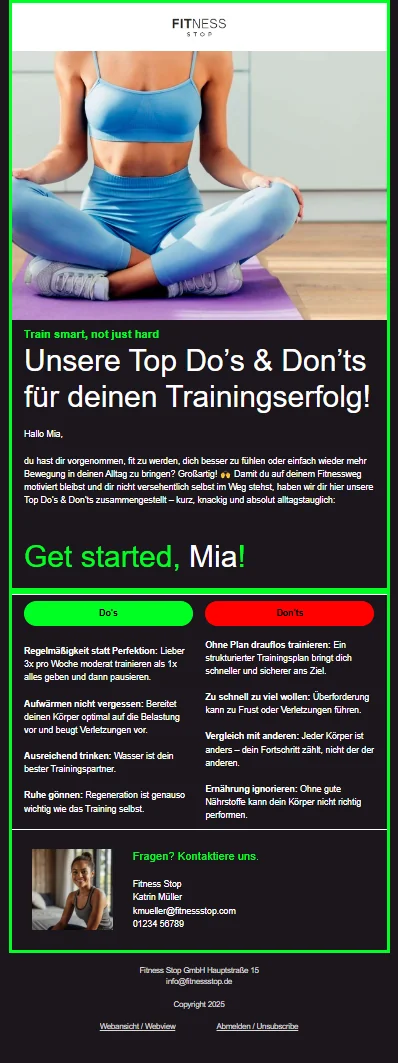
- 🎓 Colleges and universities: Accessibility is useful for university newsletters too. Clear headings, understandable language and logically structured content help students find information quickly.
- 🏪 Local businesses and service providers: The easier your newsletter is to understand, the greater the chance that appointments and offers will actually be noticed and your local online marketing will work.
👀 Did you know? How rapidmail supports accessible email marketing

rapidmail makes it easy to create accessible newsletters using carefully designed features directly in the editor. You can easily add alternative text for images, flexibly adjust colors, contrasts and font sizes, and use templates that are automatically optimized for mobile devices. This ensures your content is easy for everyone to read while also demonstrating digital responsibility.
Free accessible newsletter checklist to download
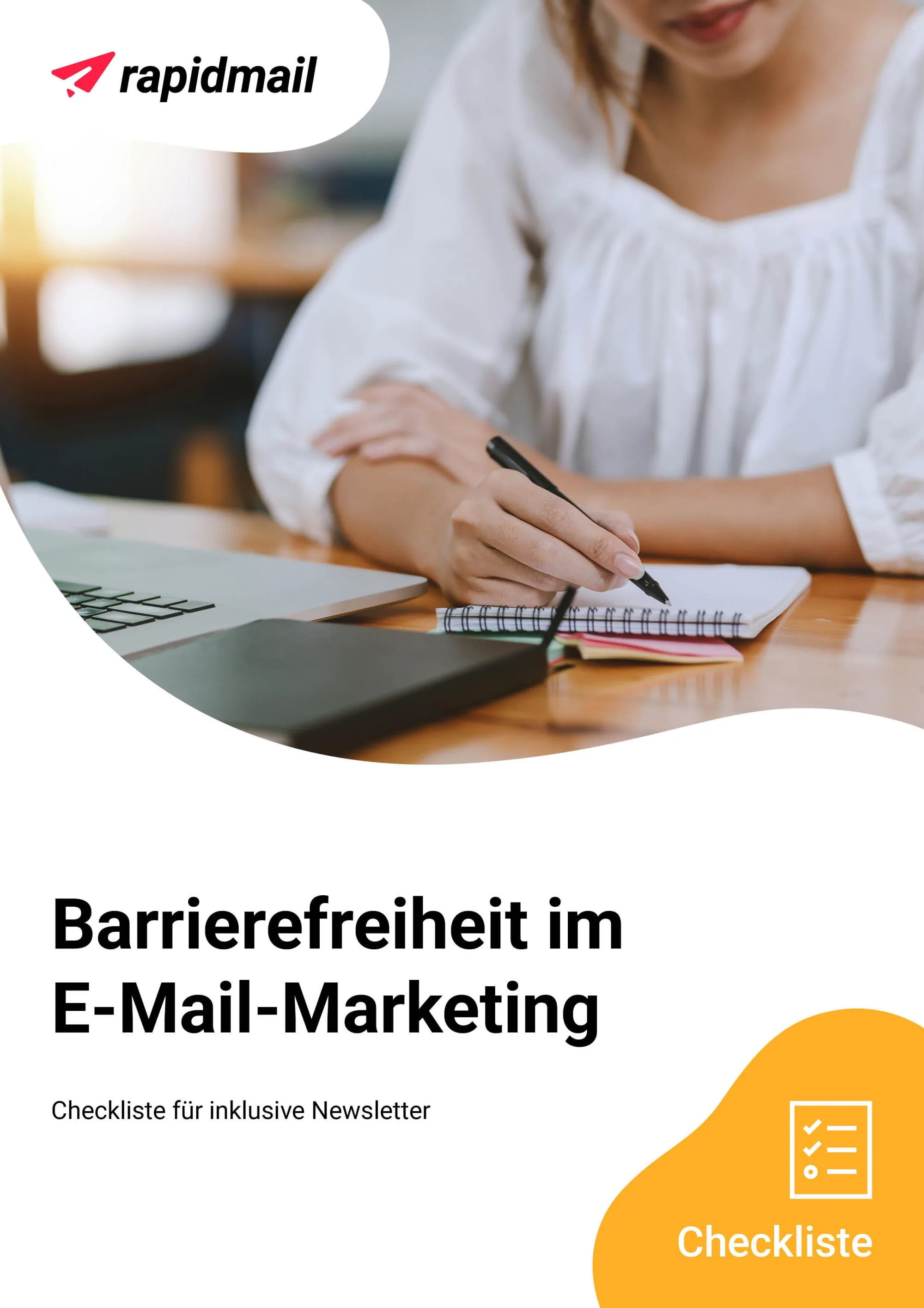
Want to make your newsletters accessible without overlooking anything important? No problem. Our free checklist summarizes the most important points for accessibility in email marketing.
You can work through it step by step to see where your newsletters are already accessible and where there is still room for improvement. Download our checklist free of charge with just one click and start optimizing today.
Let’s get started! 🚀
Download the free checklist (PDF in German)
6. Email marketing trend: minimalist designs are taking over
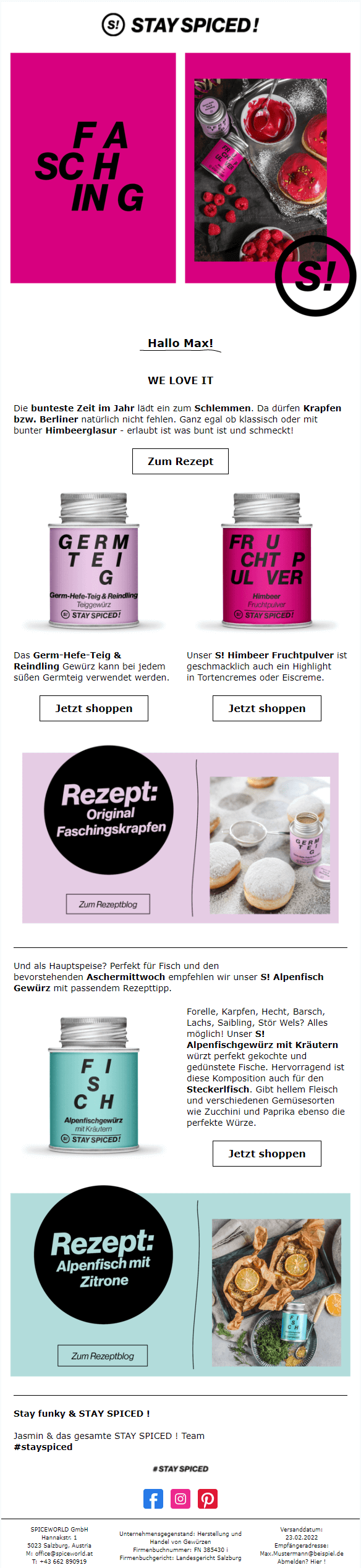
Fewer distractions, maximum impact: minimalist newsletter designs are definitively taking over in 2026. In crowded inboxes, a few seconds often determine whether an email is read. Clear structures, plenty of white space and a simple design help readers absorb content more quickly and understand your message immediately. Minimalism does not mean going without. It is a conscious decision to focus on the essentials in your newsletter design.
Why less design often has more impact
Modern email inboxes prefer content that is clearly structured and easy to understand. A clear newsletter structure therefore performs better not only with readers, but also in email providers’ technical assessments.
A minimalist newsletter design ensures that:
- 👀 Attention is directed to what matters
- 📖 Text is read more quickly
- 📢 Calls to action stand out clearly
- 🤍 Your brand appears professional and trustworthy
This trend is particularly important on mobile devices. Long blocks of text, overloaded layouts or too many colors quickly appear cluttered, causing users to lose interest and close the campaign.
What defines minimalist newsletter design
Minimalism does not mean your newsletters have to look dull or interchangeable. On the contrary, pared-back designs allow you to add deliberate accents more effectively and direct attention to the essentials.
For a minimalist newsletter design, pay particular attention to:
- ⚪ Sufficient white space between sections
- 📄 Short, clearly structured blocks of text
- 🎨 A limited color palette
- 🅰️ Easy-to-read fonts
- ❗ A small number of unambiguous calls to action
Whether it concerns your gym’s new opening hours, your restaurant’s brand-new menu or an event taking place at your premises next week, choose one central topic and use a few thoughtful accents to direct attention to that information. This creates a calm layout that provides guidance and lets your content speak for itself.
👀 Did you know?
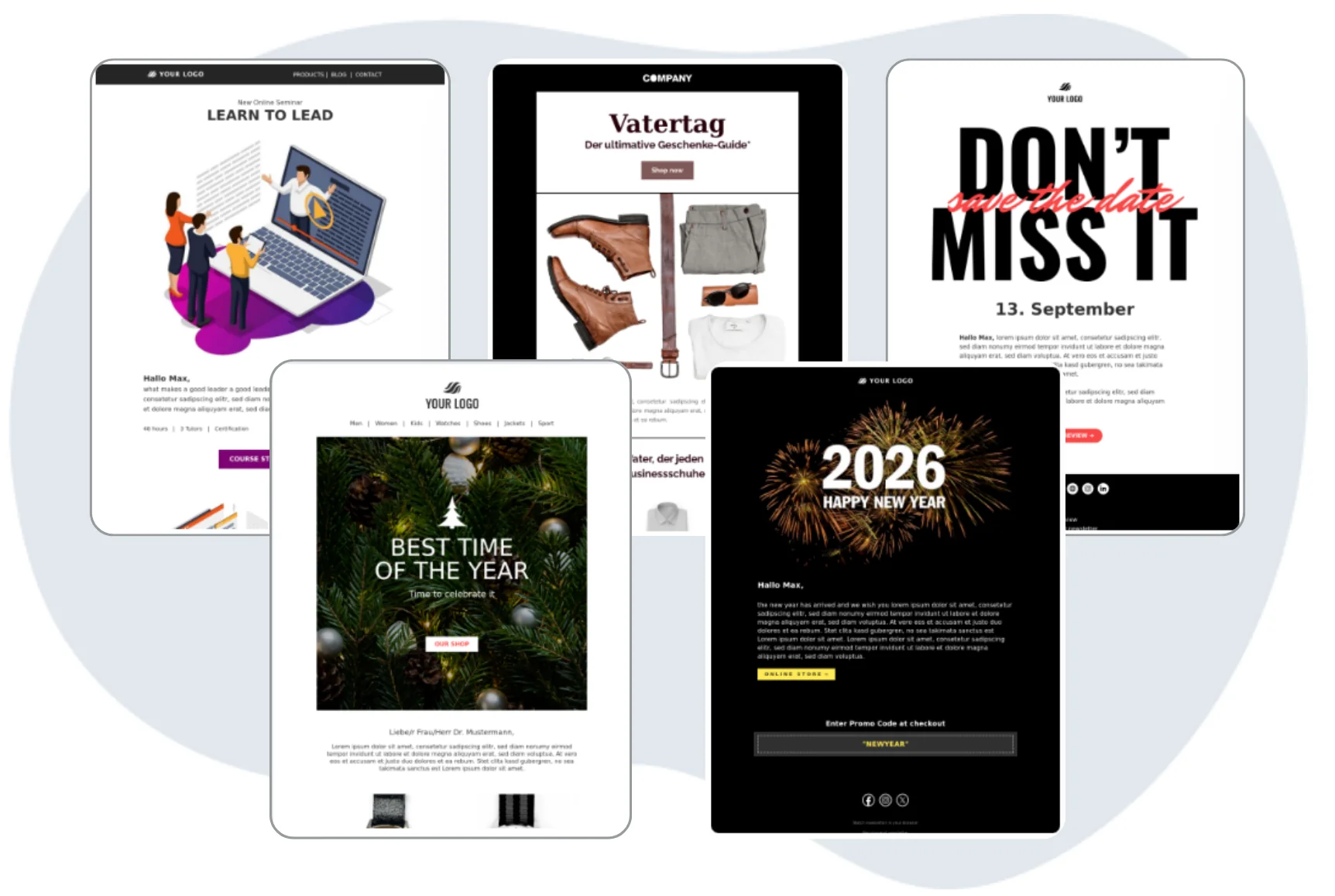
rapidmail offers a wide range of free, mobile-optimized newsletter templates for every occasion. This includes many modern newsletter templates that make minimalist design effortless. Many templates can also be adapted to your corporate design in just a few clicks using 1-click design. Why not give it a try?
Conclusion for your 2026 newsletter year: relevance first, reach second
The email marketing trends for 2026 show clearly that success comes not from louder campaigns, but from relevant content at the right time. Smart inboxes, changing KPIs and new technologies demand a rethink, away from mass communication and toward genuine relationships. Anyone who regularly offers contacts added value, understands their target groups and uses modern tools sensibly will continue to succeed with email marketing in 2026.
Solutions such as rapidmail make these trends easy to implement, from automations and performance analysis to modern, accessible designs. This secures your newsletter a permanent place in your contacts’ inboxes in the future too. ✨
👀 Have you seen this?
Would you like to watch the email marketing trends for 2026 again in a compact video? No problem. In this video, our Social Media Manager Wiebke clearly explains each trend once more, helping you take your newsletter campaigns to the next level this year. Roll the film! 🎬
Open video transcript
Chapter 1: Intro
Seven trends and developments could radically transform email marketing in 2026. To help you prepare now, today we are looking at the most important email marketing trends for 2026, which will determine whether your emails are still successful this year.
First, one thing up front: emails and newsletters remain among the most effective marketing channels in 2026. So we can still answer the question of whether newsletters are completely outdated with a clear no.
But that makes it all the more important to keep up with the times. Technologies and user behavior are changing rapidly, and anyone who fails to develop their strategy will lose visibility and relevance in the long term.
Chapter 2: Trend 1 - Smart inboxes
The inboxes of Apple, Gmail and others are becoming increasingly intelligent. Providers want to stop users constantly being overwhelmed by irrelevant emails, so they increasingly decide for themselves which messages should be prioritized and which should be sorted straight into promotions or even spam folders.
This means that purely promotional newsletters offering no genuine benefit to recipients will find it increasingly difficult to reach the “primary” inbox directly and attract contacts’ attention without detours.
But you can still earn your place in the primary inbox if you complete a few tasks:
Make sure you authenticate your sender domain. You need to add a few security records so email providers recognize that you are a legitimate sender with no malicious intent. Incidentally, this two-minute video tells you more about sender authentication.
You should also abandon the idea that a single campaign can cover your entire target audience. A generic email will never reach many recipients’ inboxes when those inboxes increasingly filter content and reward relevance. Instead, focus on reaching the right contact at the right moment. You achieve this by segmenting your list, meaning dividing it into different subgroups, for example by gender, area of interest or location. You should also use email automation. You create your emails once, after which they are automatically sent to the defined target groups when certain conditions are met, for example when a contact performs a specific action such as clicking a newsletter link, or has not opened one of your newsletters for three months. A particular time can also trigger your automation, for example in the form of an appointment reminder.
These two levers, automation and segmentation, let you tailor content precisely to individual contacts and secure a place right at the top of the inbox.
Chapter 3: Trend 2 - Bye-bye, open rate!
At first glance, the open rate may seem like a hugely important metric. After all, if you put a great deal of work and effort into an email, it should certainly be read. Nevertheless, the open rate should no longer be your most important metric in 2026. In recent years, email providers’ privacy updates have already made it impossible to measure reliably, and new smart inboxes will intensify this effect.
But when we think about it, email marketing is rarely just about contacts reading your email. You also want to prompt them to take action, such as registering for an event, making a purchase or trying a new feature. The open rate cannot tell you whether they do that.
So in 2026, focus your performance analysis much more on click and conversion rates.
Chapter 4: Trend 3 - Regular touchpoints instead of peak campaigns
Short-term promotions are becoming less effective in 2026. What really works is long-term trust, built through relevant, regular touchpoints.
Customers no longer make decisions only at seasonal peaks such as Black Friday or Christmas. Purchasing decisions arise much more frequently in between.
Regular newsletters ensure that you remain consistently visible. They keep the relationship warm, build trust and ensure recipients think of you when they are ready to act.
In 2026, I would therefore recommend launching not only occasional major campaigns, but smaller, valuable and consistent impulses. It does not really matter whether you send weekly, fortnightly or monthly. Simply find a regular rhythm that fits your working day and use it to build strong brand loyalty.
Chapter 5: Trend 4 - AI as a creative sparring partner
In 2026, AI is no longer the “cool new tool”, but an established part of everyday working life. The best results do not come from letting AI take over all the work, but from using it as a sparring partner.
AI can help you find newsletter ideas faster, optimize subject lines, structure content and define target groups. It can suggest personalized versions or even plan your automation flow.
The creative direction, tone of voice and emotional note should still come from you. This allows you to increase efficiency without losing your brand personality.
Chapter 6: Trend 6 - Accessibility
Since 2025, accessibility has also been mandatory for digital products and is therefore no longer regarded merely as “nice to have”, but as a genuine factor in quality and success. An accessible email benefits not only people with disabilities or difficulties using technology, but is fundamentally easier for everyone to consume.
In 2026, you should therefore design your emails as follows: use sufficiently large fonts of at least 14–16 pt, create strong contrasts and always include alt text. Establish a clear structure with headings and make buttons large enough and easy to read. Use understandable language and clear messages. The clearer your wording, the more people can understand your content without difficulty.
Would you like to read about the topic again at your leisure? Take a look at the video description, where I have linked our detailed newsletter guide.
Accessibility not only makes your emails more inclusive, but also improves usability and increases your chances of clicks and engagement, especially in smart inboxes that increasingly reward good readability.
Chapter 7: Trend 7 - Minimalist designs
Minimalism remains extremely popular in 2026 and will continue to shape newsletter design. No wonder: a pared-back look, clear structures, sufficient white space and short sections ensure that your message is immediately understood without readers having to battle through chaos or “make an effort”.
Pared-back design does not have to be boring. It thrives on clear lines, calm surfaces and targeted use of color. rapidmail offers 12 clean newsletter design templates that you can easily customize and fill with your content.
Do not forget to optimize your newsletter for mobile devices. Most emails are now read on the go using smartphones and tablets. With rapidmail, every email is automatically optimized for mobile, and you can check its appearance once more using the preview feature.
Chapter 8: Conclusion - Relevance first, reach second
In 2026, relevance will be far more important than reach in email marketing. The winner will not be the sender with the largest recipient list, but the one that builds long-term relationships through regular, tailored content. If you also pay attention to accessibility and minimalist designs and seek support from AI tools, you already have a huge head start.
What do you expect from 2026? Let me know in the comments.
Thank you so much for watching, and see you next time.