How to create the perfect welcome email for your newsletter: first impressions count


Welcome emails are important in email marketing because they help you make a positive first impression on new subscribers and spark their curiosity about the emails to come. The welcome email, also known as a greeting email, is the first thing your contacts receive after signing up for your newsletter. With our tips, templates and examples, you can make an impact from the moment you welcome someone to your newsletter and win over your readers from the start. 💌
🥜 In a nutshell: key facts about welcome emails
- ✔ A welcome email is the first automated greeting email new newsletter subscribers receive immediately after signing up.
- ✔ Because new subscribers are particularly interested just after signing up, the welcome email should be sent automatically and promptly.
- ✔ A successful welcome email combines a personal greeting, a preview of future newsletter topics and often a small welcome gift.
- ✔ The subject line, header image, personal copy and a clearly visible call-to-action button are among the most important elements of a successful welcome email.
- ✔ The initial welcome email only needs to be designed once and then runs automatically as a workflow for all new contacts.
- ✔ Instead of a single message, you can also automate an entire welcome series comprising several staggered emails.
1. Hello there: why welcome emails matter in email marketing
Hooray, a website visitor has signed up for your newsletter. Congratulations! The first hurdle is behind you and your newsletter list has gained a new contact.
Now is not the time to wait unnecessarily. After all, your contact has just shown an interest in your brand and was willing to enter their email address in the newsletter sign-up form. At this precise moment, the website visitor appears particularly interested in your business, your brand or your offers.
Do not let this opportunity slip away. Send your new contact a warm welcome email to spark their curiosity, make a positive first impression and learn more about them.
Content ideas for your newsletter welcome email
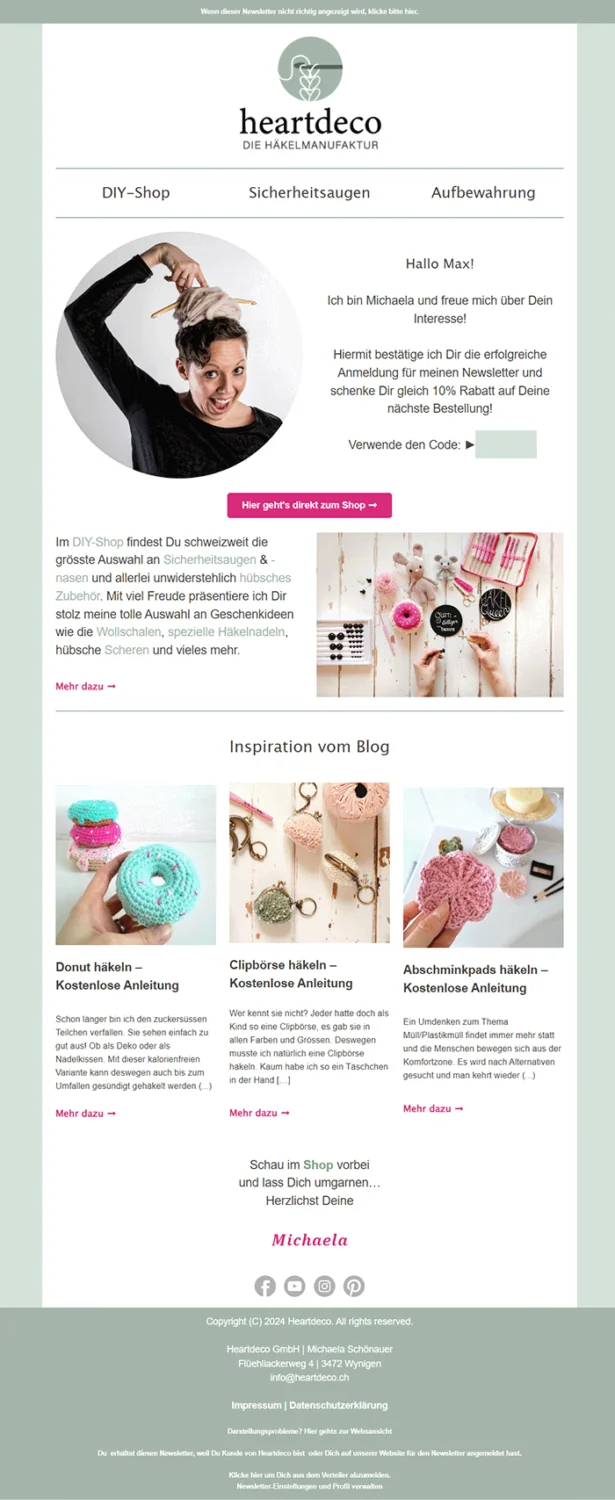
- 👋 Welcome your new subscribers and build a personal relationship with them. A warm, personal greeting such as “Hello Eva, it’s great to have you with us!” will immediately help you win them over.
- 🔜 Introduce the topics of future newsletters. This shows subscribers what they can expect from you and your newsletter. It also builds anticipation and curiosity about upcoming newsletters, which in turn has a positive effect on the open rate of your future emails.
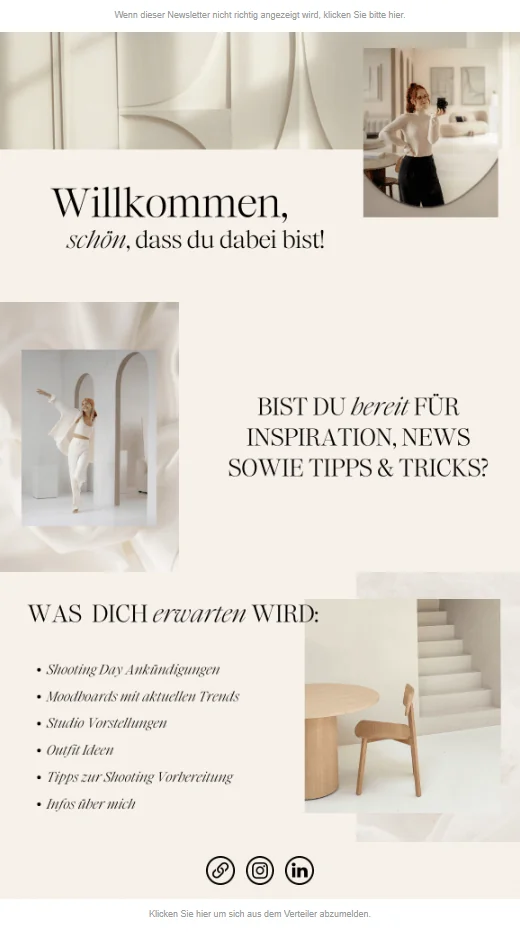
- 🍴 Give them a taste of what is to come: the first few emails someone opens from a business often determine whether they will make the effort to open and read future newsletters. Use your welcome email to win over new subscribers straight away with your most popular recipe, best-selling products or latest insider tips.
- ❓ Get to know your subscribers better: a short survey in your email can help you learn more about your new contacts. In your welcome email, for example, ask about their individual interests, shopping habits or how often they would like to receive your newsletter. The more you know about your subscribers, the better you can tailor future newsletter content to their needs and lay the foundations for a long-lasting relationship from the outset. You can also segment your target audience more effectively and prevent newsletter unsubscribes from the start by sending personalized, relevant content.
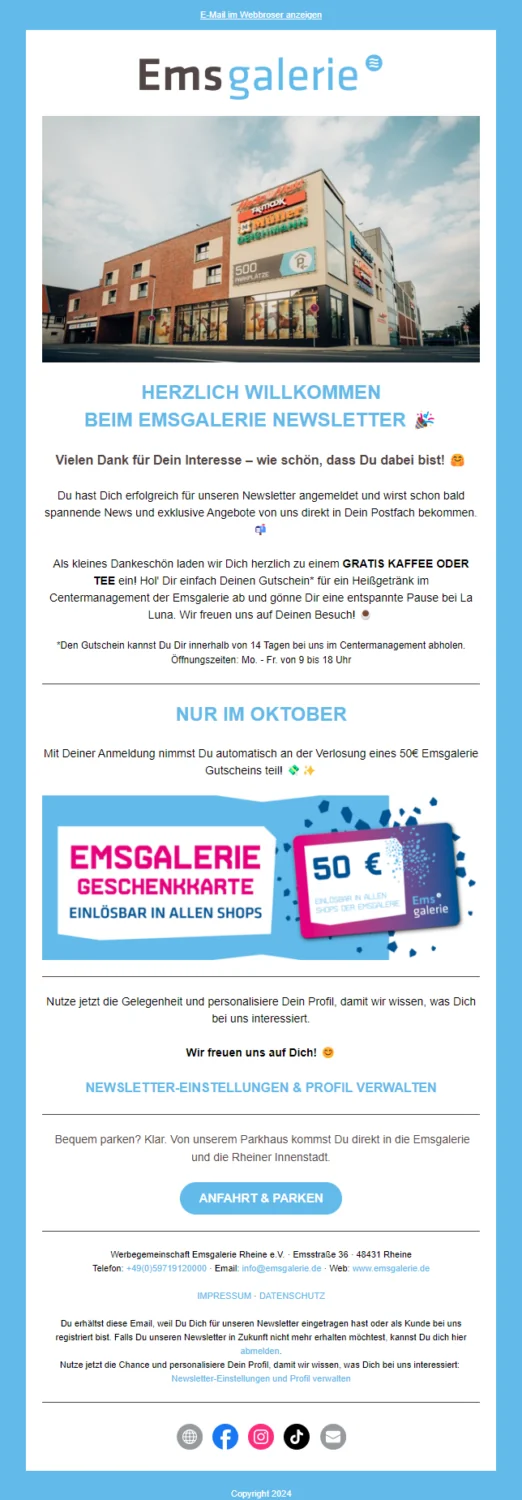
- 🎁 Offer a small welcome gift: what goes around comes around! Nothing delights new newsletter subscribers more than a small welcome gift. A free sample, free delivery on their first order, a 10% welcome discount or a free introductory ticket to your next event is a thoughtful gesture that immediately creates a positive impression of your brand and introduces contacts to your offers from the outset.
👀 Did you know?
Welcome emails are among the email formats with the highest open rates, so there is certainly plenty of potential to tap into. It is therefore all the more worthwhile to put effort into designing your welcome emails, helping your future newsletters achieve high open rates too.
2. The right structure: important elements of a welcome email
Your welcome email should immediately captivate new subscribers, not just with its copy but also with its layout and design, because visual appeal matters too. The more positive the impression you make on contacts at the outset, the more likely they are to read future newsletters or take a closer look at your online shop.
When structuring your welcome email, pay particular attention to the following elements:
✨ An appealing subject line
The subject line of your welcome email is the first thing readers see in their inbox. That is why it is particularly important to motivate them to open your message with a short, appealing line of copy. An emoji at the beginning or end of the subject line draws your contacts’ attention to your email, which is already a good start!
The subject line and preheader should make it clear that this is the welcome email for your newsletter and, where appropriate, provide a brief, concise summary of its contents.
Here are a few subject line and preheader examples for your welcome email:
- 🛥️ Welcome aboard: your ticket to exclusive insider knowledge!
- 🤸🏽♂️ Ready for our adventure together? The journey begins now!
- You’re part of our family now! 👨🏽👩🏼👧🏻👦🏽 We have something for you to celebrate🤫
- 🤗 It’s great to have you with us! Discover our little welcome gift for you. 🎁
- Hey Laura, we’re delighted! 🤩 May we get to know you better?
- A very warm welcome! We’re sharing our most popular recipe with you 👨🏽🍳
- Hooray, let’s get started: explore our shop with your 10% welcome discount! 👀
👀 Have you seen this?
Our Content Manager Wiebke reveals the secret to successful welcome emails in just five minutes. Roll the film! 🎬
Open video transcript
Chapter 1: Introduction
Welcome, it’s great to have you here! That is not only my greeting to you, but should also be the first message you send to new newsletter subscribers and customers. In this video, I will show you how to write a welcome email that delights new contacts and lays the foundations for strong customer loyalty.
Chapter 2: Hello there: why you should write welcome emails
A new contact has subscribed to your newsletter! This shows that they are interested in your brand and willing to trust you with their email address. Do not miss the opportunity to thank them for subscribing, give your new contact a warm welcome and get them excited about your content and offers from the outset. If you write a friendly welcome email and send it at exactly the right time, you build trust, show appreciation and have already taken the first step toward strong customer loyalty.
Do not worry: you do not have to send your welcome emails manually every time a new contact subscribes. By setting up your welcome emails as an automation in your newsletter tool, you only have to write the welcome email once and choose the settings you want for sending it. rapidmail even offers a practical workflow template that lets you get your automated welcome email up and running even faster. Once you have set up the automation, your welcome email is sent automatically to all new contacts after they subscribe to the newsletter and confirm the double opt-in email.
Chapter 3: Let’s get started: how to write your welcome email
But how do you ensure that your welcome email immediately captivates your new contacts? Pay attention to the following elements when writing it:
The subject line is the first thing readers see in their inbox. It is therefore particularly important to motivate them to open the email with a short, appealing line of copy. Emojis are real eye-catchers and make your subject line stand out from the competition. Examples include: 🎁 “It’s great to have you with us! Discover our welcome gift for you.” A personal greeting also increases the open rate, for example: “Hey Laura, we’re delighted! 🤩 May we get to know you better?” Mysterious wording can spark curiosity, such as: “🤸🏽♂️ Ready for our adventure together? The journey begins now!” You can also create a sense of urgency with a limited-time promotion: “Hi Max, you can redeem your welcome discount today!”
The first visual impression of your newsletter should also impress. Fortunately, rapidmail lets you choose from 12 ready-to-send templates for your welcome email, many of them even in your own brand design. A personal greeting also strengthens the relationship. Whether “Dear Ms Smith” or a casual “Hey Marianne” is more appropriate depends on your industry and communication style. Naturally, you will need your contacts’ names for this.
The copy of your welcome email should be friendly, short and concise. After all, you do not want to overwhelm new subscribers with endless blocks of text. Important content includes a brief introduction to your newsletter topics so your contacts know what to expect. This also builds anticipation for upcoming content, which has a positive effect on the open rate of future emails. You can also give them an immediate taste of what is to come, such as a popular recipe, your best-selling products or exclusive insider tips.
A short survey in your email can help you learn more about your new contacts and tailor your content perfectly to their needs. In the long term, this prevents many newsletter unsubscribes and can even lead to higher sales. Welcome gifts are a true classic in welcome emails. A discount, free sample or free delivery will delight your new contacts and move them more quickly toward their first purchase.
A linked call-to-action button at the end of your welcome email encourages your subscribers to take action and continue engaging with your business. Consider what would help your contacts most at this point and link to suitable pages, such as your online shop, appointment booking system or a contact form. Suitable call-to-action buttons might include: “Read the user guide”, “Get help getting started”, “Join the webinar” or “Redeem voucher now”.
If you need even more inspiration for your welcome email copy, we have prepared various copy templates and subject lines to help make your welcome email a success. You can download the copy templates for free using the link in the video description.
Chapter 4: Conclusion: creating welcome emails quickly and easily
As you can see, the right tool and a few simple tips make it incredibly easy to write welcome emails that delight new contacts. Why not try it for yourself right away? You can get started with rapidmail from just €15 per month and send welcome emails to new contacts automatically. Do you have any questions or comments? I look forward to answering them in the comments. I hope you have fun and every success writing your welcome email! Thank you for watching and see you soon!
🎨 Design with the wow factor
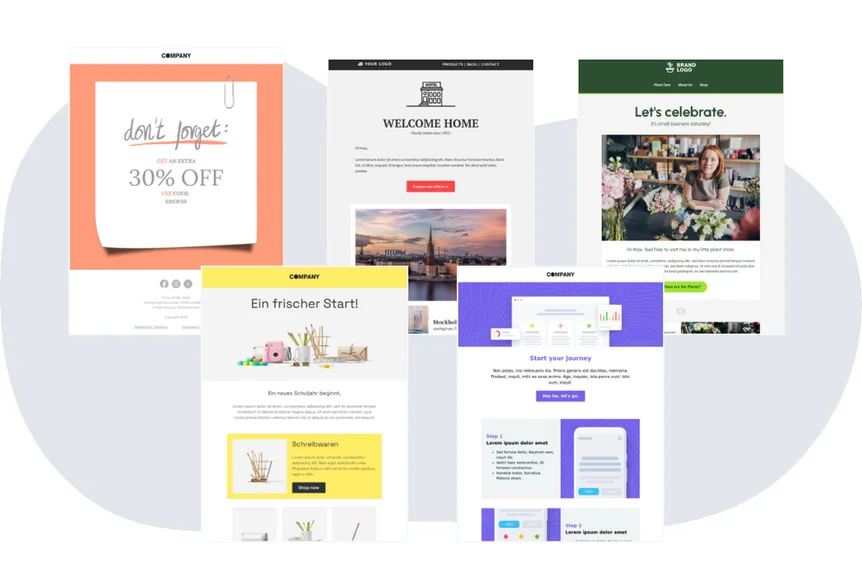
The first visual impression of your newsletter should also wow new subscribers. To make readers want to look at more newsletters, the welcome email design should be appealing, creative and modern, have a good image-to-text ratio and match your brand design.
Make sure your email does not appear too cluttered and that your contacts’ eyes are automatically drawn to the relevant places, such as the call-to-action button or voucher code.
👀 Did you know?
The rapidmail 1-click design makes it easy to create your welcome email in your brand design. Simply enter your company URL and discover automatically generated email templates in your unique corporate design, including colors, fonts, your logo and social links. Alternatively, rapidmail lets you choose from 12 ready-made welcome email templates for all kinds of occasions.
🖼️ An attractive header image that catches the eye
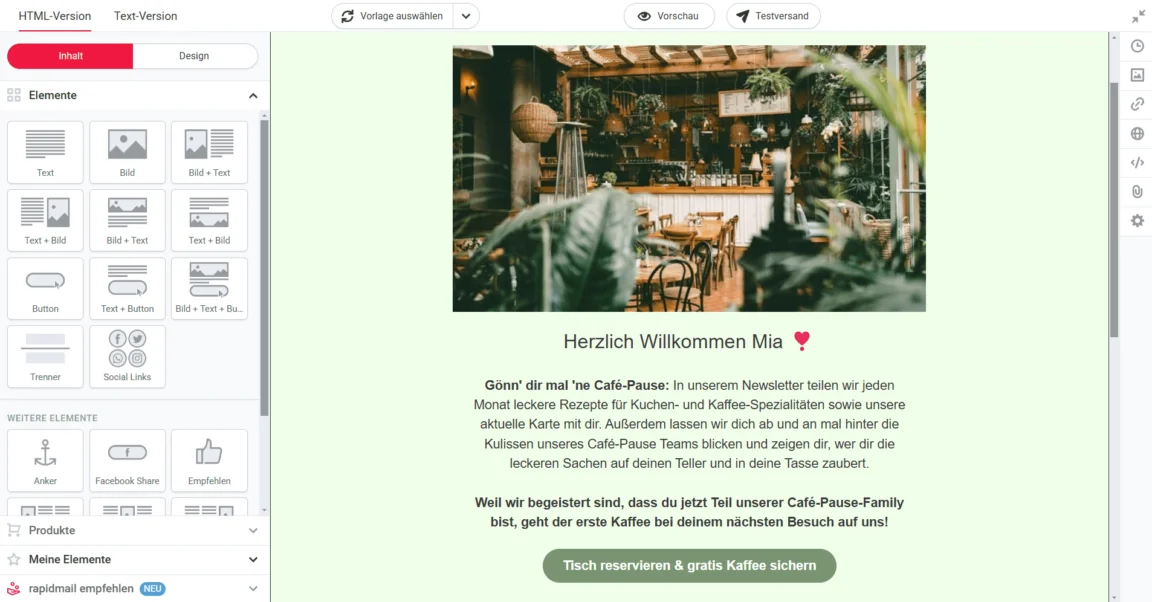
When your very first message is opened, a striking header image can spark your new subscribers’ curiosity. The header image should match your planned newsletter topics and highlight the most important content in your welcome email, such as the welcome discount or free ebook your contacts will receive. A restaurant, for example, can use an attractive photo of its premises or one of its most popular dishes to encourage subscribers to keep scrolling and perhaps even book a table straight away.
👋🏽 A personal greeting
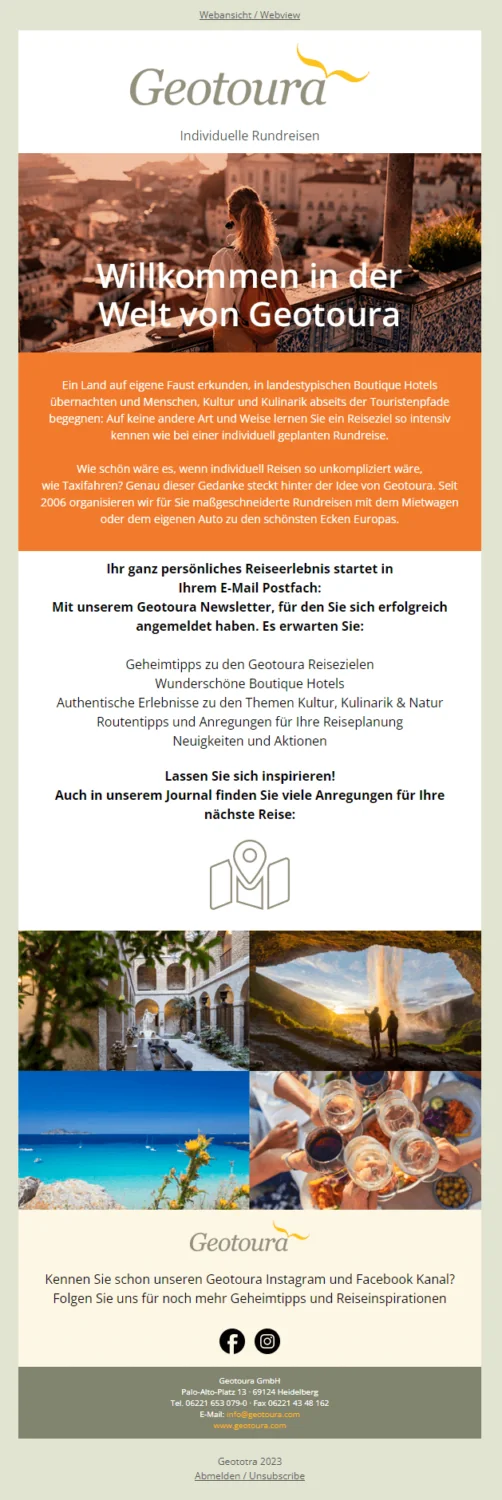
A personal greeting is a good way to build an immediate personal connection with your readers, not only in the subject line but in the welcome email itself. The greeting should match your company’s usual communication style. Depending on the industry and target audience, anything from a formal “Dear Ms Smith” to a casual “Hey Lukas” could be the best choice.
🖊️ Informative, personal copy
The content of your welcome email should be short and concise and answer your new subscribers’ most important questions: What will your newsletter be about? What benefits does your newsletter offer? How often can readers expect the newsletter? Which topics are especially important to your business?
Try to package your answers in personal, easy-to-understand newsletter copy that might even bring a smile to your contacts’ faces. Your subscribers will remember it when they see your next newsletter in their inbox!
Writing a welcome email: succeed with these subject lines and copy examples
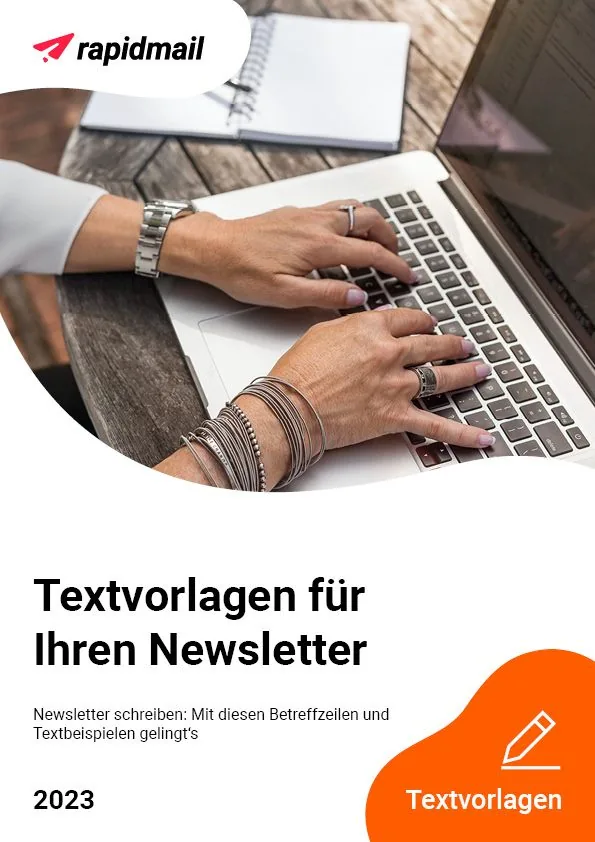
You have the basic idea, but are not yet sure how to phrase the subject line and copy of your welcome email? Our copy templates will help you put your ideas into practice and ensure you are perfectly prepared for subsequent newsletters too!
Here is what you will get:
- 🖊️ Subject lines for different occasions
- 🖊️ Examples of newsletter greeting copy
- 🖊️ Example copy for a product newsletter
- 🖊️ Example copy for a newsletter with an event invitation
- 🖊️ And much more
Download them for free now and get started with our copy examples! 🚀
Download free copy templates for your welcome email now (PDF in German)
🖱️ A call-to-action button that encourages clicks
A linked call-to-action button in the immediately visible area of your newsletter welcome email ensures that subscribers do not simply close your message again, but take action and continue engaging with your business, content and offers. The call-to-action button can lead contacts to many different pages, depending on what helps them most at that moment or what best matches the copy above it in your welcome email.
Suitable link destinations for your call to action include:
- 🧺 Your online shop, where contacts can redeem their welcome voucher.
- 📖 Your ebook, which you give to new subscribers as a welcome gift.
- ☎️ Your website’s contact form, which contacts can use to get in touch with questions.
- 📆 Your appointment booking system, if readers would like to reserve a table or book an appointment at your photography studio.
- 🛟 The most important help articles, which help subscribers use your tool or products.
When wording your call-to-action button, it is also advisable to use “active wording”. This means including an active verb that encourages readers to click. You should also word the call-to-action button so that contacts can immediately see where they will go after clicking.
Suitable CTA wording for your first welcome email includes:
- 👀 “Read the user guide”: invite subscribers to learn about the most important aspects of your service or product right from the outset. Simply link the CTA button in your welcome email to the relevant section on your website, where customers can find a user manual, various guidelines or similar content.
- 🚀 “Get help getting started”: for more complex content, online seminars or extensive processes, help articles are useful for guiding subscribers from the very beginning. Interested readers immediately know where to start in order to understand your business or product, giving them an ideal introduction. A link to your support contact form is also a good option here.
- 👩🏻💻 “Join the webinar”: do you offer online courses and webinars that you highlight to contacts in your welcome email? Seize the opportunity and direct subscribers straight to the page where they can register for the events described.
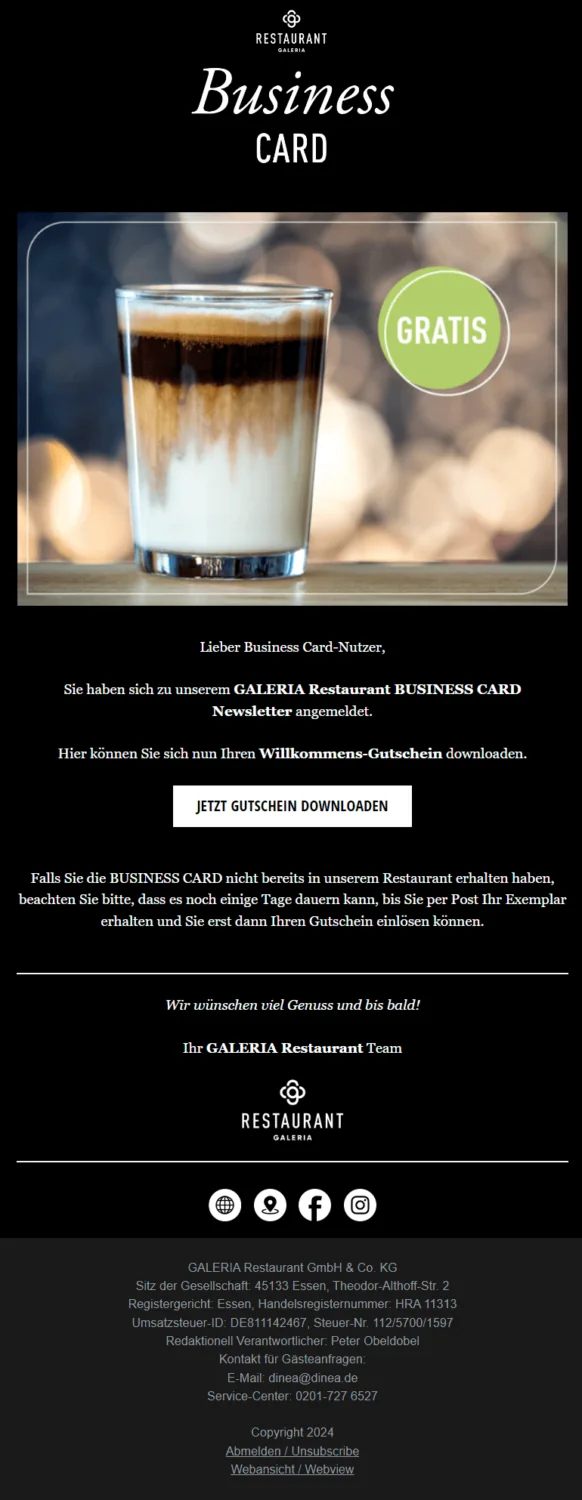
- 💸 “Redeem voucher now”: if your welcome email includes a gift such as a discount voucher or free template, use the CTA button to direct new subscribers straight to the place where they can redeem the voucher or download or edit the template. This creates a seamless transition from newsletter sign-up and delivery of the gift to its immediate use.
👀 Did you know?
With rapidmail, you can send not only universal codes, such as “Welcome-24”, but also completely individual voucher codes, such as “rm-12345-10”, in your welcome email. This means that each contact receives a different code in the email, which can only be redeemed once.
3. Successful real-life newsletter welcome email examples
For a little inspiration and to help you picture what your newsletter welcome email could look like, we have compiled some successful real-life welcome email examples for you:
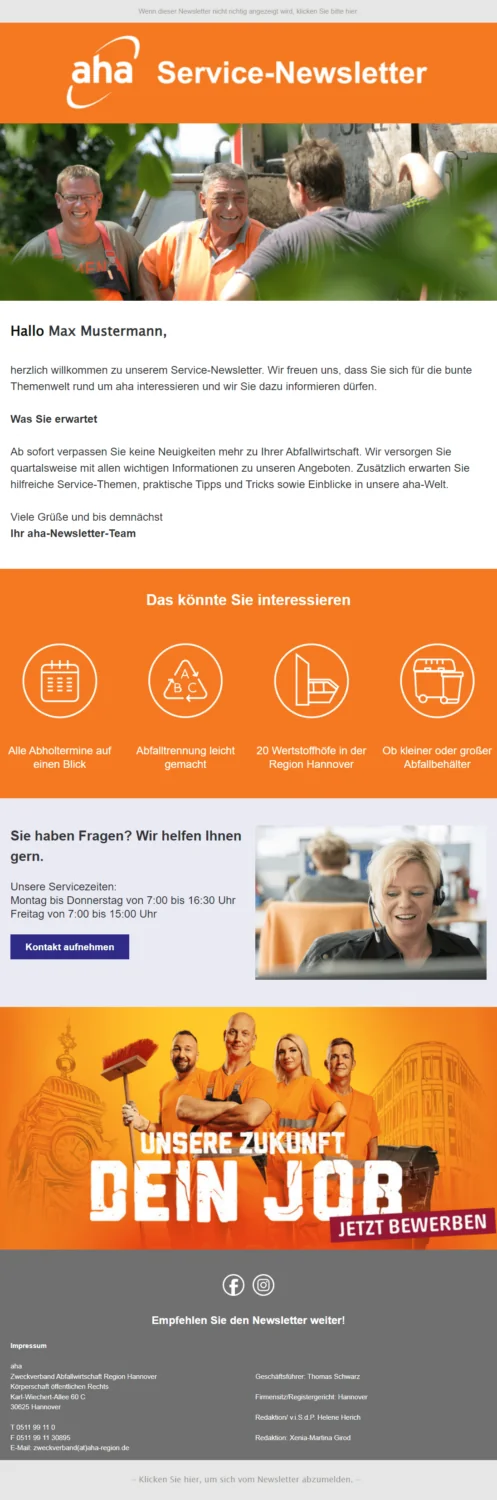
Welcome email example from aha – Zweckverband Abfallwirtschaft Region Hannover
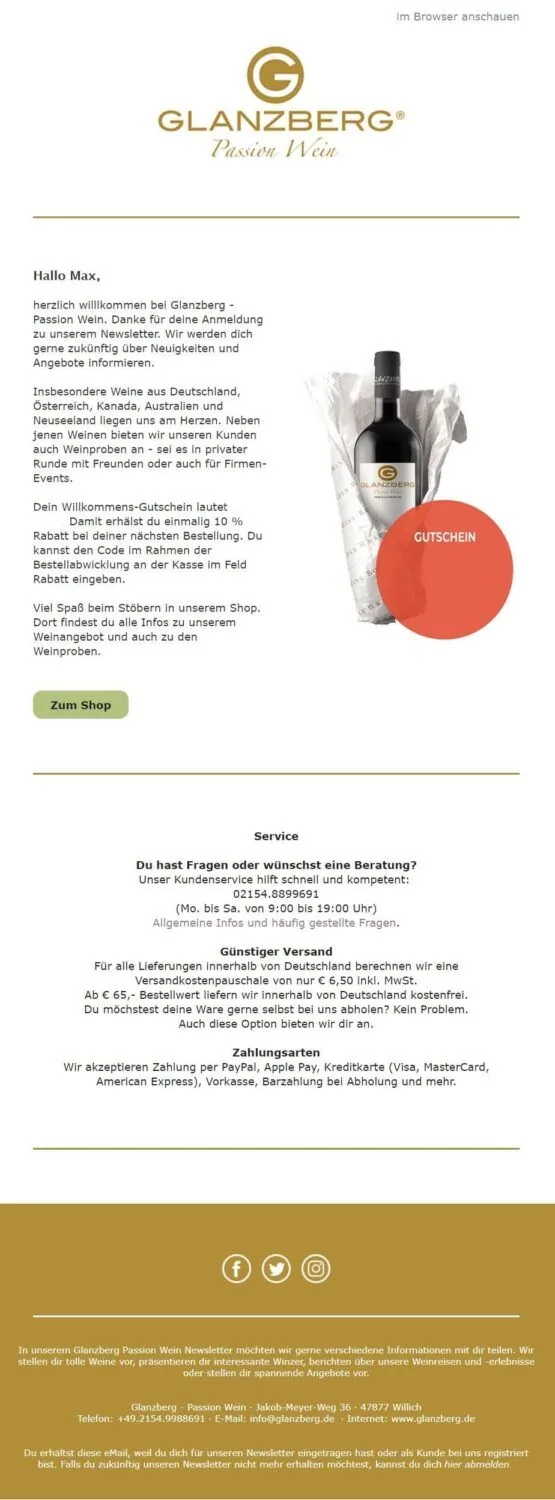
Welcome email example from Glanzberg – Passion Wein
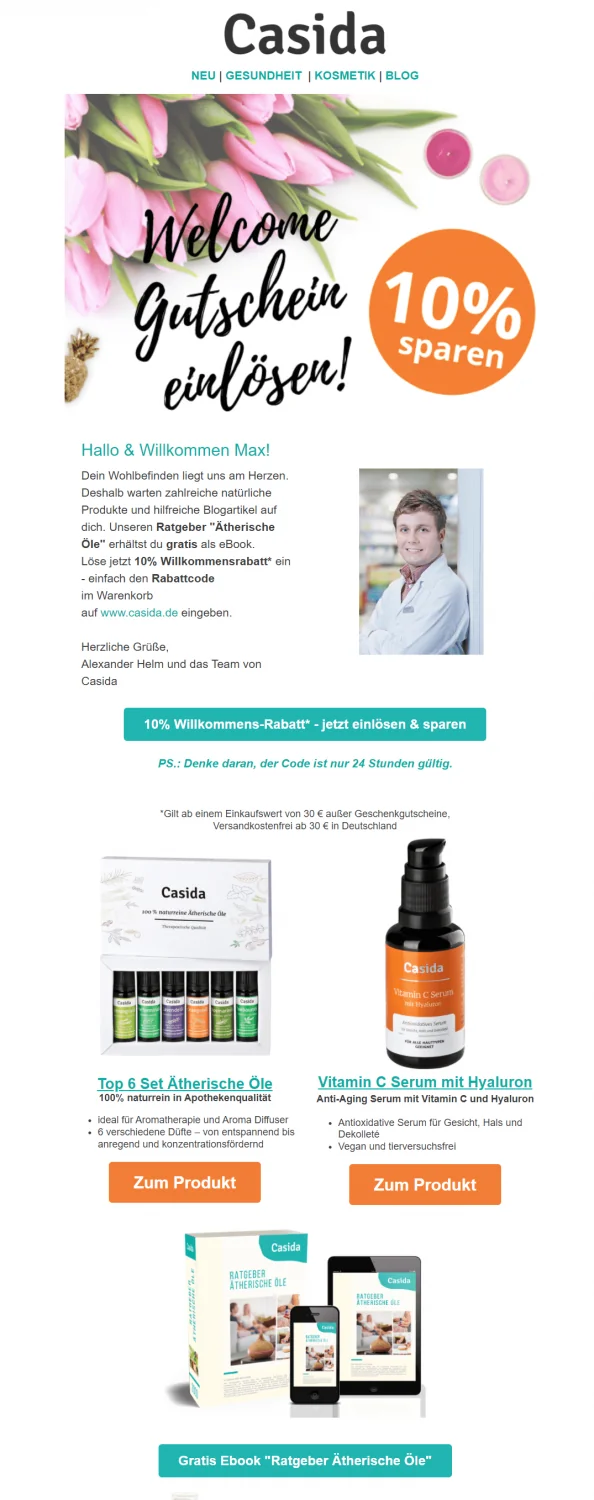
Welcome email example from Casida
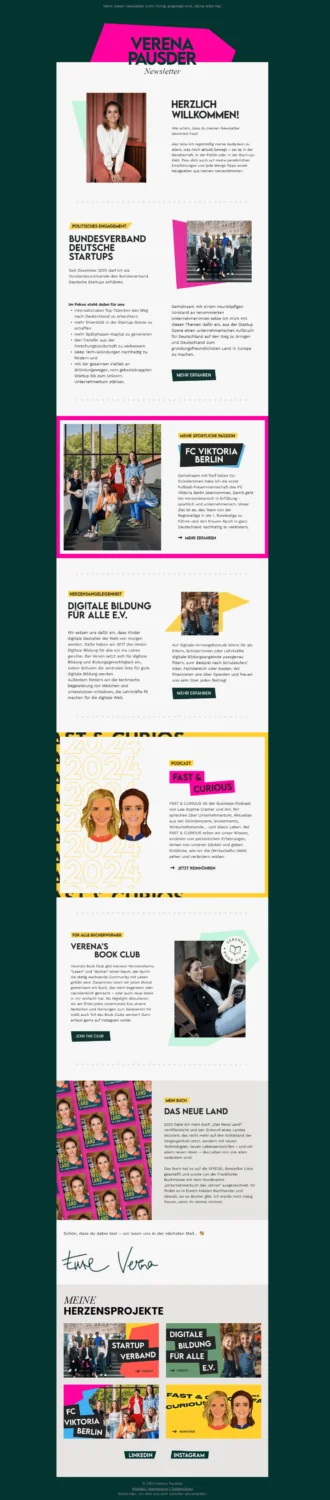
Welcome email example from entrepreneur Verena Pausder
The rapidmail newsletter
Tips, ideas and news about email marketing, straight to your inbox.
4. Design welcome emails quickly and professionally with templates
Do not worry: even if email marketing is new territory for you or you have no design training, you can easily create a professional welcome email for your newsletter. rapidmail provides 12 free templates that you can customize and expand as you wish using drag and drop. Whether on a laptop or smartphone while on the go, your welcome email will look stunning on every device! Best of all, the rapidmail 1-click design lets you adapt the templates to your unique brand design simply by entering your website URL!✨
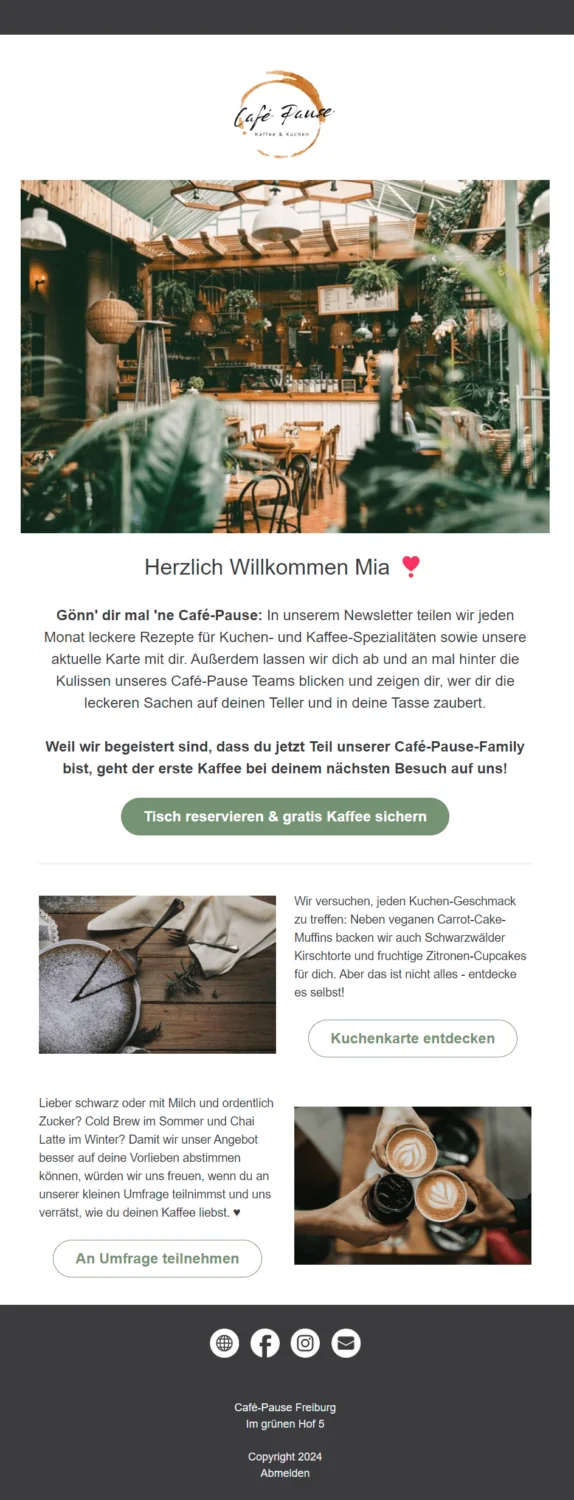
Create a welcome email with this template
5. How to avoid mistakes in your onboarding email
To ensure your first email impresses new subscribers from the outset, you should know and deliberately avoid these common mistakes.
Sending it too late (no automation)
Mistake: the email is not sent until hours or days after sign-up, when the subscriber’s interest has already cooled.
🖊️ Tip: trigger the welcome email automatically, immediately after sign-up (within seconds or minutes).
An unclear or weak subject line (and no preheader)
Mistake: vague subject lines such as “Welcome” or a missing preheader reduce the open rate.
🖊️ Tip: keep it short and benefit-led (around five to seven words), and use the preheader to name the main benefit and content.
No clear focus and too many CTAs
Mistake: multiple buttons, links and offers overwhelm contacts, so nobody clicks.
🖊️ Tip: define one main objective and include exactly one primary CTA (examples: “Redeem discount”, “Complete profile”, “Read your first guide”).
No personalization or segmentation
Mistake: “Dear Customer” and the same email for everyone feel like mass email and reduce relevance.
🖊️ Tip: address contacts by name, refer to the sign-up context (example: “because of your download about X”) and adapt the content and CTA to the source segment.
Too promotional and the wrong focus (“hard sell” instead of value)
Mistake: the email reads like a sales page instead of building trust and delivering value.
🖊️ Tip: begin with the promised value (discount code, guide, onboarding step), briefly explain what comes next and simply leave out aggressive sales pitches.
Not mobile optimized and difficult to scan
Mistake: long copy, small buttons and poor readability on a smartphone cause readers to abandon the email.
🖊️ Tip: keep the email concise (around 50 to 150 words), use clear paragraphs and large clickable buttons, and test how it looks on mobile devices before launch.
Missing legal and technical basics (sender, unsubscribe, links)
Mistake: a “noreply” sender, missing unsubscribe link, broken links or failure to deliver the promised content damage trust and deliverability.
🖊️ Tip: use a real sender name and a reply-enabled address, add a visible unsubscribe link, check all links before sending and deliver the promised incentive immediately in the email body or via a direct link.
6. Over to you: how to send welcome emails automatically with rapidmail
Why make it complicated when it can be easy? By setting up your welcome email, or even an entire welcome sequence comprising several staggered emails, as a marketing automation workflow, you only need to design the emails once and choose the settings you want for sending them. Such a sequence could look like this:
- The first email welcomes new contacts immediately after they sign up.
- A few days later, a second email offers helpful tips about your products or topics.
- A third message rounds off the onboarding process with a small offer after around a week.
This allows your subscribers to get to know you gradually. Packing all the information into a single message would be more likely to overwhelm them.
Your welcome emails are then sent automatically to all new subscribers after they have signed up for the newsletter and confirmed the double opt-in email.
With rapidmail as your email automation tool, you can use our practical workflow template for your welcome email and flexibly choose when specific contacts should receive your welcome message. You can customize each email in the editor using drag and drop, making it easy to adapt them to your brand design. For even more inspiration from email automation examples, simply download our free guide featuring seven examples from different industries.
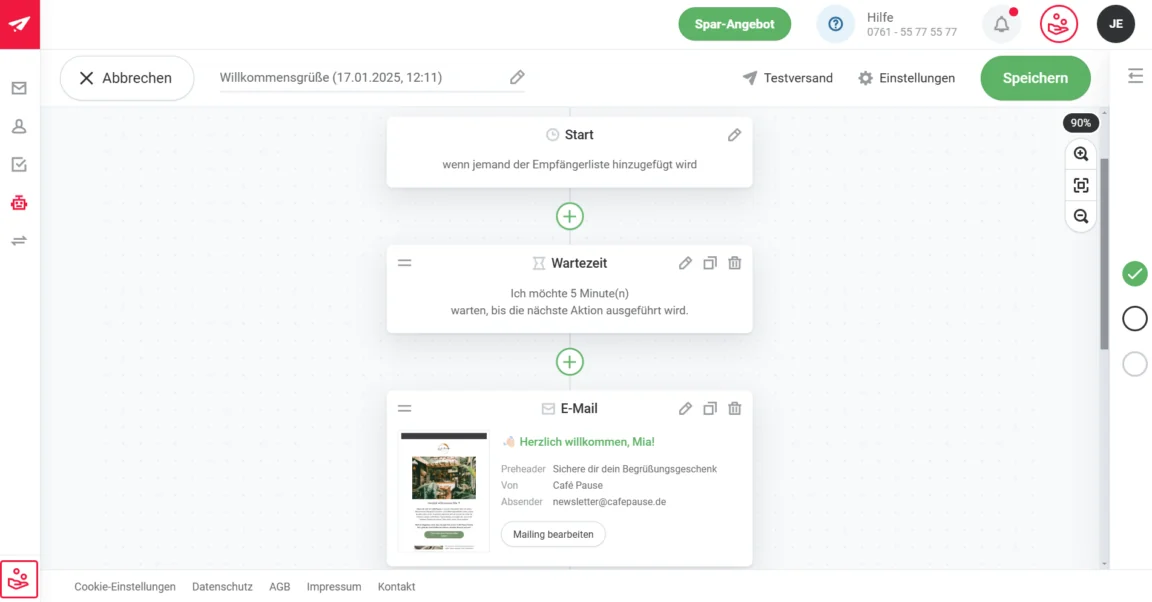
Discover rapidmail email automation now
Keep an eye on the success of your welcome emails
To find out whether your message resonates with new contacts, it is worth regularly looking at a few metrics: the open rate shows how many contacts opened the email at all, while the click-through rate reveals whether the subject line and content encourage them to click through.
By contrast, a rising unsubscribe rate can indicate a mismatch between expectations and content. It is best to regularly compare these figures with those of your other newsletter emails. This will quickly show whether it is worth optimizing the content of your welcome emails.
7. FAQ: frequently asked questions about welcome emails
What should the copy of a good welcome email include?
What should the copy of a good welcome email include?
The copy of a good welcome email should include a personal greeting and brief answers to new subscribers’ key questions: What is the newsletter about, what benefits does it offer and how often is it sent? Keep the copy short, friendly and easy to understand, then finish with a clear call to action.
Does an automated welcome email need an unsubscribe link?
Does an automated welcome email need an unsubscribe link?
An automated welcome email needs an unsubscribe link because it is legally treated like any regular newsletter email. Your contacts must be able to unsubscribe at any time.
Is a welcome gift necessary for a successful welcome email?
Is a welcome gift necessary for a successful welcome email?
A welcome gift is not necessary for a successful welcome email. New subscribers also appreciate a warm welcome without a discount or voucher. However, a small gift can make it even more effective.
Is a single welcome email enough, or is a full series worthwhile?
Is a single welcome email enough, or is a full series worthwhile?
A single welcome email is enough to get started, but a complete welcome series comprising several staggered messages builds an even stronger relationship with new subscribers and can be automated with rapidmail.
When should a welcome email be sent?
When should a welcome email be sent?
A welcome email should be sent as soon as new subscribers have signed up and completed their registration using the confirmation email. Further messages in a welcome series can then follow at intervals, for example after a few days and after around a week.
How can you measure the success of a welcome email?
How can you measure the success of a welcome email?
You can measure the success of an initial welcome email using the open rate and click-through rate. Both figures show how well the subject line, design and content appeal to new subscribers.