Master customer communication: The 10 best tips

Annoyed customers, a poor image and social media storms: these are nightmare scenarios that every company wants to avoid. To ensure customer satisfaction and respond appropriately in a crisis, you need to focus on trustworthy customer communication. True to the motto “Happy customers, happy us”, our 10 effective tips will help you master communication with your customers.
1. Why is customer communication so important?
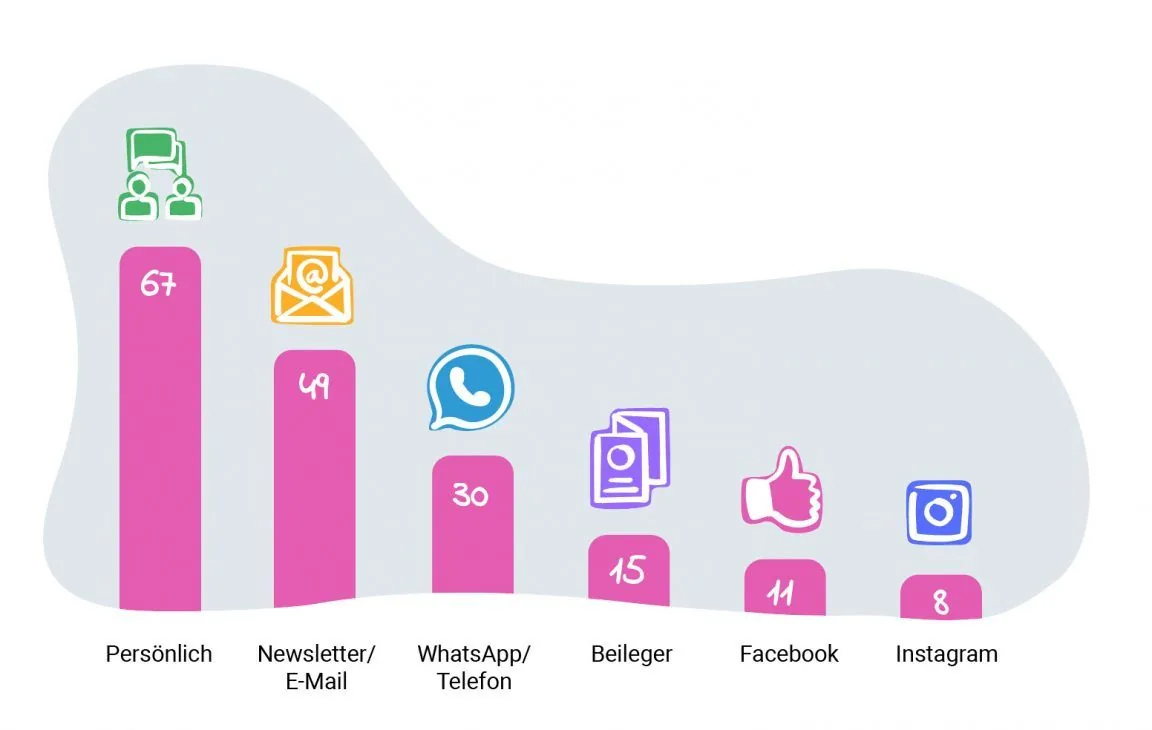
Communication is not a particularly long word, but it has enormous significance for the way we live together. The same applies to customer communication, which encompasses all measures used to interact with (potential) customers. Companies have a wide variety of online and offline options for communicating with their customers:
- 💬 face-to-face conversations
- 📞 telephone hotlines
- 📧 newsletters
- 🌐 social media such as Facebook, LinkedIn and Instagram
- 🖋️ blogs
- 📱 messaging services such as WhatsApp or Telegram
- 🤖 chatbots and live chats
- 📋 contact forms
- 🗞️ print advertising such as newspaper adverts, inserts or flyers
- 📨 emails
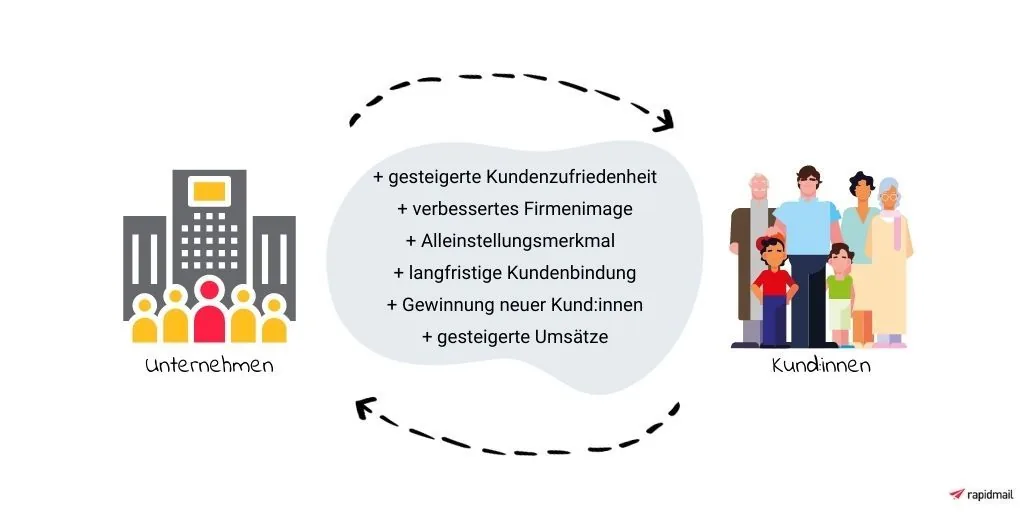
A good communication strategy not only prevents customer dissatisfaction. Above all, it helps you establish and strengthen interpersonal relationships and create long-term customer loyalty. At the same time, targeted and informative communication can help you win new customers and keep existing customers up to date.
With that “certain something”, the ideal mix of expertise, friendliness, humor and your company’s individuality, your customer communication can even become a unique selling point that sets you apart from your competitors and makes a major contribution to your company’s public image.
2. “The customer is king”: Focus on your customers
For successful customer communication, your customers should naturally be at the center of everything you do. Always focus on the needs, expectations and wishes of your target audience, and tailor your communication strategy precisely to the personas you have defined in advance. Put yourself in your customers’ shoes and consider…
- …when, how and through which channels your customers want to contact you, as well as when you can best reach them.
- …which tone and language style are appropriate for communication within your industry and with individual customers. If your customers tend to be older on average, for example, it is better to avoid youth slang or casual wordplay.
- …how you can communicate the advantages of your products and services. As customers can choose from numerous providers in the market, be sure to emphasize why you are the best fit for your target audience’s needs.
- …how you can keep interested people up to date. Honesty and trust form the basis of a long-term relationship between customers and companies. You should therefore announce news regularly and clearly explain decisions such as price increases, the discontinuation of certain products or a change in a recipe.
💡 rapidtip: Email marketing tailored to your target audience
Are you still looking for the best way to connect with (potential) customers? Sending newsletters offers the major advantage of reaching recipients selectively and according to their individual interests. It is no coincidence that newsletter marketing is a very popular, simple and effective communication measure for businesses and freelancers.
Once you have built a recipient list containing high-quality email addresses that you have not purchased, you can easily segment your newsletter readers, for example by location, age, profession or gender. Unlike sending mass emails, this allows you to provide subscribers with much more targeted and relevant information.
Don’t worry: getting started is not difficult! 😎 If email marketing is still unfamiliar to you, take a look at our free ebook on email marketing for beginners.
Always remember: the more satisfied your customers are, the more likely they are to recommend your business. You should therefore ask about customer satisfaction regularly. These conversations can show you what customers value about your business, what they dislike and even what is missing entirely from your offering or service. This allows you to keep improving and tailor your offering increasingly closely to your customers.
To obtain this important customer feedback, you can send survey emails, include a short satisfaction survey at the end of a phone call, give readers the option to rate your blog articles, and even use reactions to your social media posts to see how well your communication resonates with your followers.
3. Move beyond self-promotion and communicate real value
Another important factor in building a positive relationship with your customers and giving them a reason to stay loyal to your company is communication that offers clear added value. Instead of constantly praising and advertising your own business, it is far more effective to inform (potential) customers about relevant topics and support them with your industry expertise.
Engaging content that you can send in a newsletter or publish on your blog or social media includes:
- useful tips, announcements and guides
- relevant, timely topics
- exciting current developments in your industry
- access to exclusive content
- discounts for newsletter subscribers
But be careful: before you start throwing around clickbait and sensational headlines, remember that customers can only build trust in you and your company if you deliver on the promises made in your headlines and subject lines.
4. Set the right tone: Choose an appropriate communication style
Have you already decided what content you want to share with your customers? Don’t forget to think about the right tone. The tone of your campaigns, social media posts and blog articles matters, but you should also remain true to your individual style in every other area where you come into contact with customers.
💡 rapidtip: Create a consistent communication concept
Look at the bigger picture: the way you communicate with your customers has a major impact on your company’s image. Once you have devised a consistent strategy, you can align all areas of communication, from marketing to customer support, and actively shape your public reputation.
Follow these rules and your customer communication will be on the right track:
- Convey quality and value. How? Write clearly and precisely. Be polite, friendly, respectful and appreciative, for example by creating a professional email signature and including it in your newsletter.
- As the saying goes, honesty is the best policy. We therefore recommend that you communicate honestly and proactively and inform customers about important matters early, including problems and disruptions.
- It is not an easy decision, but you have to make it: how formally or informally do you want to address customers, and what form of address do they expect?
- Show humor and make your statements a little more relaxed. This creates a much more personal and less formal customer relationship.
- Speaking of personal communication, in addition to interest-based content, addressing customers personally always makes a good impression.
- Respect the limited time of the people you communicate with. When sending newsletters, for example, put the most important information right at the beginning and cover only one topic per send. Readers will not feel that they are wasting time or have to search endlessly for the information you promised.
5. Time flies: Handle customer inquiries as quickly as possible
When you receive customer inquiries, for example by email, live chat, comments or messages, you should respond as quickly as possible. If you leave customers waiting too long for answers to their questions and problems, you risk losing them to the competition. Naturally, good and prompt handling of customer concerns depends on being available so that customers do not spend hours on hold waiting for answers and information.
Sending transactional emails is also worthwhile to ensure an overall positive shopping experience in your online store or a positive visit to your website. This allows you to keep buyers regularly updated and guide them through the entire purchase process. We also recommend keeping customers regularly informed about the status of their order, so they do not wonder what has happened to the purchases they are eagerly awaiting.
6. Modern and proactive: Be available on social media
Social media platforms such as Facebook, Twitter and LinkedIn are becoming increasingly important and ever more popular as convenient sources of information and inspiration for users.
Social media also becomes more attractive to companies every year. With relatively little effort, you can reach a very large audience and give users an impression of your company, services and products.
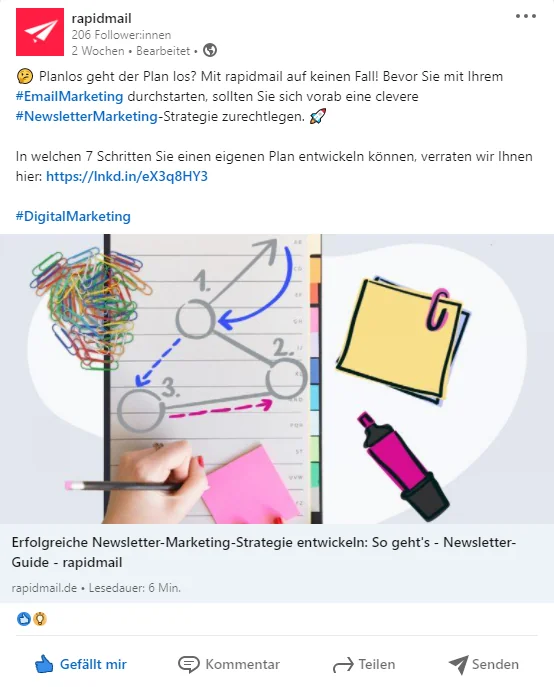
Another advantage: the barrier to contacting a company is particularly low on social networks. Here too, however, make sure you focus closely on your customers and remain active on the channels they use most. Using several popular communication channels can increase your reach even further. Email marketing and social media can work especially well together.
👀 Did you know? WhatsApp can also be used for customer communication

Besides promotional newsletters, WhatsApp Promotional Messages allow you to answer customer questions quickly and easily and send shipping confirmations to your customers’ smartphones. Can’t reach your customers on WhatsApp? Don’t worry, there are many useful alternatives to WhatsApp newsletters, such as Facebook Messenger, Telegram and Notify. Our favorite, however, remains sending personalized newsletters in your own corporate design.
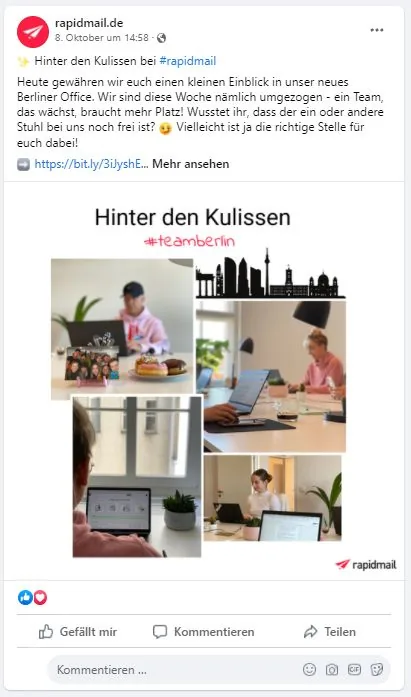
Also very popular: a glimpse behind the scenes can be refreshing alongside professional, informative content. Sharing personal details with your followers makes you seem more likeable and approachable and encourages customer interaction. We also like this approach to customer communication:
7. Better together: Email marketing meets blogging
Which is more worthwhile for customer communication, a newsletter or a blog? They should go hand in hand. While a blog is essential for building readers’ trust and creating a connection with your company, a newsletter draws attention to the blog and helps you win new customers.
We therefore recommend linking your newsletters and blog. If you have not used either format before, you should start with newsletter marketing. At first, your email communication with (potential) customers should focus primarily on building a relationship of trust, expanding your recipient list and establishing your newsletter as a regular part of your readers’ lives. Our pro tip: think of an original name for your newsletter that is memorable and perfectly suited to your company.
The time is then right for a blog that explores the topics from your newsletter, and your relationship with customers, in greater depth. Make sure you include a newsletter sign-up form in the blog post so that your recipient list continues to grow.
The rapidmail newsletter
Tips, ideas and news about email marketing, straight to your inbox.
8. Who can say no to a gift? Offer freebies and discounts
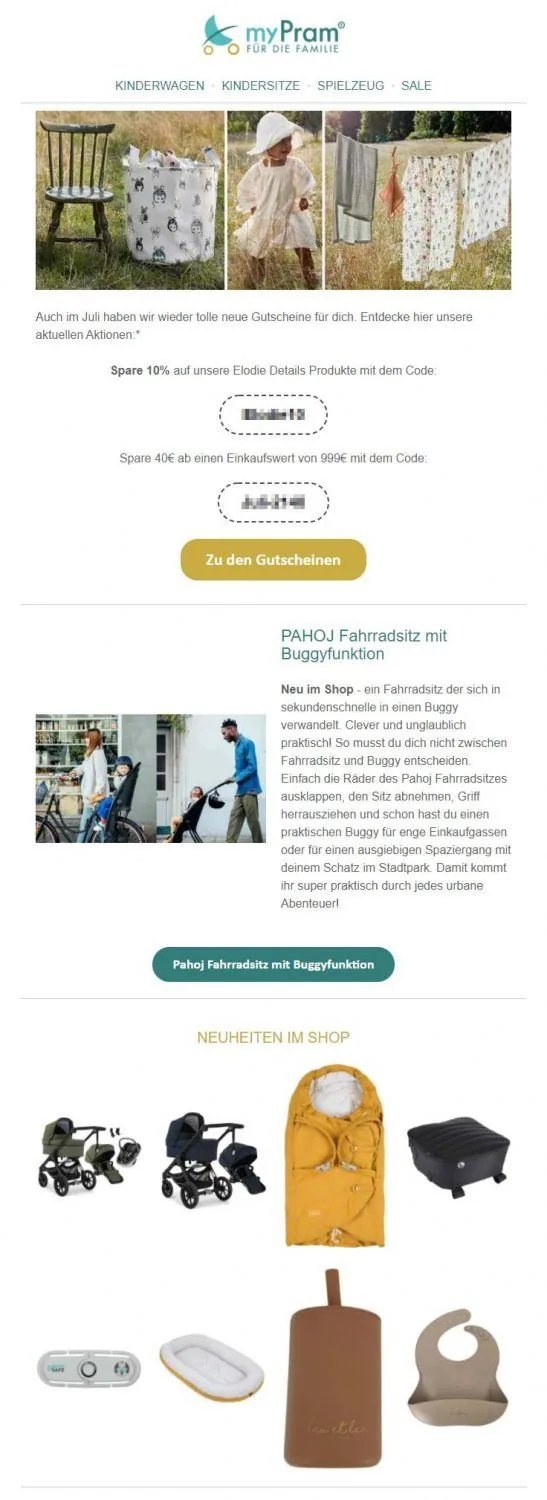
How about a little surprise for your customers? Voucher codes and small freebies are a great way to give them a little treat. Show your appreciation for your customers’ loyalty. If they feel valued, they will continue to trust your company and reward you with future purchases.
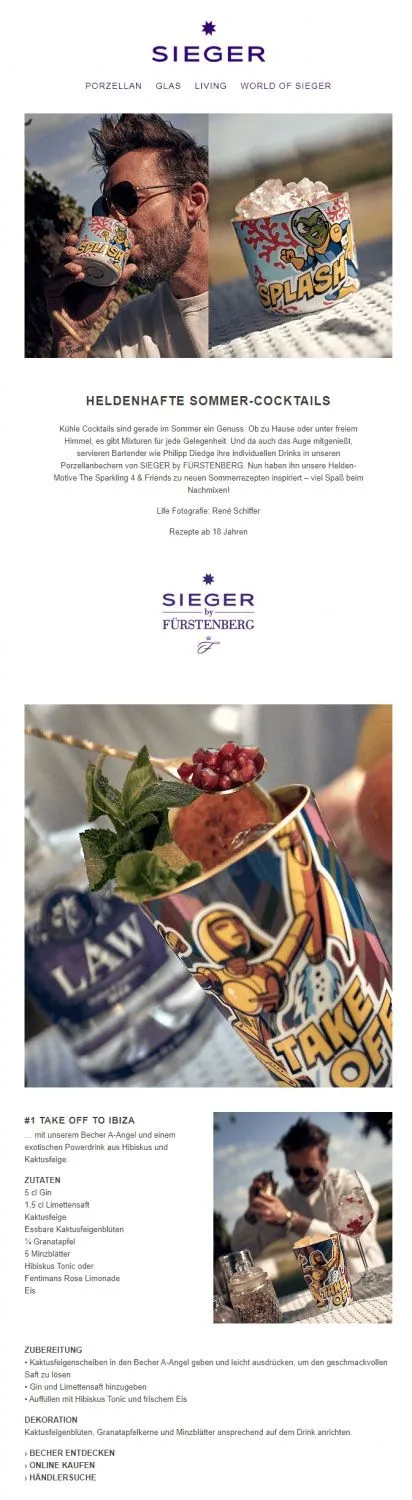
Whatever industry you work in, discount codes offer every company advantages in customer communication. Newsletters are also an efficient way to make as many interested people as possible aware of your discounts. The following example from myPram, an online store for baby products and equipment, shows what this can look like in a campaign:
9. Say goodbye to mistakes: Avoid slip-ups and learn from minor mishaps
Of course, mistakes are human. But if they start to pile up, your company may appear unprofessional. You should therefore avoid mistakes in customer communication as far as possible. Take the time to research thoroughly and check your communication content carefully, whether for your blog, newsletters or social media posts, before publishing it and sending it to your customers.
💡 rapidtip: Test, test, test
As the saying goes, two pairs of eyes are better than one. To make sure your customer communication hits the mark, ask team members to review your drafts. If your communication strategy includes newsletters, use a test send to check everything relevant. Always pay attention to:
- text readability and content completeness
- the first impression created by the campaign’s sender, subject line and preheader
- how images and graphics are displayed
- the appropriate language style and correct grammar
- links
- the format and overall appearance of your text or newsletter
If something does go wrong, be honest about it and learn what you can do better in the future. It is therefore always worthwhile to analyze the success of your communication methods and then optimize them. This also highlights an advantage of newsletter marketing for businesses: you can evaluate newsletter campaigns using clear metrics such as delivery rate, open rate, click rate and unsubscribe rate. With very little effort, you can find out whether and how your emails resonate with customers and whether they support your business objectives.
10. Play it safe: Comply with GDPR requirements
Data protection is becoming increasingly important. Show your customers that you care about the security of their data. As it is easy to lose track of legal requirements, we have worked with our external data protection partner Keyed to compile everything you need to know about sending legally compliant newsletters.