Sending legally compliant newsletters: Requirements you need to follow

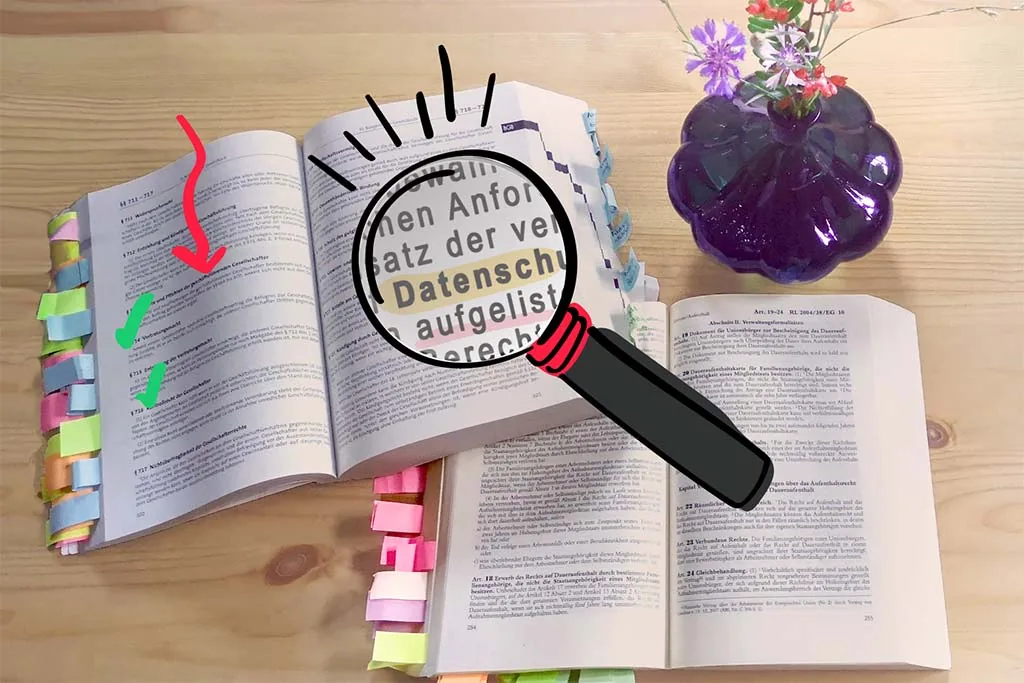
Newsletters are, and remain, one of the most popular communication and advertising tools. This is true not only for companies, but also for self-employed professionals, associations and agencies. As in every other area, however, email marketing is subject to legal requirements and guidelines that you need to observe as a sender to make your newsletters legally compliant and avoid warnings or fines.
1. A legally compliant newsletter sign-up process
Since the General Data Protection Regulation (GDPR) came into force, the law has required newsletter senders to be able to demonstrate at any time that their subscribers have expressly and actively consented to receiving the newsletter and to the processing of their data. The duty of accountability, meaning the ability to provide evidence of consent, follows from Article 5(2) GDPR. Although the GDPR does not explicitly require companies to use the double opt-in process for newsletter registrations, it is the simplest way to be on the safe side legally. The double opt-in method allows you, as the sender, to demonstrate easily in the event of a warning or legal dispute that you have the active and express consent of every recipient. This is also one of the many reasons why you should not buy email addresses to grow your newsletter recipient list.
For a legally compliant newsletter sign-up, you should provide interested users with the most important information about your newsletter and data processing before they complete their registration, ideally in the sign-up form on your website:
- What topics or content does your newsletter cover?
- How often do you send your newsletter?
- Do you use an external email marketing tool to send it?
- How do you use the data that interested users enter in the sign-up form, for example: “We use your email address to send you our monthly newsletter about xyz through the newsletter provider rapidmail”?
- You must meet your information obligations under Articles 12 et seq. GDPR by explaining your website’s data protection information. The sign-up form must include a reference to the privacy policy, which should explain what personal data you collect for newsletter distribution, why you collect it and what happens to it.
Do I also need to use the double opt-in process for existing customers before sending them my newsletter?
If a business relationship already exists, it may be possible under certain conditions to send customers a newsletter without their explicit consent. All of the following conditions must be met:
- Your company obtained the customers’ email addresses when they purchased a product or service
- Your company uses the email addresses to send direct advertising by newsletter for its own products and services that are similar to the customers’ previous purchases
- The customers have not objected to the use of their data for advertising purposes
- When entering their email addresses, and every time they are contacted by newsletter, customers were expressly informed that they may object to the use of their data at any time
Given the minimal effort involved and the different possible interpretations of these requirements, we nevertheless recommend obtaining existing customers’ consent to receive the newsletter by double opt-in at the start of the business relationship.
2. A legal notice as a mandatory part of the newsletter
Advertising newsletters are legally considered telemedia and are therefore subject to the legal notice requirement. To make your newsletter legally compliant, we recommend including the required information in your newsletter signature.
The purpose of the legal notice requirement for newsletters is to give recipients a way to make contact quickly. It should also allow them to see immediately who sent the newsletter.
Unfortunately, legislators have not yet provided specific guidance on where the legal notice should appear, although senders now commonly place it in the newsletter footer. Nor is there any specific guidance on whether a link to the legal notice on the website is sufficient or whether the details must appear directly in the newsletter.
To be on the safe side, we therefore recommend including the following legal notice details in the newsletter to ensure legally compliant distribution:
- Company name and legal form
- Company address
- Authorized representative
- Telephone number and contact email address
3. The mandatory unsubscribe link in the newsletter
The law also requires subscribers to be able to unsubscribe from the newsletter at any time. It is usually sufficient to include an unsubscribe link, such as: “Unsubscribe from newsletter” or “Click here to unsubscribe from the mailing list”, in the newsletter footer. Your recipients can then simply click this link to unsubscribe.
Senders who distribute their newsletter from a “no-reply” sender address should take particular care to provide an unsubscribe link in every email. Recipients cannot unsubscribe by replying to an email from such an address, so without an unsubscribe link they would have no way to object to receiving further newsletters. This would carry a high risk of a warning and should not be overlooked. From a data protection perspective, newsletter subscribers must be offered a way to withdraw consent that is just as easy as giving it, in accordance with Article 7 GDPR. You can also read our blog post with tips for GDPR-compliant newsletter unsubscribes.
💡 rapidmail has thought of this, of course:
An unsubscribe link is automatically inserted in every newsletter you create in the editor. You can edit it and customize the link text as you wish, keeping you on the safe side legally. You can also direct recipients who click the unsubscribe link to a customized unsubscribe page and ask why they are unsubscribing. This helps enormously with the continued optimization of your campaigns and reduces your newsletter’s unsubscribe rate over the long term.
4. Rights to use third-party images
Images enhance your newsletter, stir emotions and leave readers wanting more. It is no wonder that almost all newsletter senders now include images, graphics and photos in their newsletters. If the pictures were taken with your own camera or smartphone, you can add them to the newsletter without any problem.
Things become more complicated if you want to use images in your newsletter that you did not create. The image rights belong to their creator, such as the photographer, graphic designer or artist. These rights apply in particular to reproducing, publishing and distributing the images, which includes sending them in newsletters. You may therefore only use these images if their creator has granted you the image rights under a free or paid license agreement. It is not enough for the person simply to display their work online. They must expressly state that they make the usage rights available to others free of charge, or that the rights to use the images can be purchased.
In short, if you want to display images in your newsletter that you did not create yourself, you may only include them if their respective creators have granted you the appropriate rights of use. It is important that these rights cover not only private use, but commercial use as well.
Alongside image rights, you must also respect creators’ moral rights when using third-party photos and graphics, including the right to attribution. This simply means that you must name the image creators in the newsletter. Depending on the platform and creator, certain formal requirements may apply to how the rights holder’s name must appear in the newsletter.
5. Protecting recipient data
Protecting recipient data plays an important role in legally compliant newsletter marketing. Under the principles of data avoidance and data minimization, personal data may only be collected and processed if it is relevant to the respective purpose.
For newsletter distribution, this means that users must be able to subscribe by providing only the email address to which the newsletter will be sent. In other words, only the email address may be a mandatory field in the newsletter sign-up form.
You may still request additional personal data such as a name, address or age in other fields, but these must be optional. If interested users leave these fields blank and enter only their email address in the form, they must still be able to subscribe to your newsletter. This ensures that subscribers have the option to use your newsletter anonymously.
When sending your newsletter, you must also protect recipient data by ensuring that none of your recipients can use the email to see which other email addresses received the newsletter. If you use rapidmail as your newsletter tool, you do not need to worry about this: your recipients can only see your sender address and their own email address as the recipient address.
If your recipients’ data leaves Europe and is transferred to a company such as a newsletter software provider in the USA, you should also find out how the new judgment invalidating the EU-US Privacy Shield agreement affects newsletter distribution and the management of recipient data. If, for example, you use the US newsletter tool Mailchimp, data protection considerations now make it advisable to look for a European alternative to Mailchimp. Using newsletter providers from unsafe third countries is becoming increasingly difficult because it involves considerable contractual work and documented risk assessments. To be on the safe side, we recommend using a tool that stores personal data exclusively in an EU country for GDPR-compliant email marketing.
👀 Did you know?
When distributing newsletters, you must also bear in mind that recipients may exercise the so-called “right to be forgotten” under the GDPR. This means that a person whose personal data you have collected has the right to demand its complete deletion, provided this does not conflict with other retention obligations. As a newsletter sender, you must then ensure that all of the recipient’s data is permanently and completely deleted. The data may remain stored in anonymized form in newsletter statistics. With rapidmail as your newsletter tool, you can unsubscribe recipients from your mailing list or delete them in compliance with the GDPR.
6. Correct price information in product advertising
If you advertise one of your products in a newsletter, you must also comply with the German Price Indication Ordinance to ensure that your newsletter is legally compliant. In relation to newsletter distribution, the ordinance is intended to give recipients clarity about the prices stated in your newsletter. It also allows consumers to compare offers easily across newsletters from different providers.
As a sender, you are required to inform subscribers in the newsletter that a purchase may incur additional delivery or shipping costs, and that the price shown includes statutory VAT.
The rapidmail newsletter
Tips, ideas and news about email marketing, straight to your inbox.
7. Concluding a data processing agreement with the newsletter provider
If an external company, such as rapidmail as your email marketing tool, has access to your customers’ data, such as their email addresses, this constitutes data processing on your behalf. Under Article 28 GDPR, you are required to conclude a data processing agreement with this company. To make your newsletter distribution legally compliant, you should therefore conclude a data processing agreement with rapidmail before you send your first newsletter.
How can I conclude a data processing agreement with rapidmail?
It is quick and easy with rapidmail: you can conclude the data processing agreement electronically in your rapidmail account.
8. Checklist for legally compliant newsletter distribution
The newsletter has been created and the recipient list prepared and selected. Everything is ready to send. Then, in the moment of truth, just before you click the “Send campaign” button, doubts often arise: Have you really remembered everything?
Alongside our general newsletter checklist and a comprehensive step-by-step guide to data protection-compliant newsletters, we have put together this checklist for legally compliant newsletters so that you can release the mouse button with a clear conscience and send your newsletter confidently by clicking “Send campaign”:
- When users sign up for your newsletter, do you tell them its topics and sending frequency?
- Is the email address the only mandatory field in the sign-up form?
- Do you have the express, active consent of every recipient to receive your newsletter through the double opt-in process, and can you provide evidence of it?
- Are you sure your newsletter registration confirmation emails contain no advertising content?
- Have you included a working unsubscribe link that your subscribers can use to unsubscribe at any time?
- Does your newsletter include a legal notice?
- Is the price information in the newsletter correct, including delivery and shipping costs and a statement of whether the prices include or exclude VAT?
- Do you have commercial usage rights for all images and photos included in the newsletter?
- Are you sure recipients cannot see which other email addresses received the newsletter?
- Have you concluded a data processing agreement with your newsletter provider?
Send GDPR-compliant newsletters now
Data protection in focus: Our interactive checklist for data protection-compliant newsletter distribution
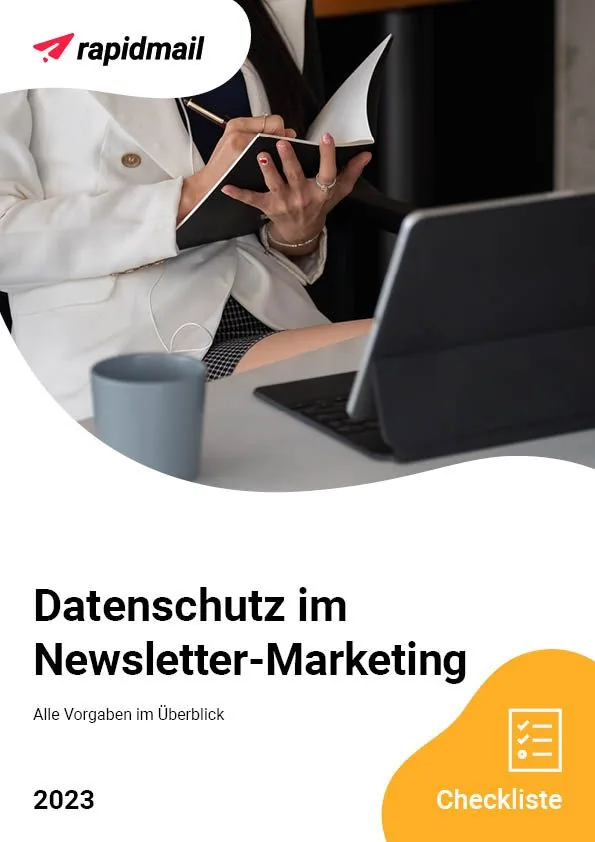
There are many requirements to observe when sending GDPR-compliant newsletters. We therefore understand that data protection can sometimes feel really tricky. But it does not have to be! 🤓
We want to help you make sure, step by step, that your newsletter is 100% GDPR-compliant. That is why we have created a free checklist for you to download and check off, focusing on every data protection requirement in newsletter marketing. You will see how easy data protection-compliant newsletter distribution can be!
We hope you enjoy working through the checklist and wish you every success with your newsletter marketing.
Download the free interactive data protection checklist (PDF in German)
Do you have any questions?
This article provides non-binding information only and does not constitute individual data protection advice. If you have further questions about the legal requirements for newsletter distribution, it is best to contact your legal adviser, in-house legal counsel or the experts at Keyed. They can also provide detailed information for your specific case.