Master e-commerce marketing with ease: The right strategy for your online store

There are so many ways to market an online store that it is easy to lose track, especially at the beginning: Why is online marketing in e-commerce necessary and important in the first place? Which relevant channels and useful methods are available, and where is the best place to start? We show you how even a small or new business can create a successful master plan for online store marketing that raises your profile and boosts your sales.
1. Definition of e-commerce marketing: What exactly does it mean?
E-commerce stands for “electronic commerce”, also known as online retail. In other words, it refers to buying and selling transactions that take place online rather than in a physical shop. E-commerce marketing therefore covers all advertising activities carried out to promote an online store and the products it offers. The aim of e-commerce marketing is to attract as many customers as possible to the online store, generate more orders and increase sales.
A distinction is made between offline and online marketing activities for the online store:
The different types of e-commerce marketing
| Online marketing for online stores | Offline marketing for online stores |
|---|---|
| In e-commerce, online marketing covers all digital advertising activities for the online store that reach the target audience on the internet, in other words, online. For example, newsletters can be sent regularly to showcase the latest products from the online store, or ads can be placed in search engines such as Google to promote the online store at the top of the results page for specific searches. | In e-commerce, offline marketing covers all traditional advertising activities for the online store that reach the target audience away from the internet, in other words, offline. For example, an online store can be marketed offline by distributing catalogs to the target audience or running a TV commercial that showcases the latest products and raises brand awareness. |
In this article, we focus on the potential online marketing activities for your online store. This area alone offers so many options that it makes sense to focus on individual channels and activities first and optimize them before expanding your marketing channels further. Since you are marketing your online store, it stands to reason that your target audience can be reached effectively through online channels. That makes them the perfect starting point for your e-commerce marketing! 🚀
2. Why online marketing is important for your online store
Good e-commerce marketing is the foundation of a successful online store over the long term. Especially at the very beginning, when you are opening a new online store, it is essential to think in advance about how you can raise awareness of the store and draw potential customers’ attention to your business.
Even if your online store is already performing well and has a large customer base, however, it is important to build lasting loyalty to your brand among your customers and keep winning new customers. Only a well-planned marketing strategy can ensure that existing customers return to your online store regularly while new contacts discover it and can then be won over by your offers on your website.
At a glance: The benefits of e-commerce marketing
- 📈 Greater visibility and reach: Targeted activities on the channels relevant to your audience, such as search engines or social media, can bring more potential customers to your online store. Even if not every user ultimately buys something, increased traffic in your store usually also increases your revenue.
- 🎯 Targeted advertising: Most online marketing activities have useful tools that you can use to tailor your e-commerce advertising precisely to the interests and behavior of specific target audiences. The more closely advertising matches the individual preferences of your potential and existing customers, the more likely they are to respond to it and browse your online store.
- ↩️ Returning customers: Even if your customers have already bought something from you and loved your products, there is no guarantee that they will return to your online store on their own. With so many different products, brands and stores available today, targeted online store marketing is important for reminding people about your brand regularly and turning customers into loyal customers over the long term.
- 💬 Direct customer communication: Most direct marketing channels, such as email marketing or social media, allow you to contact your customers directly and address them personally. This brings them closer to your business and strengthens customer loyalty. When you send product newsletters and other marketing emails, for example, you give your target audience the opportunity to reply to your advertising messages and contact your business with just one click.
- ✨ Optimizing your offers: Through online marketing, online stores can collect valuable data about the behavior, interests and preferences of potential and existing customers and optimize their product ranges accordingly. If you run paid ads on Google search results pages, for example (SEA), you can see exactly which products users search for more often or which ad copy appeals more strongly to your target audience.
- 🏇🏻 Standing out from the competition: Exactly how you shape your e-commerce marketing is, of course, up to you. You can let your creativity run free when planning your campaigns. Online stores often operate in highly competitive markets, so original advertising campaigns are a particularly good way to stand out from your competitors and put your online store in the spotlight.
The rapidmail newsletter
Tips, ideas and news about email marketing, straight to your inbox.
3. Relevant channels and methods in e-commerce marketing
As you can see, marketing and e-commerce go hand in hand! 🫱🏼🫲 Now all you need to do is devise a master plan for your online store and consider which communication channels and methods will best reach your target audience.
Unfortunately, there is no single perfect solution that you can simply adopt for your marketing strategy. But if you take the time to review the most important online marketing activities available, you are sure to develop a feel for which channels you should test first to position your business successfully in the e-commerce market.
Content marketing & SEO in e-commerce
As a branch of inbound marketing, content marketing plays an important role in raising awareness of your online store.
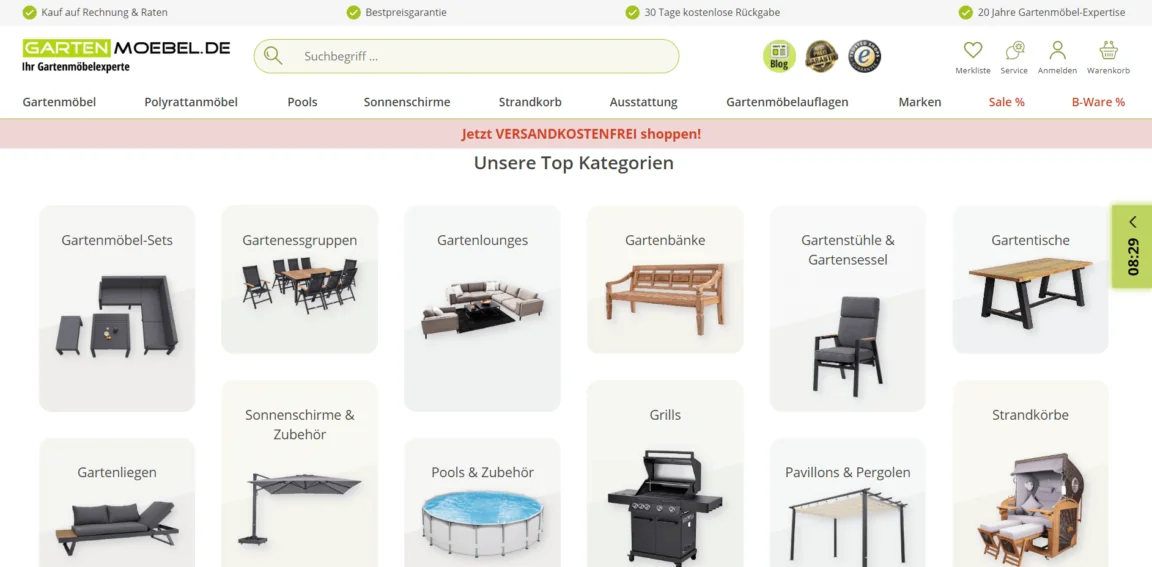
Try to provide helpful and relevant content regularly, for example in the form of blog articles, guides or targeted landing pages on your own website. The topics of your content should naturally suit your sector. If your e-commerce business sells garden furniture, for example, articles offering garden design tips can help you establish expert status with your target audience and become their point of contact for questions about garden furnishings.
In many cases, content marketing is a useful way to begin e-commerce marketing because published content lays the groundwork for further online marketing activities. The content you publish on your online store’s website is also the foundation for search engine optimization (SEO): The more valuable search engines such as Google consider your content to be for users, the better it will rank on search results pages. In turn, the more care you put into your content to provide your target audience with useful and unique information, tips, instructions or inspiration, the more likely it is that more potential new customers will reach your online store through Google Search.
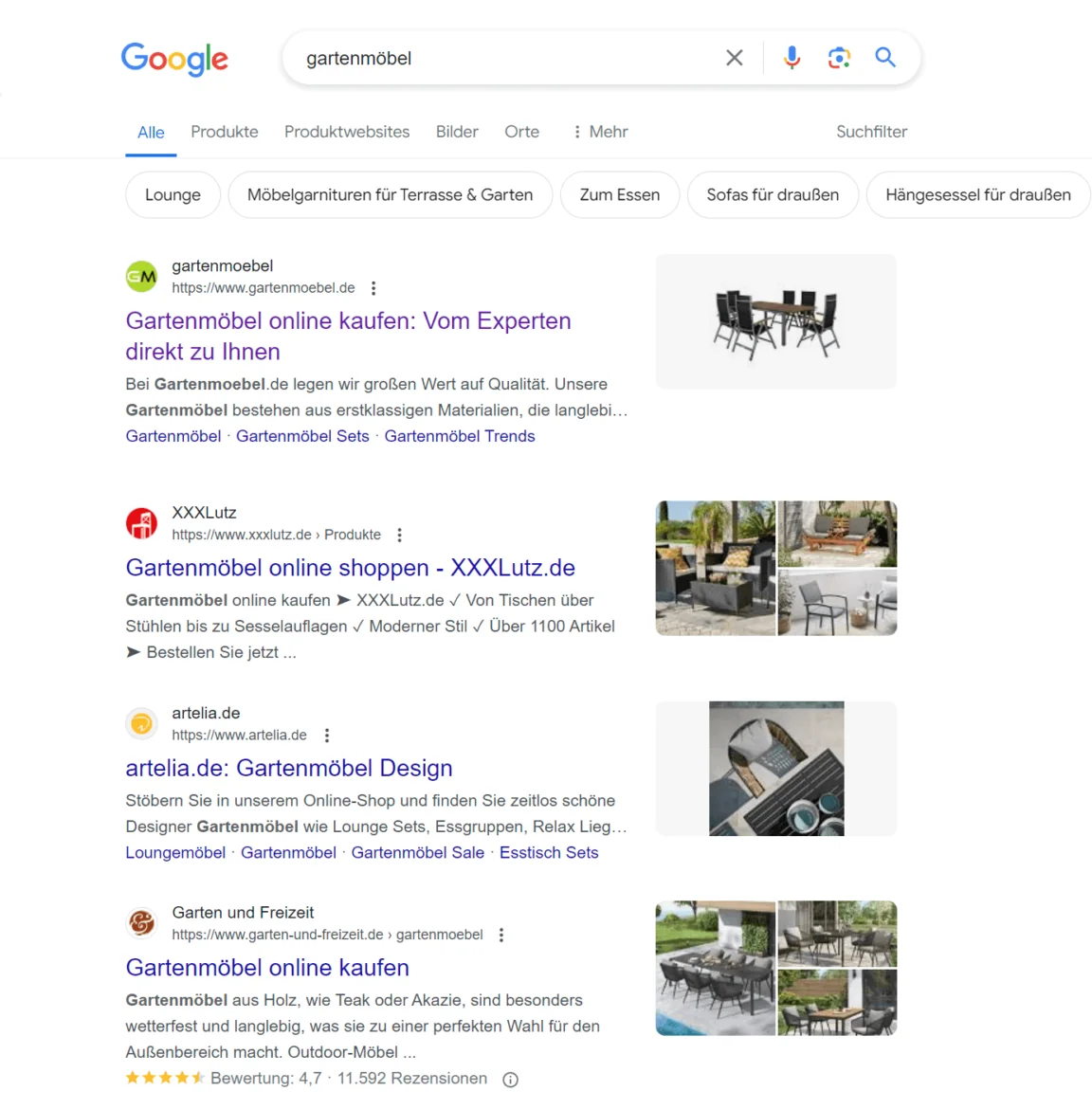
In addition to useful tips and instructions, your product category pages and individual product pages should contain sufficient content tailored to a specific set of keywords. After all, your main goal is for users who search online for products using certain terms to land in your online store and be encouraged to buy there. Suppose many users search online for “garden lounge set”. You should provide a product category page for that search term. You can then tailor the descriptions on individual product pages to more detailed search terms, such as “black four-piece garden lounge set”. The best way to discover which terms users search for on Google and elsewhere is with an SEO tool such as Surfer, Sistrix or Semrush.
You should also make sure that the product pages in your online store are clearly laid out and informative, so your customers can find everything they need to make a purchase decision on the page. This includes professional product images, information about dimensions, functions and features, delivery times, prices and return options.
👀 Did you know?
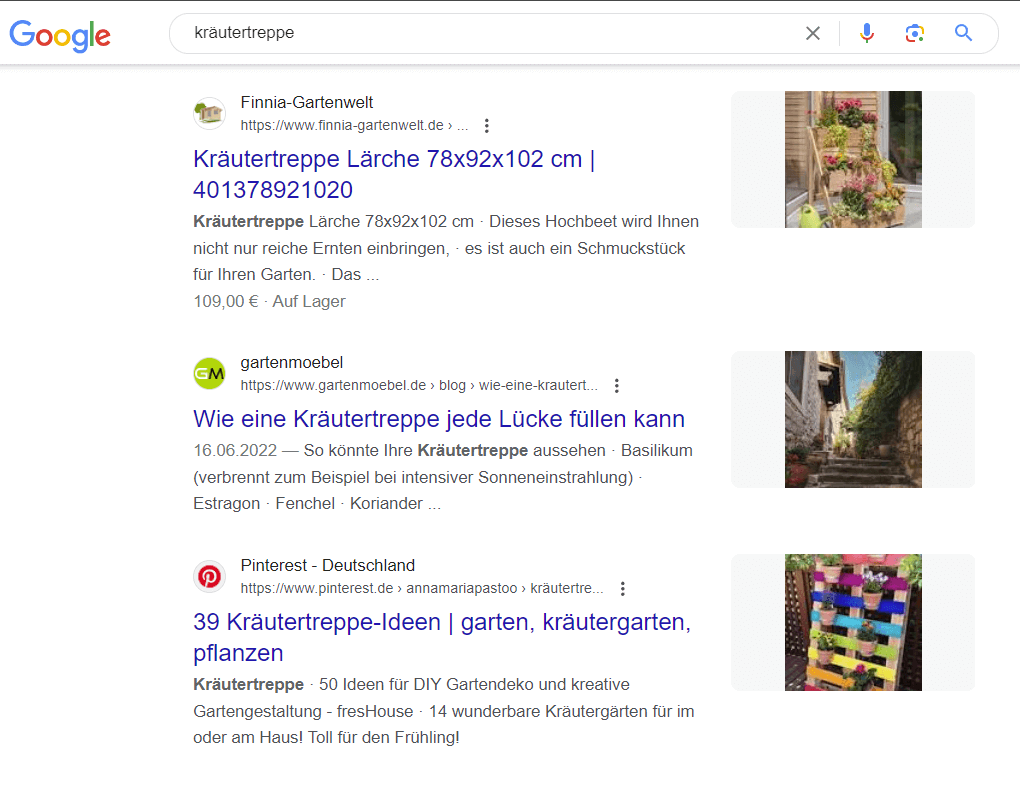
By not only filling the product pages in your online store with content and optimizing them for search engines, but also providing useful knowledge, tips and instructions on relevant industry topics in a blog, for example, you strengthen your overall “website authority”. The more valuable content you provide on current and relevant industry topics, the more expertise Google attributes to your website and the more likely it is to regard your business as an industry expert. This can also improve the Google search rankings of relevant pages such as your homepage or product pages, bringing more users to your online store. For new or smaller e-commerce stores in particular, content marketing is therefore an effective channel for outperforming large online stores and established brands in search rankings and making your own brand more visible.
💡 5 rapidtips for your online store’s content marketing
- 💭 Start by planning a sensible website structure: Check which search terms users use to find products from your range and use this information to decide which product categories to offer in your online store and which keywords to include on your product pages. Once the basic structure is in place, you can start filling your online store with content.
- ⏱️ Give your content time: Content marketing and SEO are activities that only produce results over the long term. At first, it takes time for Google to index your initial articles and product pages and work out which field your business is an expert in and which product categories you market. As you add more valuable content over time, rankings will improve, which will become noticeable through rising visitor numbers.
- 🔎 Use an SEO tool to identify relevant keywords: Investing in a good SEO tool is particularly worthwhile in e-commerce marketing. It allows you to discover easily which keywords users employ to search for products and which terms your competitors target with high-ranking product pages or blog articles.
- 👑 Focus on quality rather than quantity: Artificial intelligence (AI) can write texts in no time at all, right? We recommend using AI tools only to create a solid basis for your copy. Take the time to optimize the text in your online store so that it suits your brand and target audience and contains unique information that users cannot find on 1,000 other pages. Your visitors and Google will love it!
- ✒️ Give metadata sufficient attention: You can define individual metadata for every page of your online store, consisting of a title (meta title) and description (meta description). These are the texts that Google will then generally display for the relevant page in its search results. Make sure that the metadata contains all important keywords and information, observes the maximum character count and, of course, encourages users to click.
Email marketing
For online stores, email marketing is an essential advertising activity and definitely belongs in an ideal marketing mix made up of several relevant channels. With an email marketing strategy featuring varied, personalized content such as new collection launches, information about your business and your team, or interesting discount campaigns, you can win new customers for your online store, build lasting brand loyalty among existing customers, win back former customers and increase your store’s revenue.
👀 Have you seen this?
Is newsletter marketing still new territory for you? No problem, we have just what you need: Our content manager Wiebke explains how beginners can get started with their first newsletter. The video is part of a newsletter course that teaches you everything you need to know about email marketing step by step. Roll the film! 🎬
Open video transcript
Chapter 1: Introduction
Welcome to my newsletter course, which will turn even a beginner like you into a real professional. There are 12 episodes in total, in which you will learn step by step how email marketing works and how you can achieve your goals.
Today, we are starting right at the beginning with the most important fundamentals: What exactly is email marketing? Is it really still worthwhile today? And what can you actually achieve with newsletters?
Chapter 2: Definition: What exactly is email marketing?
As the name suggests, email marketing is an advertising activity that uses emails. For example, you send newsletters to a list of contacts to provide them with targeted information about something or encourage them to make a purchase.
The most important point is that you only write to people who have agreed in advance to receive the emails. When it is done correctly, email marketing has nothing to do with spam or fraud. Quite the opposite: Your contacts actively sign up for your emails themselves!
We will take a detailed look at how you can collect contacts like these for your recipient list in episode 2.
Chapter 3: Is email marketing still worthwhile today?
I often hear people wondering whether email marketing is still worthwhile today. That is understandable, because topics such as influencer marketing and social media seem to be on everyone’s lips at the moment. BUT the relevance of email marketing has actually grown steadily in recent years. rapidmail discovered this in an extensive survey of almost 800 businesses! I will link the study in the information box so you can read the results again at your leisure.
The fact is that email marketing is still one of the most profitable advertising channels. For every euro invested, you get between 35 and €42 back.
And that is just one of many advantages:
Chapter 4: Benefits of email marketing
Unlike social media, email marketing does not make you dependent on algorithms, apps or updates. Your contact list belongs to you alone. Or think about expensive TV advertising for a moment: So many people see your advert even though they have no interest in what you offer. With email marketing, you therefore have a direct connection to your potential customers and much less wasted reach than with other advertising channels.
You alone decide which messages to send to your readers. If you manage to match your content to your contacts’ tastes, they will develop trust and a close relationship with your brand.
Emails have an enormous reach because almost everyone has at least one email address. What is more, we no longer read our emails only on a computer; we also read them on our smartphones while we are out and about. This means you can reach your target audience almost anytime and anywhere, and you decide when.
Email marketing is also relatively inexpensive. Depending on the software, you can get started for just 7 to €20 per month. Or you can choose a tool that lets you try it out first and pay only for each actual send, with no monthly subscription.
Best of all, emails are not simply sent out blindly. As soon as you have sent them, you can see how successful your emails are. Metrics such as open and click rates are collected automatically and show you how well your emails are received by your target audience.
If you are now thinking that you do not have enough staff or time, or that you lack the necessary knowledge, I can put your mind at ease. Professional email marketing tools have plenty of practical features, such as a drag-and-drop editor or stylish design templates, so you can create your emails quickly and easily. You really do not need to be a professional!
Sounds great, doesn’t it? Now let us look at exactly what you can achieve with email marketing.
Chapter 5: Goals you can achieve with email marketing
You can win new customers. Once you have caught your contacts’ interest and they have subscribed to the newsletter, your emails allow you to stay in touch and build their interest bit by bit until they are finally convinced by your offers or products and become paying customers.
You can then increase customer loyalty straight away. If your contacts repeatedly receive positive, helpful emails from you, they are likely to return, remain loyal, identify with your brand, and simply love it!
You can also shape your company’s image by using your emails strategically as a mouthpiece. You have the opportunity to share exactly the information that matters to you, actively helping your business make a good impression and become associated with positive values among your target audience.
This also increases brand awareness. By sending recurring emails that include your company’s name, values and products, you increase your brand’s visibility and, over time, its recognizability.
And all of this is reflected in revenue. Marketing emails offer plenty of ways to encourage your target audience to make a purchase, for example with discount codes or special offers.
Chapter 6: Conclusion
Now you know exactly what email marketing is and that it offers you plenty of benefits. In the next lesson of the newsletter course, you will learn how to build your contact list effectively and in compliance with the law. So do go straight on to that episode.
If you enjoyed the first lesson of “Learn email marketing”, please give the video a thumbs up.
What do you hope to learn from this newsletter course? Let me know in the comments so that I can cover it in the future videos!
Why email marketing is worthwhile in e-commerce
- 💸 You guide your contacts through the entire customer lifecycle: Whether they are looking for suitable products, making a final purchase decision or have just completed their first purchase, targeted product newsletters and personalized offers allow you to give interested visitors exactly what they are looking for at every stage. Automated transactional emails after a purchase allow you to keep your customers up to date on their order and delivery at all times and send invoices easily. Email automations also help you send targeted messages automatically based on customer behavior, for example immediately after registration in the online store or on your customers’ birthdays.
- 💌 You contact only interested people: For GDPR-compliant email marketing, you may contact only people who have expressly consented to receive your marketing emails. Your newsletter recipient list therefore contains only contacts who are already interested in your brand and products. You avoid wasted reach and can focus on potential customers who want to learn more about your online store and product range and are receptive to your offers.
- 🖱️ Your contacts reach your online store with just one click: For e-commerce businesses, product newsletters are a smart way to direct interested contacts to a product page in the store simply by clicking a newsletter link. Whether they are using a laptop or smartphone, if your subscribers like an item in the newsletter, they can buy it directly from your online store.
- 💰 Email marketing does not involve high expenditure: Compared with other channels, email marketing has a particularly high return on investment (ROI): Every euro you invest in email marketing generates an average return of €44 (source: EmailToolTester, 2021). Newsletter delivery prices vary depending on the tool, but generally start at just €15/month.
- 📊 You can measure and optimize results easily: If you use a professional newsletter tool for your online store’s email marketing, it will collect important metrics with every send, showing whether and how well your newsletter products are received by your contacts. If you also track newsletter conversions with Google Analytics 4, you can even see how much revenue each item featured in the newsletter generated.
👀 Did you know?
Email marketing is an extremely popular and valuable channel in e-commerce marketing: An incredible 94.4% of Germany’s 1,000 largest B2C online stores use newsletters and marketing emails (source: EHI Retail Institute, 2022).
Practical example: How AH-Trading uses email marketing in e-commerce
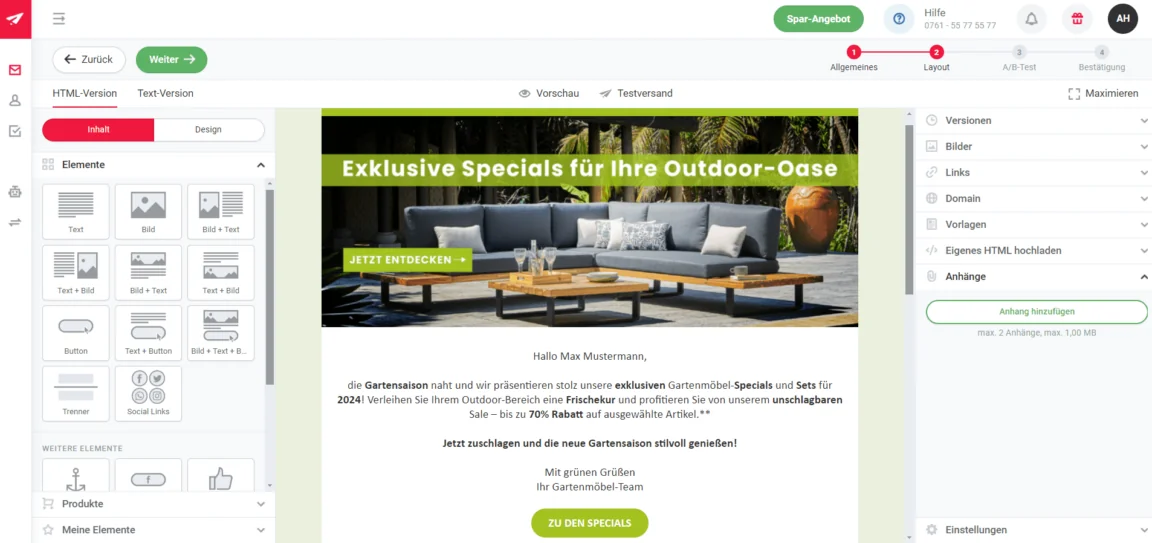
AH-Trading GmbH has successfully established a new online marketing channel for its Gartenmoebel.de online store through email marketing, enabling it to maintain regular contact with its target audience. In the video, Simon Rüttermann, e-commerce manager at AH-Trading, shares his experience of the benefits of email marketing for the online store, explains how it is used, and reveals why he chose rapidmail when looking for a suitable newsletter tool.
💡 5 rapidtips for your online store’s email marketing
- ✂️ Segment your online store customers into subgroups: Women’s fashion vs men’s fashion, elegant dresses vs casual jogging bottoms. By discovering your customers’ interests and purchasing habits and tailoring your newsletter content accordingly with personalized offers, you can increase your newsletters’ click rate and the traffic to your online store.
- 💡 Do not send only product offers: If your newsletter advertises nothing but products and discounts, your subscribers will eventually become bored. Maintain their interest by sending varied newsletter content and, for example, offering behind-the-scenes glimpses of your team or sharing exciting industry knowledge with your readers.
- 🖌️ Design your newsletters to match your online store: Your online store marketing strategy should have a consistent thread. This includes a uniform newsletter design that matches your store website and other communication materials, boosting your brand’s recognition. By the way, rapidmail 1-click design automatically creates newsletter templates in your store’s individual design! Alternatively, you can begin with pre-designed e-commerce newsletter templates that you only need to fill with your content.
- 👍🏻 Discover what interests your contacts most: Once one newsletter is sent, it is time to prepare for the next. Take a moment after every send to carry out a newsletter analysis. Which product images do your contacts click more often? Which subject lines work better? As you get to know your target audience better, you can tailor your newsletter content more precisely and keep your contacts engaged over the long term.
- 📈 Place newsletter sign-up forms on frequently visited online store pages: To win more newsletter subscribers, do not hide your sign-up form in the website footer. Give it a prominent position on popular online store pages, for example in the sidebar or as a pop-up.
Free ebook: An easy email marketing strategy for e-commerce
Our detailed ebook explains how you can use the countless benefits of email marketing effectively for your online store.
This ebook includes:
- an overview of the different types of marketing email used in e-commerce
- 10 good reasons why online stores should use email marketing
- tips for the right strategy for successful online store marketing
- an example of the ideal structure of an online store newsletter
- and many more marketing tips for online stores.
Download the ebook for free (PDF in German)
Enjoy reading and good luck with your online store marketing! 🚀
👀 Did you know?
96.6% of Germany’s 1,000 largest B2C online stores send their marketing emails using a professional email marketing tool such as rapidmail or API-based sending services (source: EHI Retail Institute, 2022).
Pay-per-click advertising & SEA
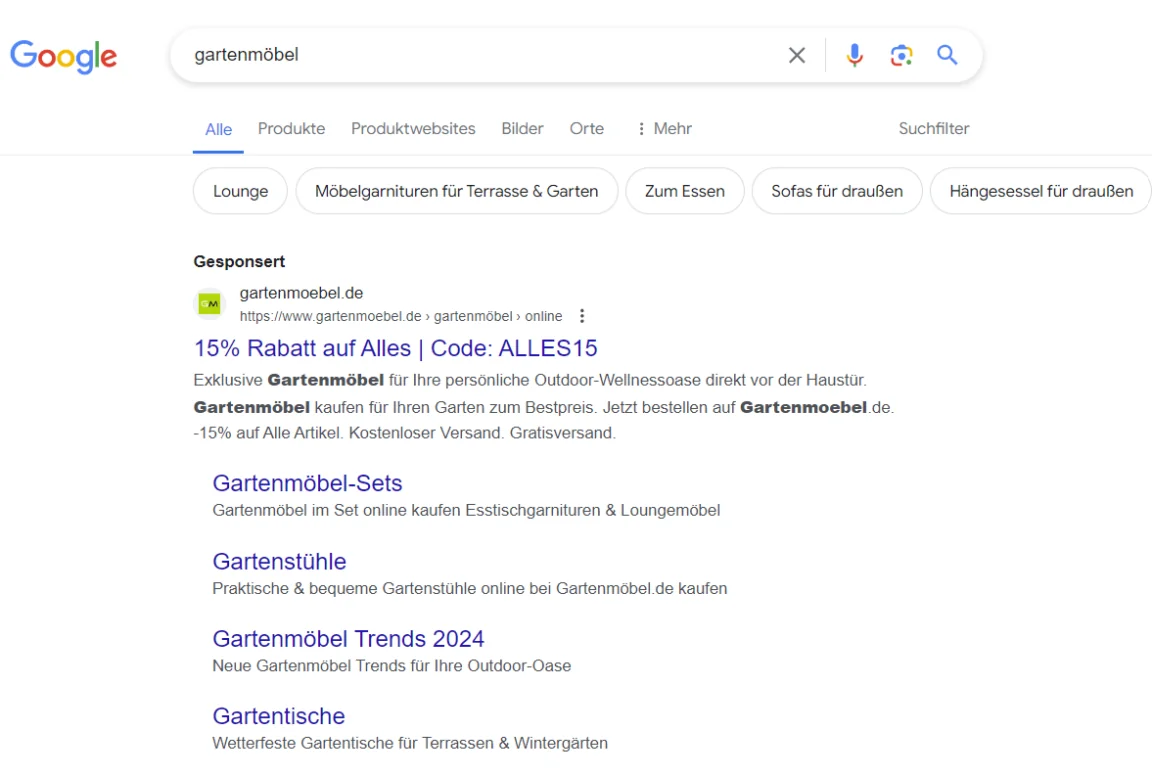
Depending on the level of contest, it can make sense for your online store marketing to focus more heavily on search engine advertising (SEA), and pay-per-click advertising (PPC) in particular, especially at the beginning. Place targeted product ads on results pages for relevant Google searches and on websites frequently visited by your target audience. This increases the likelihood that potential customers will notice your brand and products and click the ad to reach your online store. PPC advertising is especially suitable for small or new online stores that need to use limited marketing budgets efficiently. You publish an ad at no initial cost and pay only when an interested user clicks it to visit your online store. The benefit is that you only “invest in users” who have already shown an initial interest in your products.
SEA and PPC campaigns allow you to increase your online visibility quickly and raise awareness of your brand among your target audience. The option to adjust your spending individually to suit your needs gives you great flexibility and allows you to respond quickly to changes in the market, seasonal trends or special promotional days.
👀 Did you know?
For online marketing in e-commerce, Google Shopping ads are a smart way to advertise products from your online store. Users see important information such as an image, price, availability and customer reviews for your products directly on the Google search results page, increasing the likelihood that they will click the ad.
Social media marketing & influencer marketing
In e-commerce marketing, social media channels such as Instagram, LinkedIn, TikTok, YouTube, Pinterest and Facebook are good platforms for showcasing your products while building a personal connection with your target audience and offering behind-the-scenes glimpses of your brand. Depending on the channel, you have various options for targeting users who belong to your audience based on demographic characteristics, interests and behaviors.
Organic social media marketing
Today, it is important to create profiles for your brand or online store on relevant social media platforms and promote them through other communication channels, such as your newsletter and store website. By publishing informative and varied posts regularly, you can win new followers and gradually increase your reach.

Be patient: At first, test which platforms and social content formats, such as slideshows, videos, reels and photos, appeal most to your target audience. Especially if you do not yet have many followers, it is perfectly normal for your posts not to “go viral” or receive lots of likes and comments. When creating your social posts, make sure the design matches your online store to achieve the greatest possible recognition.
Content ideas for marketing your online store on social media
- 🫱🏼🫲🏽 Interactive content such as polls and contests: Ask your followers for their opinions or invite them to enter your contest. Content that your followers can respond to actively strengthens their connection to your brand, products and content.
- 🤩 Exclusive product previews and discounts: By sharing exclusive content such as product previews, invitations to an online store pre-sale or interesting discounts with your followers, you show them that you value them and encourage them to continue following you closely on social media.
- 🎥 Team insights and behind-the-scenes glimpses: Show people who is behind your online store and your fantastic products. Who designs your clothes, who creates your new spice blends, or who actually posts all the social content for your online store? Showing members of your team and telling personal team stories brings you closer to your followers.
- 📸 High-quality product photos and videos: Use professional product photos and videos in your posts that convey the precise values behind your brand. For example, post photos of breathtaking natural landscapes that people can discover with your camping equipment, or film a video at a skatepark where your new streetwear collection stylishly complements the lifestyle.
- 🧪 Product tests and testimonials: Share interviews with experts and customers who have already bought and tested your products. By addressing criticism openly and honestly instead of “covering it up”, you strengthen trust in your brand. After all, you can learn from mistakes too!
- 👣 Step-by-step instructions, tutorials and explanatory videos: How do you connect a washing machine from your online store correctly at home? How can someone use the coffee beans from your store to make a delicious cappuccino at home? And how do they change the guitar strings they bought from you? Use your social media channels to give your customers a helping hand and remove every potential obstacle to using your products.
- 🎤 Live videos: Most social media channels, including Instagram and TikTok, allow you to host live sessions where you can present new products to interested followers or answer the most common questions in Q&A sessions, for example. This gives your brand and products a face, provides a platform for personal interaction with your target audience and increases the likelihood that your followers will eventually become new or returning customers.
💡 rapidtip: The more original the content, the better
Social media in particular is a marketing channel that thrives on creativity and unique content formats. Do not focus too rigidly on presenting products. Instead, fill your profile with entertaining and exciting content that makes your e-commerce business more likeable and strengthens the connection to your brand. Above all, your followers want to have fun when they use social media!
Paid advertising campaigns & influencer marketing
Alongside free, “organic” social media marketing for your e-commerce business, you can also run paid advertising campaigns, either by placing paid ads in your target audience’s feeds or by working with influencers who advertise your brand or products.
Influencers are well-known social media personalities who generally have large numbers of followers and therefore a wide reach. When influencers show their followers how your products help them in everyday life, for example, your brand reaches entirely new target audiences and becomes better known in the market. The personal experiences that influencers share with your products also help their followers develop greater trust in your brand and products, increasing the likelihood that they will make a purchase from your online store.
You pay influencers to advertise your products and encourage purchases. Depending on their reach and individual contractual arrangements, this could involve a specific sum of money, free products or discounts for your online store, for example.
💡 rapidtip: Finding suitable influencers for your online store
If there are no well-known people in your region or industry who are already a perfect fit for your product range, you can search the relevant social media channels yourself. Which public profiles with large numbers of followers use particularly high numbers of hashtags that fit your products well? Simply contact the people behind them and ask whether they would be interested in working with you.
4. How to develop the right online store marketing strategy
As you can see, you can choose from a great many different options and channels to create your individual e-commerce marketing strategy. And so far, we have focused only on the online marketing activities that we consider particularly useful at the beginning for raising awareness of new or small online stores.
Now it is up to you to choose from the many options and develop a well-planned marketing concept for your online store. Of course, there is no single perfect model strategy. Every business needs to examine where and how it can best reach its own target audience. Nevertheless, we can give you the most important steps to help you develop your successful e-commerce marketing strategy for 2026:
Step 1: Define your target audience
To develop relevant content and distribute it through the right communication channels, you first need to discover exactly who your target audience is. The following questions can help you define the target audience for your e-commerce marketing strategy:
- ❓ Who are your ideal customers? Which customers generate the most revenue?
- ❓ Which demographic and socioeconomic characteristics define your ideal customers? Think about your potential customers’ gender and age, as well as their place of residence, marital status, occupation and level of education. If your offer is aimed at businesses (B2B online marketing), be sure to include economic characteristics such as legal form, company size and industry in your considerations.
- ❓ Where does your target audience obtain information? Which channels allow you to reach your potential and existing customers?
- ❓ What interests, preferences and attitudes do your customers have? Do they face particular challenges and problems?
- ❓ Which needs of this target audience can you meet with your products, and how?
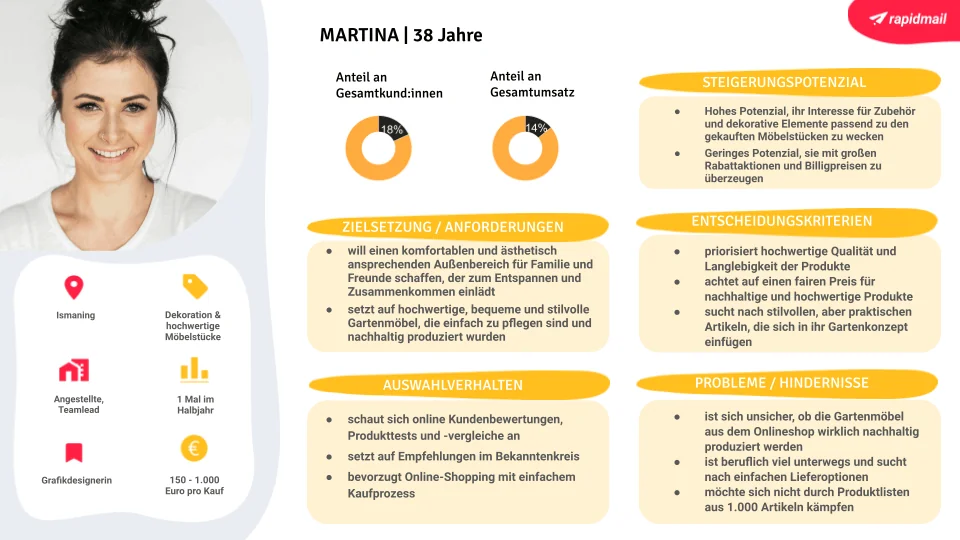
Even though the individuals in your target audience will certainly have things in common, you should not underestimate the individuality of potential customers. Instead of imagining a homogeneous group of customers, it is very useful to develop different personas that can guide you.
Personas are fictional users from your target audience who have specific characteristics, needs and expectations just like real people. In online store marketing, personas therefore help you produce helpful, relevant content tailored precisely to the interests and problems of your target audience.
Step 2: Examine which channels your competitors use
Look around the market to see which marketing channels your strongest competitors and other well-known online retailers in your sector use, and assess whether they work. This can give you an initial impression of which channels and methods you should focus on first. Nevertheless, it is of course important not to copy every advertising campaign from your competitors exactly. Do it even better! Successful online marketing for your online store depends on daring to try something, experimenting widely and exploring entirely new avenues. Use the opportunity to secure a competitive advantage as a new or small online store.
Step 3: Consider the story your brand should tell
Once upon a time… That is how all good stories begin, or something like it. Your online store’s marketing strategy also needs a consistent thread running through all your advertising activities. To write your story, start by asking yourself the following questions and consider how you can use the answers to develop a vision and mission for your online store that appear in all your advertising activities:
- ❓ What values does your business represent?
- ❓ How does your product range help your customers?
- ❓ What goal was your business founded to achieve?
- ❓ If employees had to describe your business in three words, which words would they choose?
Whether your focus is on environmental responsibility, team spirit, simplicity, customer service or local engagement, communicate the precise values in your advertising that your team lives by every day at work. Do not tell fairy tales. Authentic content is generally the content that people find most inspiring.
Step 4: Choose suitable marketing channels
One thing at a time: Start by choosing the channel that you think will allow you to reach your target audience most effectively. Then focus initially on developing and using that channel until it successfully wins new customers for your online store.
At the same time, you can begin to tackle more channels, familiarize yourself with them and discover which internal and external capabilities and resources you need to use additional marketing channels for your online store successfully and make many potential customers aware of your brand.
Once you have built a solid and satisfied customer base, customer loyalty programs and refer-a-friend programs, for example, are often effective ways to retain customers over the long term and win new customers almost as if by magic through your satisfied contacts. Press work, or PR (public relations), and affiliate marketing are also important marketing channels with great potential that you can develop in due course once your online store is performing well.
💡 rapidtip: Win over potential and existing customers with email marketing
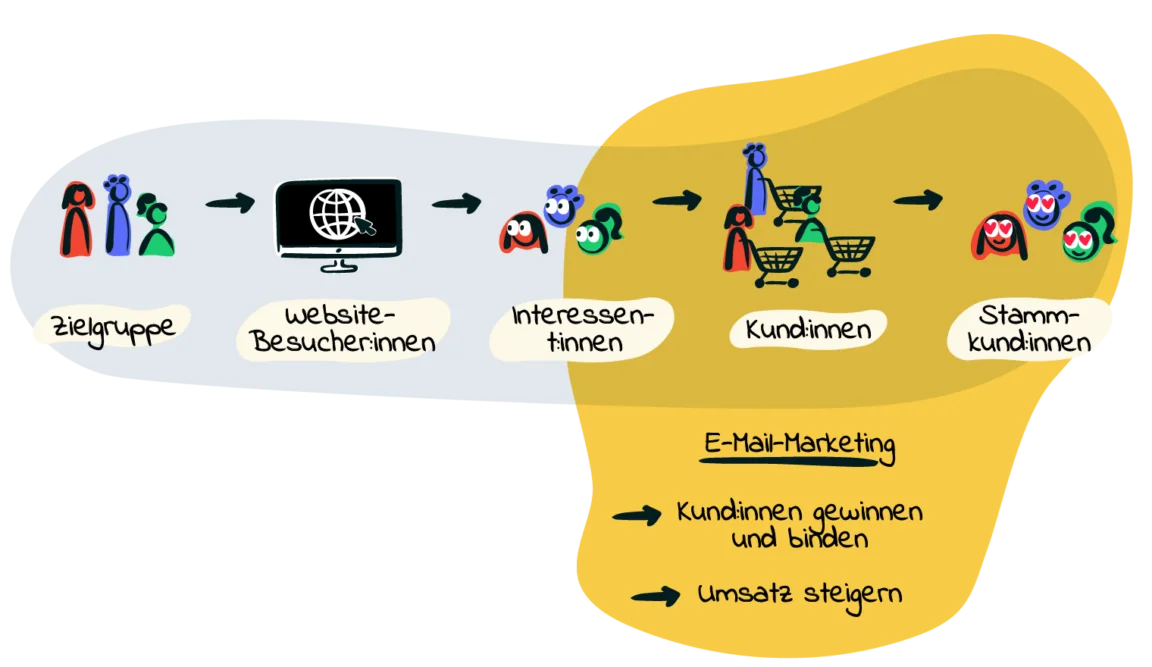
Sending newsletters online offers the great advantage that recipients actively subscribe to your advertising messages and therefore already show considerable interest in your online store and products. The segmentation feature also allows you to divide your recipient list according to criteria such as place of residence, age, occupation or gender and send your subscribers newsletters that are particularly relevant and closely matched to their interests. Promotional newsletters for seasonal occasions such as Black Friday with special discounts and personalized offers are also an excellent way to promote sales of your products, win new customers and build their long-term loyalty to your brand.
Step 5: Let marketing tools support you
Editing product photos easily, publishing social media content on several platforms simultaneously, finding important SEO keywords for product pages, or creating newsletters quickly and easily with drag and drop: Today, there are smart marketing tools that save you a great deal of work and time for every task and channel. Research online in advance, for example with the help of tool comparison sites such as OMR Reviews or our newsletter tool comparison, to learn which features and pricing models different software offers and which option will best support you in implementing your e-commerce marketing strategy effortlessly and successfully.
👀 Did you know?
With rapidmail, you can send your first newsletter to up to 2,000 contacts for free to test whether our email marketing tool has all the features you need for your online store marketing. What are you waiting for? Take a look around at your leisure!
Step 6: Measure results and optimize your marketing strategy
To discover whether your sophisticated marketing strategy is working and bringing your online store more customers and higher revenue, you should evaluate important metrics regularly and analyze the results to determine what is working well and what is not. Only by taking the time to observe the various marketing channels closely and compare the results can you discover which adjustments you need to make to optimize your strategy further.
Your marketing tools will generally help you evaluate your advertising activities easily using automatically generated statistics. That is one more reason to use professional tools instead of reaching for a calculator and struggling with complex Excel spreadsheets! 🧮😶🌫️
5. Conclusion: Marketing your online store in the right way matters
For small and medium-sized enterprises (SMEs) and online stores in particular, having a good e-commerce marketing strategy is very important for holding their own against larger competitors. It is important to know your target audience precisely and take the time to consider which content you should communicate through which channels to reach those exact contacts.
Tailor your offers, messages and all advertising activities precisely to the needs of your target audience to win them over. But do not make false promises. Remain authentic and credible as a brand and team in your communication, and make sure you comply with important legal requirements, such as the General Data Protection Regulation (GDPR), competition law and copyright law, so that your customers can trust you without hesitation.
“Dare to try something new” is the final piece of advice we would like to leave you with. Among the vast number of online stores offering the same or similar products, users today often choose businesses that implement original marketing ideas they have never seen before. So put your creative heads together and develop an individual strategy for marketing your online store and boosting your sales!