The GDPR coupling ban for newsletter signups: What is it?

Contests, ebooks and white papers are often used as incentives to win new newsletter contacts and potential customers. Users provide their email addresses in exchange for the chance to win a prize or receive helpful information from an ebook or white paper. Entering the competition or downloading the ebook is often linked to simultaneously signing up for the company newsletter. But is automatically linking a company service to a newsletter signup actually legal? We explain what the coupling ban entails, whether it still applies and what you need to consider when sending newsletters.
1. What is the coupling ban under the GDPR?
Many incentives used in email marketing to win new newsletter subscribers are based on a simple principle: recipient data in exchange for a service. Whether from the company’s or the customer’s perspective, we are all familiar with the situation: a company runs an exciting contest or offers a white paper full of helpful information to download and receives the email addresses of entrants and interested users in return. These email addresses are then often added to the newsletter distribution list so that the company can keep in touch with interested users.
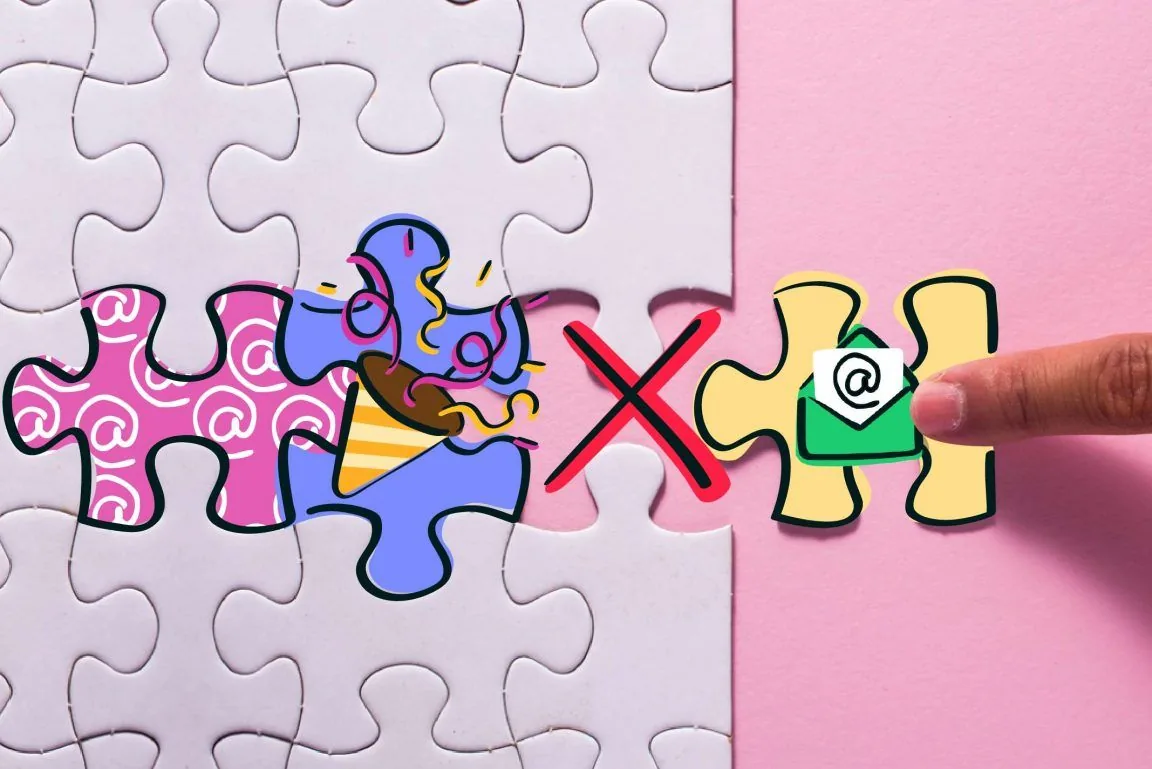
However, automatically linking entry into a contest or the download of a white paper to a simultaneous newsletter signup is generally prohibited by the coupling ban under the GDPR. For data protection-compliant newsletter marketing, the General Data Protection Regulation (GDPR) stipulates that people must actively and explicitly consent to the collection and processing of their personal data. The coupling ban therefore prevents users from automatically consenting to the processing of their personal data when they agree to something else, in this case entering a contest or downloading an ebook, and thus ensures the protection of personal data.
The coupling ban applies in particular when the data processing, in this case the newsletter signup, is not necessary to fulfill the contract, as is the case when entering a contest or downloading a white paper. If you run a contest and automatically add entrants to your email distribution list without obtaining their explicit consent to sign up for the newsletter, you are violating the GDPR and risk receiving a formal warning.
💡 How to expand your email distribution list with high-quality email addresses.
Contests and white papers are not the only clever ways to build your newsletter distribution list:
- The foundation for allowing interested users to subscribe to your newsletter is an appealing, well-placed signup form on your website.
- You can also use other incentives, such as discounts, vouchers, free samples or advance offers, to persuade many users to subscribe to your newsletter.
- Promote your newsletter. You can use social media, mention your newsletter as part of collaborations or reach passing customers through offline advertising.
2. Does the coupling ban still apply, and are there any recent court rulings?
The coupling ban does not mean that contests and white papers are no longer suitable or worthwhile as incentives for newsletter signups. As the coupling ban is not an absolute ban, you can continue to use such incentives in your email marketing, but you should pay close attention to the requirements of the GDPR.
The Frankfurt Higher Regional Court reached this landmark decision on June 27, 2019 (6 U 6/19): a company ran a contest in which entrants had to consent to their telephone numbers being used for marketing calls. The problem: because the company could not prove that it had obtained the entrants’ explicit consent to store their telephone numbers, for example through the double opt-in process, it violated the GDPR and lost the case. However, the Frankfurt Higher Regional Court also confirmed that linking recipient data to a company’s service is acceptable under certain conditions.
You have several options for running legally compliant contests or offering a white paper as a GDPR-compliant download while observing the coupling ban.
- In principle, you can draw up a contest agreement that automatically links entry into the competition to data processing. However, in view of the coupling ban, this agreement must be prepared by an experienced data protection expert. The State Commissioner for Data Protection and Freedom of Information of North Rhine-Westphalia (LDI NRW) recently presented this approach as one possible solution.
- However, freely given consent is not only the most legally secure option, but also the fairest option for your prospective subscribers. It also means that you only receive newsletter contacts who are genuinely interested in your newsletter and therefore relevant to your email marketing. In this case, you do not require users to sign up for the newsletter in order to download the white paper or enter the competition. Instead, you offer the newsletter subscription as an additional, voluntary option. This increases your transparency and presents you as a trustworthy brand and newsletter sender.
The rapidmail newsletter
Tips, ideas and news about email marketing, straight to your inbox.
3. What do newsletter senders need to consider regarding the coupling ban?
To ensure that your contest or white paper does not conflict with the coupling ban, consider the following criteria for legally exchanging the chance to win a prize or access exclusive content for the contact details of new newsletter subscribers:
- Free choice: It should be possible to enter the competition or download a white paper without signing up for the newsletter. You can use an optional checkbox that interested users can select themselves if they want to subscribe to your newsletter.
- Clarity: State clearly and unambiguously that entrants are signing up for the newsletter and consenting to data processing when they select a particular optional field. However, you should then verify this step through the double opt-in process.
- Verifiability through the double opt-in process: Double opt-in is the safest way to prove explicit consent to receive newsletters. Interested users are only added to the newsletter recipient list and begin receiving your campaigns after they click the link in the confirmation email.
- Ability to withdraw consent via an unsubscribe link: Under the GDPR, recipients have the right to object to the processing of their data at any time and to withdraw their consent to receive the newsletter. Your newsletter should therefore always include an unsubscribe link.
4. Conclusion: Is it worth linking a contest or content to a mandatory newsletter signup?
Always bear one important principle in mind for your email marketing: only newsletter contacts who are genuinely interested in your company and your content are valuable contacts. Trying to force users to engage with your brand through mandatory or hidden newsletter signups offers no advantages for your company. On the contrary, people who do not want to receive your newsletter can damage your company’s image and marketing strategy, for example by marking your emails as spam or complaining about them to people they know.
Offering contests or exclusive content, such as white papers, is of course still a good way to raise awareness of your company and win new newsletter contacts, but only if you offer the newsletter signup as an additional, voluntary option alongside the main service.